
Panicum streak virus
Mastrevirus panici
The causal agent of the disease is the Panicum streak virus (PanSV), which is classified under the genus Mastrevirus in the family Geminiviridae. It is a single-stranded DNA virus.
What the section contains
Panicum streak virus
This is a systemic viral disease that affects the plant's physiological processes, causing significant stress and metabolic disruption.
The virus is primarily transmitted by leafhoppers, specifically species within the Cicadulina genus. The virus is persistent within the vector, remaining infectious for a long duration.
Mechanical transmission via sap is generally ineffective; therefore, the disease spread is almost entirely dependent on the movement and feeding habits of insect vectors.
The incubation period within the host plant is variable, usually lasting several weeks depending on environmental conditions and the age of the crop at the time of infection.
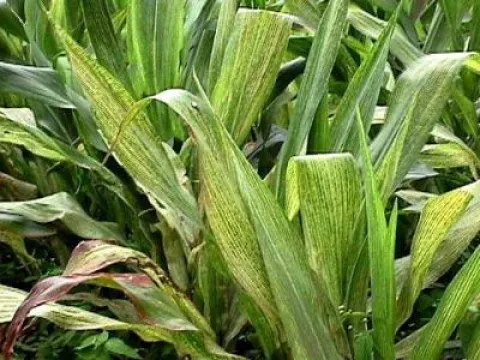
The most characteristic symptom is the appearance of chlorotic streaks or stripes running parallel to the veins of the leaves, which can become quite prominent.
As the infection progresses, these stripes often merge, causing large areas of the leaf to become discolored, which severely impacts the plant's photosynthetic efficiency.
Stunting is a common observation in early-infected plants, leading to a significant reduction in overall plant height and vigor compared to healthy crops.
- Chlorotic striping of the leaf blades.
- Deformation and curling of newly developed leaves.
- Delayed development of the flowering panicle.
- General reduction in tillering and plant biomass.
In severe cases, necrotic tissue can develop along the chlorotic streaks, resulting in premature senescence of the affected leaves or even the entire plant.
The development and spread of the disease are heavily influenced by the population dynamics of the leafhopper vectors, which thrive in warm climates.
Wild grasses act as primary reservoirs for both the virus and its insect vectors during the off-season, facilitating the spread to nearby cultivated fields.
Fields with poor weed management are at significantly higher risk, as weeds provide both a habitat for the vectors and a source of inoculum.
Dry periods often encourage the movement of leafhoppers from drying wild vegetation into lush, irrigated, or recently emerged crop fields.
Temperature plays a crucial role, as higher temperatures generally accelerate both the replication of the virus in the plant and the life cycle of the vectors.
Panicum streak virus causes substantial economic losses by reducing both the yield quantity and the quality of the harvested millet grain.
Yield reduction is primarily due to reduced grain fill and lower weight per thousand seeds, resulting from decreased carbon assimilation by the damaged leaves.
Infected crops often produce small, shriveled grains that do not meet market quality standards, leading to lower crop value and compromised processing traits.
Early infections during the seedling stage can cause severe stand loss, requiring replanting or leading to significant gaps in the field that facilitate weed growth.
Weakened plants are also more susceptible to secondary infections by fungi and bacteria, which can further exacerbate the damage caused by the primary virus.
Weed control in and around fields is the most critical preventative measure to eliminate reservoirs for both the virus and its insect vectors.
The use of insecticides to target leafhopper populations during the early vegetative stages can significantly reduce the incidence of the disease.
Planting resistant or tolerant cultivars is the most sustainable long-term strategy for managing the virus and ensuring consistent grain yields.
Adjusting planting dates to avoid peak activity periods of leafhopper populations can help reduce the initial infection pressure on the crop.
Monitoring vector activity using sticky traps allows farmers to implement timely management decisions before the virus reaches epidemic levels in the field.