
Orthotospovirus
Orthotospovirus
Orthotospovirus is a genus of plant-infecting viruses within the family Tospoviridae. The most economically significant member of this group is the Tomato Spotted Wilt Virus (TSWV).
What the section contains
Orthotospovirus
These viruses are characterized by a tripartite, single-stranded RNA genome enclosed within a lipid envelope, which contributes to their high adaptability to different hosts.
Orthotospoviruses have an exceptionally broad host range, infecting over 1,000 species, including economically vital vegetables, fruits, and ornamental plants.
The virus acts systemically, moving through the vascular system of the host plant to reach all organs, including leaves, stems, flowers, and developing fruits.
Transmission occurs exclusively through thrips, which acquire the virus during their larval stage and remain infectious throughout their adult life, facilitating rapid spread.
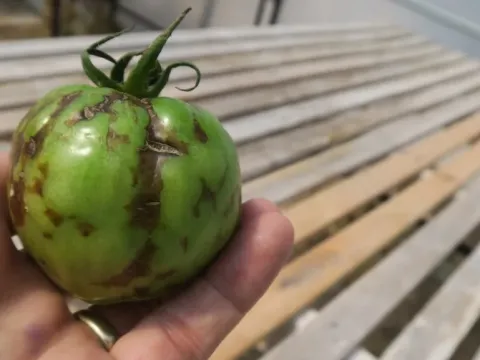
Symptoms of Orthotospovirus infection vary significantly depending on the plant species, but often include characteristic ring spots, mosaic patterns, and bronze-colored lesions.
Infected tomato and pepper plants often show leaf curling, tip necrosis, and stunted growth, which severely limits the plant's overall development and vigor.
Fruit symptoms are particularly detrimental, often presenting as discolored, mottled, or necrotic blotches that render the produce unsalable in commercial markets.
As the disease progresses, necrotic streaks may appear on the stems, leading to the collapse of the growing point and potential plant death under high viral pressure.
- Ring spots on leaves and fruit
- Bronzing or chlorosis of the foliage
- Stunted plant development
- Necrotic streaks on stems
- Deformed fruit production
The primary driver for the spread of Orthotospovirus is the presence of thrips, with Western Flower Thrips (Frankliniella occidentalis) being a key vector.
Warm and humid environments promote the rapid reproduction cycles of thrips, which significantly increases the risk of transmission within the crop canopy.
Greenhouse settings provide an ideal, protected microclimate for the virus to persist and circulate throughout the year if strict sanitary measures are not enforced.
The presence of perennial weeds around field borders acts as a crucial reservoir for the virus, allowing it to survive between growing seasons and infect new crops.
High population densities of the vector combined with continuous monoculture practices create favorable conditions for devastating outbreaks of the viral disease.
Orthotospovirus is considered a high-impact threat to agriculture, capable of causing total crop failure in greenhouse and field-grown vegetable production.
By disrupting metabolic pathways and photosynthetic efficiency, the virus forces the plant to allocate resources to infection management rather than fruit production.
Economic losses are compounded by the high cost of insecticide programs required to manage thrips, often proving ineffective once the virus is established.
The lack of curative treatments for infected plants means that growers suffer significant losses in yield quality and volume, undermining market competitiveness.
Furthermore, the virus compromises the host plant's immunity, making it susceptible to opportunistic secondary fungal and bacterial pathogens that further increase losses.
Integrated Pest Management (IPM) is the most effective strategy, focusing heavily on managing thrips populations to break the virus's transmission cycle.
Prevention starts with using high-quality, virus-free seeds and seedlings, along with rigorous sanitation protocols to keep greenhouse environments clean and weed-free.
The use of reflective mulches and sticky traps (yellow or blue) can help monitor and reduce the number of adult thrips migrating into the cropping area.
Rogueing, the process of immediately identifying and removing infected plants, is essential to prevent the virus from spreading further to healthy neighboring plants.
Incorporating resistant plant cultivars, where available, provides the most sustainable defense against Orthotospovirus, reducing reliance on chemical pesticides.