
Oryzavirus
Oryzavirus
Oryzavirus is a genus of plant-pathogenic viruses belonging to the Reoviridae family, primarily known for causing serious diseases in graminaceous crops.
What the section contains
Oryzavirus
The virus particle consists of a segmented double-stranded RNA genome enclosed in an icosahedral capsid without a lipid envelope, providing high environmental stability.
The primary host is rice (Oryza sativa), but the virus can also persist in various wild grasses, which act as secondary reservoirs during the off-season.
Transmission occurs through leafhopper vectors. The virus circulates within the vector and is capable of replication inside the insect, ensuring lifelong transmission.
Upon feeding, infected leafhoppers introduce the viral particles into the plant's vascular tissue, facilitating systemic spread throughout the entire host organism.
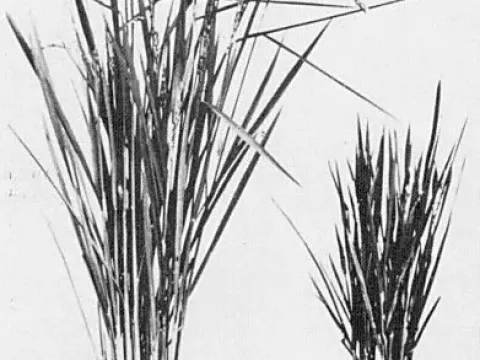
The most distinctive symptom is severe growth stunting, where infected plants remain significantly smaller and fail to reach their full physiological development.
Foliage often displays a rigid texture and may develop chlorotic stripes or mottling, indicating significant disruption of chlorophyll synthesis and photosynthesis.
Affected plants exhibit excessive tillering, producing numerous stunted, underdeveloped shoots that fail to produce healthy, filled panicles.
In the reproductive phase, panicles are often deformed, fail to emerge properly from the leaf sheath, and frequently exhibit complete or partial sterility.
Root system development is severely compromised, resulting in poor anchorage and reduced uptake of nutrients, which leaves the plant vulnerable to secondary infections.
The spread of Oryzavirus is highly dependent on the population dynamics and migratory patterns of its insect vectors, the leafhoppers.
Warm and humid climatic conditions accelerate the lifecycle of vectors, leading to increased population density and more frequent viral transmission in the field.
Weed-infested field borders serve as critical overwintering sites for both the virus and its insect vectors, creating primary sources of inoculum every spring.
Improper planting schedules that coincide with seasonal peaks of vector activity significantly increase the infection rate of young rice seedlings.
Excessive nitrogen fertilization promotes succulent vegetative growth, which attracts leafhoppers and creates a conducive environment for rapid viral replication.
Oryzavirus causes substantial economic losses in rice-growing regions, with yield reductions ranging from 30% to 80% depending on the infection timing.
The grain quality is severely impaired, showing reduced grain weight and poor milling characteristics, which significantly devalues the harvested crop.
Infected fields show uneven maturation and poor competition against weeds, necessitating higher labor and chemical costs for corrective management.
Since systemic viral infections are incurable, the harm extends to the permanent loss of plant productivity, forcing farmers to abandon heavily infected plots.
The presence of the virus in a crop ecosystem complicates standard agronomic practices and requires costly investment in resistant cultivars to maintain viability.
Effective management focuses on suppressing vector populations using systemic insecticides to disrupt the transmission cycle during the early stages of plant development.
The use of genetically resistant or tolerant rice varieties is the most sustainable and efficient strategy for mitigating viral damage in endemic areas.
- Removal of wild grass weeds around fields to eliminate reservoirs.
- Strategic adjustment of planting dates to avoid peaks in vector migration.
- Regular monitoring of leafhopper populations using yellow sticky traps.
- Integrated pest management (IPM) to balance chemical and biological controls.
Maintaining proper field sanitation and drainage helps reduce the humidity levels that favor insect vector reproduction near the crop canopy.
Implementing cooperative landscape management between neighboring farms prevents the cross-boundary movement of infected insect vectors during the growing season.