
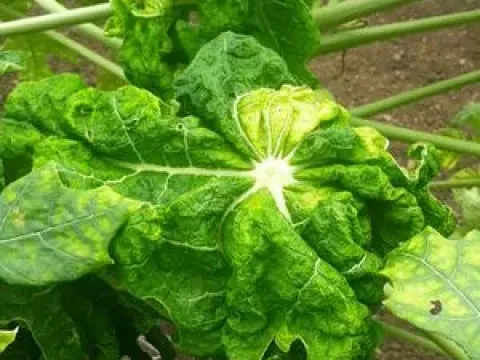
Papaya leaf curl virus
Begomovirus caricae
The causative agent of this disease is a virus belonging to the genus Begomovirus, within the Geminiviridae family. It is a single-stranded DNA virus that specifically targets the vascular system of the papaya plant, particularly the phloem tissues.
What the section contains
Papaya leaf curl virus
The virus utilizes the host plant's internal machinery to replicate its genome. This process causes severe physiological disruption, leading to the characteristic morphological changes observed in infected papaya trees.
Transmission of the virus is entirely dependent on insect vectors, most notably the whitefly (Bemisia tabaci). The virus is acquired by the vector during feeding and is then transmitted to healthy plants through the vector's saliva.
The biological nature of this pathogen makes it highly adapted to warm climates. Its ability to remain latent in weed reservoirs allows it to persist in the environment even when papaya crops are not present.
Once injected into the plant, the virus moves systemically, eventually reaching all meristematic tissues. This systemic infection ensures that new growth is also affected, leading to the rapid decline of the plant's health.
The primary symptom of the disease is the severe curling and crinkling of the apical leaves. The leaves appear stunted and distorted, often with a thickened and brittle texture that severely limits the plant's photosynthetic capacity.
Affected plants exhibit significantly shortened internodes, resulting in a stunted, rosette-like appearance at the top of the stem. The plant's overall height remains severely stunted compared to healthy trees of the same age.
Flower development is often disrupted, leading to flower drop and a subsequent failure to set fruit. Any fruit that does manage to form is typically deformed, small, and lacks the quality required for commercial markets.
Yellowing or chlorosis of the leaf veins is a common diagnostic sign as the virus spreads throughout the vascular system. In advanced stages, the apical growth may show signs of necrosis, leading to complete terminal shoot dieback.
Diagnostic verification through PCR testing is highly recommended, as symptoms can mimic nutritional deficiencies or herbicide damage, making field identification alone unreliable in some contexts.
Disease prevalence is heavily influenced by the population density of the whitefly vector. Environmental conditions that favor the rapid reproduction of these insects are directly linked to higher rates of viral transmission.
Hot and humid weather conditions are ideal for both the whitefly life cycle and the viral replication process. Under these conditions, the virus can spread throughout an entire plantation in a very short period.
The presence of alternative host plants, such as wild species or nearby weed populations, provides a refuge for both the virus and the whitefly. These reservoirs serve as the primary sources for new infections in commercial crops.
Poor agricultural practices, such as failing to remove infected crop residues, create an ongoing source of infection. Additionally, dense plantation layouts facilitate the movement of vectors between plants.
Seasonal migration patterns of insect vectors are often the trigger for widespread outbreaks. When climatic shifts occur, whitefly populations often relocate to more suitable crops, carrying the virus with them.
The impact of this virus on papaya cultivation is devastating, with potential yield losses reaching 100% in heavily infested areas. Once a plant is infected, it cannot be cured, necessitating its removal.
The economic losses extend beyond the immediate loss of fruit. Growers face the high costs of replanting, purchasing new inputs, and managing insect populations to prevent further damage to neighboring healthy crops.
Marketable quality is severely compromised, as fruit from infected plants is physically misshapen and undesirable for consumers. This leads to a total loss of revenue from affected plant batches.
The persistence of the virus forces growers to rely heavily on intensive pesticide schedules to manage vector populations. This increases operational costs and raises environmental concerns regarding pesticide residue levels.
Ultimately, the disease can render papaya farming non-viable in endemic regions, forcing a transition to alternative crops and impacting the livelihoods of those dependent on papaya production.
The most effective strategy is a multi-faceted approach centered on vector control. Integrated Pest Management (IPM) protocols, including the timely application of systemic insecticides, are vital to keep vector populations below the economic threshold.
Using certified, virus-free seedlings is the first line of defense. Ensuring that incoming plant material is healthy prevents the introduction of the virus into a new or clean production environment.
Immediate roguing (removal) of symptomatic plants is critical. By quickly identifying and destroying infected plants, growers can break the transmission cycle and limit the spread of the virus within the field.
Implementing crop-free intervals and maintaining spatial isolation between old and new plantations can significantly reduce the risk of secondary infections. Protecting young plants with insect-proof netting is also highly recommended.
- Frequent monitoring of the plantation for signs of curling leaves.
- Strict weed management to remove potential viral reservoirs.
- Adherence to strict hygiene protocols for all farm equipment.
- Selecting papaya varieties that show field tolerance to Begomoviruses.
- Coordinated pest management efforts with neighboring farms.