
Papaya potexvirus
Potexvirus papayae
The causative agent of the disease is Papaya potexvirus (PapVX), a member of the Potexvirus genus within the Alphaflexiviridae family. It is characterized by flexible, filamentous virions containing single-stranded RNA.
What the section contains
Papaya potexvirus
Unlike many other papaya viruses, this pathogen is not transmitted by common insect vectors such as aphids. Its primary mode of spread is through mechanical transmission, often facilitated by agricultural practices.
The virus exhibits significant environmental stability, allowing it to persist on pruning tools, gloves, and clothing. Transmission occurs when infected sap comes into contact with wounded plant tissues.
Upon entry, the virus replicates within the host cells and spreads systematically through the phloem. This process leads to the colonization of the entire plant, establishing a long-term chronic infection.
Identification typically relies on modern diagnostic techniques such as ELISA (Enzyme-Linked Immunosorbent Assay) or RT-PCR, as symptoms alone can be misleading due to potential mixed infections with other pathogens.
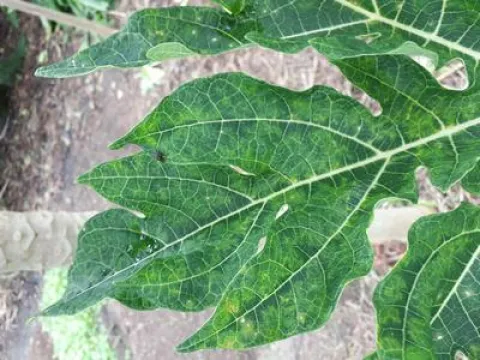
The primary symptom of Papaya potexvirus is a distinctive mosaic pattern on the leaves, characterized by irregular light and dark green patches. Leaf distortion and curling are also frequently observed in infected plants.
Infected papaya plants exhibit significant stunted growth and reduced vigor. The internodes become shortened, leading to a stunted, bushy appearance that prevents the plant from reaching its full potential size.
Fruits from infected trees often display chlorotic spots, rings, or surface mottling, which severely degrades their market value. In severe infections, the plant may show overall necrosis or branch dieback.
- Leaf mosaic and mottling patterns.
- Leaf distortion and curling.
- Severe stunting and shortened internodes.
- Chlorotic spots or rings on fruit surfaces.
- Reduced overall fruit set and quality.
Symptoms are often most pronounced during the active vegetative growth phase. Environmental stress, such as drought or excessive heat, can exacerbate the visual manifestations of the viral infection.
The spread of Papaya potexvirus is heavily linked to standard orchard operations. Frequent pruning, thinning, and harvesting without disinfecting tools are the primary triggers for localized outbreaks.
Mechanical transmission via sap contact is the most critical condition for the spread within a plantation. The physical abrasion of leaves during windy conditions can also lead to transmission between adjacent plants.
Tropical climates provide optimal temperatures for the rapid replication of the virus within the host tissues. High metabolic activity in the plant during the growing season often coincides with peak viral load levels.
High relative humidity and moisture levels contribute to the persistence of viral particles on surfaces. This ensures that tools or equipment remain infectious for a longer period after contact with an infected plant.
The introduction of contaminated planting material, including cuttings or seed from infected parent plants, is the primary source of long-distance dissemination and new outbreaks in previously disease-free areas.
The economic impact of this virus is substantial, primarily due to drastic reductions in yield. The disruption of photosynthesis and metabolic processes prevents the plant from partitioning enough energy for fruit development.
Beyond quantity, fruit quality is significantly compromised. Distorted, mottled, or small fruits are often unsellable, forcing growers to discard a significant portion of their harvest.
Viral infection suppresses the plant's immune response, making it highly susceptible to opportunistic secondary infections, including fungal root rots and bacterial stem diseases that further debilitate the plant.
The persistence of the virus within the plantation environment often necessitates the removal and destruction of entire blocks of trees, leading to long-term operational losses and high replanting costs.
Furthermore, managing the disease requires constant labor-intensive monitoring and strict sanitation protocols, which increase the overall cost of production per unit of fruit.
Since there are no curative treatments available for plant viral infections, control strategies must focus entirely on preventative measures and strict nursery and orchard sanitation.
Rigorous disinfection of all pruning equipment is mandatory. Tools must be submerged in approved disinfectants, such as sodium hypochlorite or ethanol, between every single plant to prevent mechanical transmission.
Prompt roguing is essential; any plant displaying symptoms should be identified, removed, and destroyed immediately. This reduces the primary inoculum source available for further spread within the plantation.
Growers should source only certified, virus-tested planting materials to avoid introducing the pathogen. Regular laboratory testing of mother blocks is highly recommended in specialized nurseries.
Managing weed populations within and around the orchard is necessary, as these may act as reservoirs for the virus. Establishing windbreaks can also help minimize the physical contact between plants caused by gusty winds.