
Cowpea mosaic virus
Comovirus vignae
Cowpea mosaic virus (CPMV) is the type species of the genus Comovirus, characterized by a bipartite genome consisting of two positive-sense single-stranded RNA molecules.
What the section contains
Cowpea mosaic virus
The virus particles are isometric and highly stable, which contributes to their ability to persist in diverse environmental conditions for extended periods.
As a systemic plant pathogen, CPMV infiltrates the host tissues, utilizing the plant's resources to replicate efficiently and spread through the vascular system.
The virus is primarily transmitted by insect vectors, particularly leaf-feeding beetles, which pick up the virus while feeding on infected plant tissues.
Mechanical transmission is another significant pathway, as the virus can be spread during agricultural activities through contact between healthy and diseased plants.
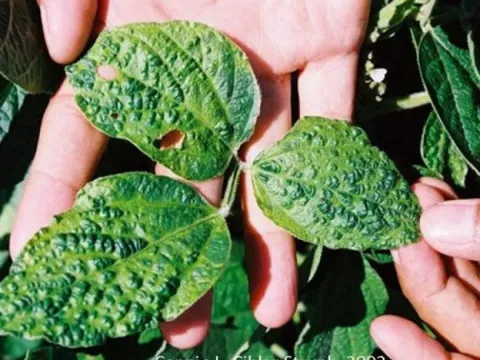
The hallmark symptoms include a distinct mosaic pattern on the leaves, characterized by variegated light green and dark green patches of chlorotic tissue.
Plants often exhibit stunted growth, with shortened internodes and a generally unthrifty, dwarfed appearance that reduces the overall canopy size.
Leaf distortion is frequently observed, where leaves may become wrinkled, puckered, or exhibit irregular, asymmetrical shapes rather than the healthy, smooth form.
In the reproductive stages, the virus causes flower and pod abnormalities, often leading to reduced pod set and the development of distorted, malformed pods.
Severe infections can result in premature yellowing and dropping of leaves, leading to decreased photosynthetic capacity and overall decline of the crop.
Warm temperatures are generally conducive to the rapid multiplication of the virus within the host and the increased activity of insect vectors.
The presence of wild legume species in the vicinity of crop fields acts as a primary reservoir for the virus, ensuring its survival between planting seasons.
High insect populations in the field during the early stages of plant development lead to a higher incidence of virus transmission and disease outbreaks.
Dense planting configurations increase the frequency of leaf-to-leaf contact, which facilitates the horizontal spread of the virus within the crop population.
Wet environmental conditions that support vigorous weed growth provide a continuous habitat for insect vectors, thereby sustaining the viral infection cycle.
Cowpea mosaic virus inflicts significant economic losses by reducing both the yield volume and the quality of the marketable product, such as fresh bean pods.
Plants infected with the virus show reduced vigor and are more susceptible to secondary stressors, including bacterial infections and drought conditions.
Yield reduction can be substantial, as the disruption of nutrient transport and photosynthesis prevents the plant from developing healthy, full-sized beans.
Infected seeds can harbor the virus, posing a risk of introducing the disease into new production areas and ensuring the carryover of the pathogen.
The aesthetic degradation of the produce, combined with the loss of nutritional value, renders the crop unfit for premium markets and processing.
Utilizing virus-free, certified seeds is the most effective proactive measure to prevent the initial introduction of CPMV into clean farming areas.
Implementing rigorous weed management programs to eliminate alternative hosts of the virus significantly reduces the local reservoir of the pathogen.
Managing insect vector populations using integrated pest management strategies helps to curtail the transmission rate of the virus throughout the season.
Crop rotation practices, which minimize the buildup of the virus in the soil and residues, are essential for maintaining long-term field health.
The development and deployment of genetically resistant cultivars remain the most sustainable strategy for protecting crops against mosaic disease outbreaks.