
Tomato yellow leaf curl
Begomovirus solanumflavusmalacitanum
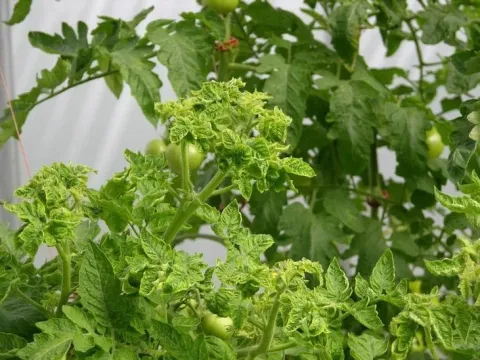
The primary symptom of the disease is the upward curling of leaflets, which often display yellowing along the margins and veins.
What the section contains
Tomato yellow leaf curl
Plants infected at an early stage exhibit severe stunting, resulting in a bushy, rosette-like appearance due to shortened internodes.
Flower production is significantly reduced, and existing blossoms frequently abscise before fruit set occurs, leading to drastic yield loss.
When fruit is produced, it is often small, misshapen, and may display symptoms of uneven ripening or pale, mottled coloration.
The severity of symptoms can vary depending on the plant cultivar and the timing of the initial viral infection by the vector.
The disease is caused by several species of viruses within the Begomovirus genus, characterized by single-stranded circular DNA genomes.
These viruses specifically target Solanaceous crops, with tomato being the most economically significant host for the virus.
Transmission occurs exclusively through the silverleaf whitefly (Bemisia tabaci), which acquires the virus through feeding on infected sap.
The virus circulates within the whitefly's body but does not multiply; however, the vector remains infectious for the remainder of its lifespan.
Mechanical transmission via pruning tools or handling is not possible, which distinguishes this disease from many common mosaic viruses.
The spread of the disease is inextricably linked to the population dynamics of the silverleaf whitefly, which thrives in warm environments.
High temperatures, combined with the presence of host weeds, create an ideal environment for whitefly proliferation and subsequent viral spread.
In regions where multiple cropping cycles occur, the whitefly can maintain high viral pressure throughout the entire year.
Migration of whiteflies from senescing or harvested crops to neighboring healthy fields often triggers rapid epidemics in younger plantings.
Dry weather conditions tend to favor whitefly movement and activity, significantly increasing the probability of plant infection.
Tomato yellow leaf curl represents one of the most devastating biotic threats to tomato production globally, often causing total crop failure.
Economic impact includes both the loss of marketable fruit and the high cost of intensive insecticide applications required for vector control.
Once a plant is infected, there is no curative treatment, meaning the viral infection remains in the plant until its eventual death.
The virus compromises the overall physiological health of the crop, making it more susceptible to secondary infestations and poor growth.
For growers, the presence of the virus often necessitates a complete change in management practices, including the adoption of resistant varieties.
The cornerstone of management is the effective control of whitefly populations using an integrated approach involving chemical and biological methods.
The cultivation of genetically resistant or tolerant tomato varieties is the most reliable strategy to mitigate yield losses caused by the virus.
Exclusion techniques, such as covering nursery beds and greenhouses with fine-mesh insect screens, prevent whitefly entry.
Sanitation practices, including the removal of weeds that act as viral reservoirs, are essential to minimize the initial inoculum in the field.
- Monitor whitefly population levels regularly using yellow sticky traps.
- Implement strict sanitation by removing crop debris immediately after harvest.
- Use systemic insecticides to provide early protection for young seedlings.
- Maintain spatial isolation between older infected crops and new plantings.