
Tomato yellow leaf curl virus
Begomovirus solanumpunense
Description
Symptoms
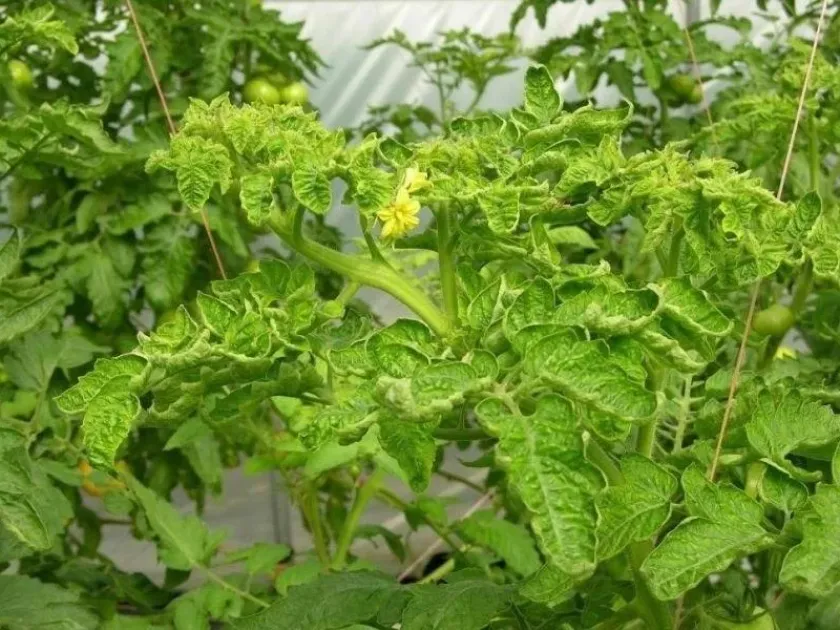
Characteristic symptoms include upward curling of the leaf margins, yellowing of the leaf edges, and severe dwarfing of the plant.
Leaves often appear smaller than normal and have a leathery texture, significantly reducing the surface area for photosynthesis.
Infected plants show reduced internode length, leading to a stunted, bushy growth habit that is highly visible in fields.
Flowers on infected plants frequently drop before fruit set, and any fruits that do develop are usually small, malformed, and of poor quality.
Symptoms are most severe when plants are infected at the seedling stage, often resulting in total yield loss.
Pathogen
The disease is caused by Begomovirus solanumpunense, a member of the Geminiviridae family, which contains single-stranded DNA.
This pathogen is obligately transmitted by insect vectors, primarily the whitefly (Bemisia tabaci), which acquire the virus while feeding on infected plant tissues.
Once ingested, the virus circulates within the whitefly and is introduced into the phloem of healthy plants during subsequent feeding.
The virus cannot be transmitted through seeds or mechanical contact, making the insect vector the sole pathway for spread in the field.
This specific biology necessitates that management strategies focus almost entirely on controlling the whitefly population.
Conditions for development
Disease outbreaks are closely correlated with high populations of whiteflies, which thrive in hot and dry weather conditions.
Intensive farming practices with overlapping crop cycles provide a continuous food source for whiteflies, facilitating year-round viral persistence.
Weedy areas surrounding agricultural plots often serve as reservoirs for both the virus and its vector, acting as starting points for outbreaks.
Protected cultivation environments, like greenhouses, can experience rapid transmission due to stable, favorable temperatures for whiteflies.
Wind currents can carry whiteflies over long distances, allowing the virus to spread from neighboring regions to previously unaffected farms.
Why it matters
This virus is considered one of the most destructive diseases affecting solanaceous crops worldwide, causing significant economic losses.
The inability of infected plants to produce marketable fruit makes large-scale production nearly impossible in heavily infested areas.
Early-stage infections result in complete stunting, which prevents the plant from developing a root system capable of supporting heavy yields.
The economic burden includes both the direct loss of crop value and the high costs associated with rigorous insecticidal treatment programs.
Because there is no cure, the cumulative impact of the disease often forces farmers to abandon susceptible cultivars in favor of resistant ones.
Protection
Management centers on reducing the whitefly population through the timely application of systemic insecticides and biological control agents.
Establishing a host-free period by removing all crop residues and weeds helps to break the viral cycle and reduce vector populations.
The use of virus-resistant tomato cultivars is the most effective long-term strategy for minimizing the impacts of the disease in endemic areas.
- Deploying yellow sticky traps to monitor whitefly activity levels.
- Utilizing fine-mesh insect screens on greenhouses to prevent whitefly entry.
- Implementing strict sanitation protocols to eradicate symptomatic plants immediately.
Integrated Pest Management (IPM) is essential, combining cultural practices, chemical controls, and the use of resistant genetics to protect yields.
Discussion
No discussions yet — be the first.