
Tomato yellow leaf curl virus
Begomovirus solanumflavuscontorsionis
Description
Symptoms
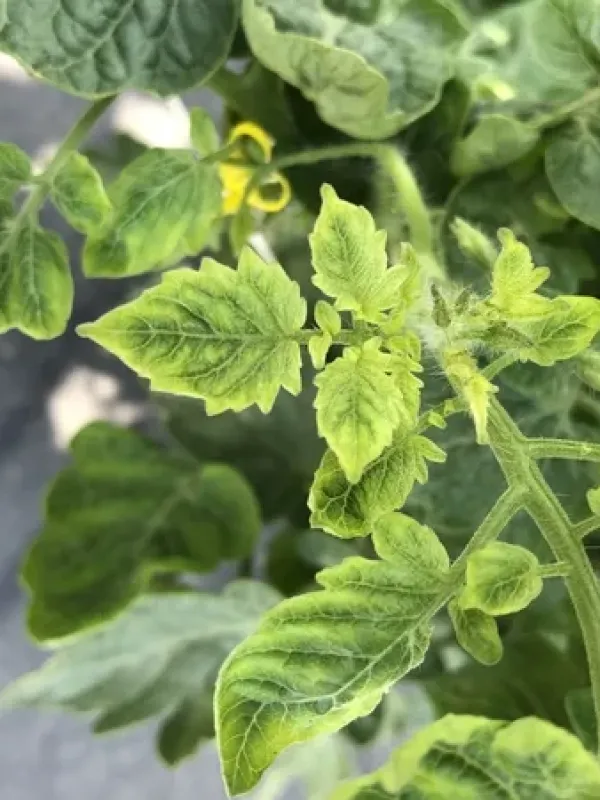
Symptoms typically start at the terminal shoots, where new leaves show significant yellowing and a characteristic upward curling of the margins.
Leaves become smaller in size, deformed, and brittle, significantly altering the canopy structure of the tomato plant.
Stunting is a major visual sign, as infected plants stop growing and exhibit shortened internodes, creating a bushy, dwarfed appearance.
Flower abscission is common, leading to a drastic reduction in fruit set and a subsequent failure of the plant to produce any viable yield.
If fruits do develop, they are often small, discolored, and commercially unsellable, reflecting the plant's overall loss of metabolic capacity.
Pathogen
The causative agent of this disease is the Tomato yellow leaf curl virus (TYLCV), a DNA virus belonging to the Begomovirus genus.
TYLCV is a circular single-stranded DNA virus that replicates within the nuclei of host plant cells, causing severe systemic dysfunction.
The virus cannot be transmitted mechanically through pruning or contact; it is an obligate vector-borne pathogen in natural environments.
The silverleaf whitefly (Bemisia tabaci) is the primary vector responsible for the transmission of this virus between host plants.
Once the whitefly feeds on an infected plant, it retains the virus for the remainder of its life cycle, acting as a constant reservoir.
Conditions for development
The spread of TYLCV is highly dependent on the population density of the whitefly vector, which thrives in warm and humid climates.
High temperatures favor both the rapid life cycle of Bemisia tabaci and the accelerated replication of the viral genome within host plants.
Weed hosts, particularly those in the Solanaceae family, serve as overwintering sites for the virus and whitefly populations.
In greenhouses, inadequate screening and failure to implement biosecurity protocols allow whiteflies to infest young seedlings rapidly.
Environmental stress and improper moisture levels can weaken the plant's resilience, making them more susceptible to the impact of the infection.
Why it matters
TYLCV is recognized as one of the most destructive viral diseases affecting solanaceous crops, capable of causing total crop failure.
Economic losses are severe due to the inability of infected plants to sustain fruit production or achieve proper development.
Since no curative treatment exists for infected plants, the damage to the production cycle is irreversible, requiring costly replanting efforts.
The virus poses a continuous threat to greenhouse operations, potentially forcing farmers to halt production in severely infested regions.
International trade restrictions are often applied to infected areas to prevent the spread of the virus to new, non-infested regions.
Protection
The most effective management strategy is rigorous control of whitefly populations through the strategic use of systemic and contact insecticides.
Utilization of host-plant resistance, specifically breeding and planting TYLCV-resistant tomato hybrids, is the cornerstone of sustainable protection.
Implementing physical barriers like insect-proof netting in greenhouse structures significantly reduces the risk of initial infection.
Sanitation practices, such as the removal of host weeds and the destruction of infected symptomatic plants, are vital for disease management.
Monitoring vector activity with yellow sticky traps allows for early detection of whiteflies and timely initiation of protective chemical applications.
Discussion
No discussions yet — be the first.