
Tomato yellow leaf curl virus
Begomovirus coheni
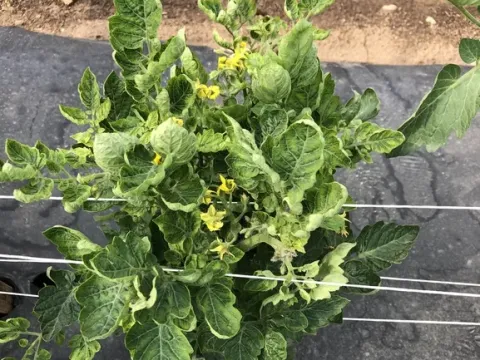
The characteristic symptoms include severe curling and upward cupping of leaflets, which often appear stunted and yellowed at the margins.
What the section contains
Tomato yellow leaf curl virus
Plants infected at an early growth stage show a bushy appearance with significantly shortened internodes, preventing normal vertical development.
Flowering is heavily suppressed, and any fruit that does set is usually undersized, deformed, and of poor quality for commercial sale.
Terminal buds exhibit severe chlorosis and branching, giving the plant a broom-like look. The overall vitality of the plant is drastically reduced.
Symptom severity varies depending on the specific strain of the virus and the susceptibility of the tomato cultivar being grown.
The disease is caused by Tomato yellow leaf curl virus (TYLCV), a member of the Begomovirus genus and the Geminiviridae family.
The virus is exclusively transmitted by the silverleaf whitefly (Bemisia tabaci), which acts as a vector that acquires the virus through feeding.
Once ingested, the virus circulates within the whitefly and is transmitted to healthy plants via the insect's saliva, typically requiring a feeding period of several minutes.
TYLCV is highly persistent within the insect vector; once a whitefly is infected, it can remain infectious for the rest of its life cycle.
The pathogen has a broad host range, infecting various solanaceous crops and weeds, which act as secondary reservoirs for the virus.
Outbreaks are heavily correlated with high whitefly populations, which thrive in warm, humid climates and temperate weather conditions.
Agricultural practices such as overlapping cropping cycles allow the virus to persist in fields, facilitating constant transmission between old and new plants.
Weedy surroundings provide an environment for whiteflies to migrate into crop fields, making the proximity of alternate hosts a significant risk factor.
Greenhouse conditions often exacerbate the situation if hygiene is poor, as enclosed spaces create ideal breeding grounds for the insect vectors.
Global trade in ornamental plants and nursery stock has contributed to the rapid geographic spread of the virus and its whitefly vectors.
TYLCV is recognized globally as one of the most economically damaging plant viruses, frequently resulting in near-total crop loss in susceptible tomato varieties.
Beyond the loss of yield, the presence of the virus significantly increases production costs due to the need for intensive pest management and insecticide applications.
Infected fields are often abandoned, leading to substantial financial losses for growers and potential instability in the local tomato market supply.
The disease limits the diversity of tomato varieties that can be grown in affected regions, as only resistant or tolerant hybrids can be reliably produced.
Continuous management is required to mitigate the spread, yet the virus remains a persistent threat due to the high mobility and adaptability of the whitefly vector.
Integrated Pest Management (IPM) is essential, focusing on reducing the whitefly population through chemical control, biological agents, and physical barriers.
Exclusion methods, such as utilizing insect-proof greenhouse screens, are highly effective in preventing whitefly entry and subsequent viral infection.
The primary control strategy involves the use of tomato varieties genetically engineered or bred for resistance to TYLCV.
- Regular monitoring using yellow sticky traps to track whitefly density.
- Sanitation protocols to remove weeds that harbor the virus and the vector.
- Strategic planting schedules to break the pest's reproductive cycle.
- Rigorous inspections of transplants to ensure they are free from both the virus and whitefly eggs.
Producers must prioritize the elimination of reservoir weed species around production sites to minimize the primary inoculum pressure.