
Freesia rust
Uromyces freesiae
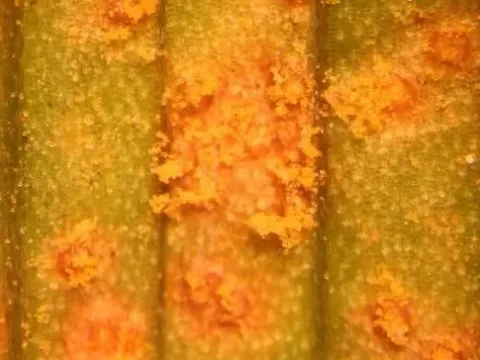
The first sign of rust on freesias is the appearance of small, slightly raised pustules (sori) on the leaves and stems. Initially, these are yellowish-brown or ochre-colored, which is characteristic of the disease.
What the section contains
Freesia rust
As the pathogen matures, the pustules rupture the epidermis, releasing a powdery mass of spores. These spores are easily spread by wind, rain, or irrigation splashing. In severe cases, these spots merge, covering large areas of the foliage.
Infected leaves begin to yellow, curl, and dry out prematurely, which significantly reduces the ornamental value of the plant. If left untreated, the necrotic processes spread to the stems, hindering normal flower bud development.
Visually, the disease can sometimes be confused with other fungal leaf spots, but the presence of a characteristic powdery dust confirms a rust infection. Inspect the entire plant, as pustules can even develop on the flower stalks.
Failure to intervene in time results in the plant losing its vigor, and the corms fail to mature properly, making them unsuitable for planting in the following season.
The causative agent of this disease is the highly specialized fungus Uromyces freesiae, a member of the Basidiomycota phylum. It is an obligate parasite, meaning it can only survive and grow on living host tissues.
The life cycle involves various types of spores, including urediniospores, which facilitate mass infection throughout the growing season. These spores are highly mobile and can travel significant distances by air currents.
The fungus overwinters on plant debris or within the corm tissues if they have not been properly cleaned and treated before storage. In greenhouse environments, the pathogen can persist throughout the entire year.
The infection penetrates the plant tissues through the stomata. Once inside, the fungal mycelium spreads through intercellular spaces, extracting nutrients, which weakens the host and paves the way for secondary necrosis.
The disease development is closely tied to the biological traits of the Uromyces genus, which require specific humidity levels to germinate spores and successfully colonize the freesia epidermis.
The primary factor triggering Freesia rust is high air humidity combined with moderate to warm temperatures, typically ranging from 18 to 24 degrees Celsius.
Water stagnation on the leaf surface, often caused by overhead irrigation or poor greenhouse ventilation, accelerates spore germination. Diurnal temperature fluctuations that cause dew formation also create an ideal environment for infection.
High-density planting restricts air circulation, creating microclimates with localized high humidity even during dry weather. Lack of ventilation is the primary ally of the fungus in protected cultivation.
Improper agronomic practices, such as excessive nitrogen fertilization, make plant tissues softer and more susceptible to fungal penetration. Excess nitrogen effectively lowers the plant's natural resistance.
The infection spreads rapidly when diseased reservoir plants are nearby or through contaminated gardening tools that have not been disinfected after handling infected specimens.
The harm caused by rust is primarily due to a drastic reduction in photosynthesis caused by widespread damage to the leaf canopy. Without sufficient photosynthetic capacity, flowering becomes weak and flower stalks are stunted.
An infected freesia loses its marketability, which is devastating for commercial floriculture. Plants with rust spots on the leaves do not meet quality standards and cannot be sold.
Disrupted physiological processes prevent the corm from accumulating enough storage reserves for the dormant period. This reduces both the multiplication rate and the quality of planting material for the following year.
Systemic infection exhausts the corms, leaving them vulnerable to secondary pathogens such as Fusarium or bacterial rots that exploit the damaged tissues.
In cases of severe epiphytotics, entire collections or production fields can be lost if prompt sanitation and treatment measures are not implemented.
The core of disease management involves preventative applications of systemic and contact fungicides. Copper-based compounds or modern systemic fungicides from the triazole or strobilurin groups are generally most effective.
- Ensure regular ventilation in greenhouses.
- Maintain proper spacing between corms during planting.
- Collect and burn all plant debris in the autumn.
- Treat corms with specialized fungicides before planting.
- Use drip irrigation instead of overhead watering.
Upon detection of initial symptoms, remove and dispose of infected leaves or entire plants immediately to limit the inoculum source. All tools must be thoroughly disinfected with alcohol or similar sanitizing agents.
Implementing crop rotation is vital; avoid planting freesias in the same soil for at least 3–4 years. During this period, the pathogen in the soil will lose viability in the absence of a host.
Applying potassium and phosphorus fertilizers enhances plant immunity, helping them recover faster from fungal pressure. Strong, healthy plants are significantly more resistant to infection than stressed ones.