
Description
Symptoms
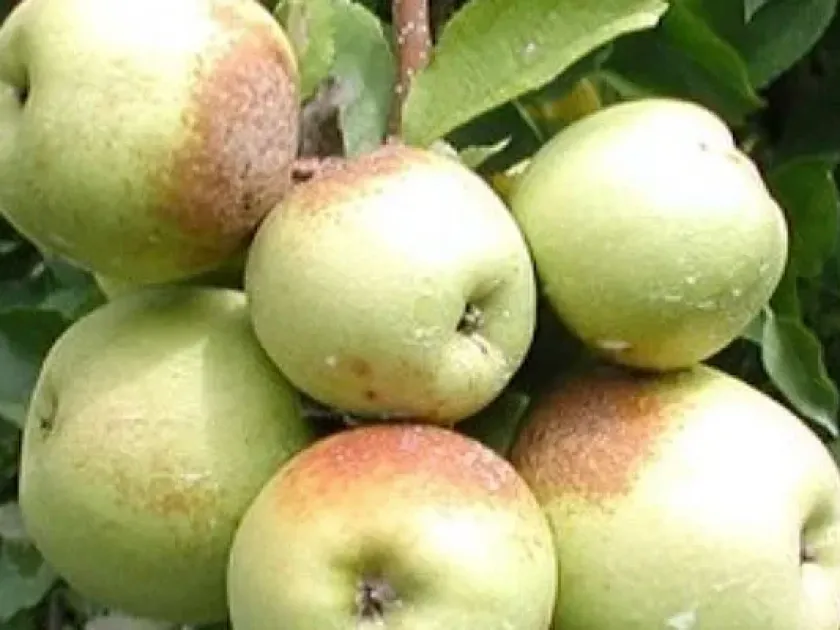
Fruit russeting is identified by the appearance of a corky, net-like, or web-like pattern on the skin of the fruit. Affected areas become rough to the touch and lose their natural glossy sheen.
The color of the skin in affected zones usually turns brown or tan. This layer of corky tissue can cover anything from small patches to the entire surface of the fruit, significantly affecting its visual appeal.
Unlike fungal diseases, russeting does not typically cause the decay of the flesh beneath the skin. However, the affected areas may lose their flexibility, which can lead to micro-cracking if the fruit expands rapidly.
It is important to distinguish russeting from apple scab, as russeting lacks the velvet-like sporulation and does not cause lesions on the foliage or twigs of the tree.
The intensity of the symptoms varies widely depending on the variety. Some apple cultivars are genetically prone to russeting, while others are highly resistant even under adverse conditions.
Pathogen
Fruit russeting is not an infectious disease; it is a physiological disorder of the fruit's epidermis. It does not involve pathogens such as bacteria, fungi, or viruses.
The disorder occurs when the epidermal cells of the young fruit die prematurely and form a protective corky layer. As the fruit grows, this rigid layer cannot expand, resulting in the characteristic cracking and web-like texture.
This biological reaction is the tree's way of protecting its skin against stress factors that damage the outer tissue layer during the early stages of fruit development.
External irritation, including physical damage or contact with certain chemical substances, can trigger this protective mechanism, causing the skin to thicken and become rough.
Research suggests that russeting is a complex interplay between the hormonal balance of the fruit and environmental conditions that affect the elasticity of the epidermal layer.
Conditions for development
Cold, wet weather shortly after full bloom is the most common trigger for russeting. Sudden drops in temperature can cause cell damage to the delicate skin of the young fruitlets.
High humidity and fluctuating temperatures create the perfect environment for the disorder. Rapid changes in water availability, such as heavy rain following a drought, can stress the fruit skin.
Chemical applications, particularly the use of certain pesticides or surfactants during the early stages of fruit development, can cause phytotoxicity, leading to russet formation.
Poor orchard ventilation due to dense canopy growth can increase humidity around the fruit, creating conditions that favor the development of physical skin defects.
The timing of fruit growth is critical; if the skin is stressed during the cell division phase, it is far more likely to develop a corky surface than if the stress occurs later.
Why it matters
The primary impact of russeting is the severe reduction in the commercial value of the crop. Retailers often reject russeted fruit as it does not meet the aesthetic standards for fresh consumption.
Russeted fruit exhibits a higher rate of water loss due to increased transpiration through the rough skin. This leads to premature shriveling during cold storage, reducing shelf life.
The micro-cracks associated with russeting can serve as entry points for secondary pathogens, such as storage rots, which can lead to further losses post-harvest.
Growers often face significant financial losses because a high percentage of their harvest must be redirected to the processing industry, where prices are substantially lower.
While the tree's health is not compromised, the economic viability of growing certain premium varieties can be heavily threatened by a high incidence of russeting in a given year.
Protection
Choosing resistant cultivars is the most effective way to prevent russeting. Selecting varieties well-suited to the local climate significantly reduces the risk of the disorder.
Maintaining a consistent irrigation schedule helps prevent the rapid, uneven fruit growth that often causes the skin to crack and form russeting.
Strictly adhering to chemical application guidelines is essential. Avoiding the use of harsh pesticides or those with high phytotoxic potential during the bloom and fruitlet stages is crucial.
Proper orchard management, including regular pruning, ensures good light penetration and air circulation, which helps stabilize the microclimate around the developing fruit.
In some commercial orchards, the application of plant growth regulators containing gibberellins is used to maintain skin elasticity and prevent the premature formation of corky tissue.
Pathogens and affected parts
Affects crops · 1
Discussion
No discussions yet — be the first.