
Fusarium root rot
Fusarium crassistipitatum
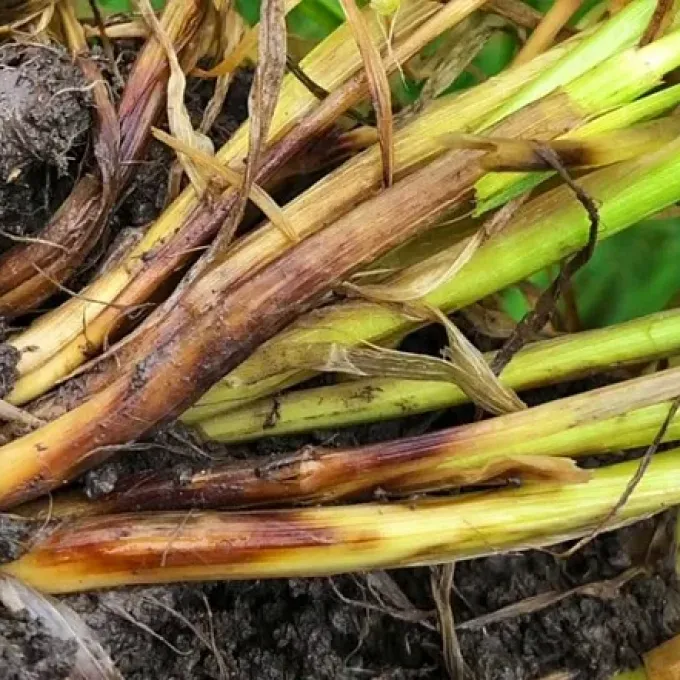
Description
Symptoms
The initial signs typically involve the discoloration of small roots, appearing as brown or dark lesions that expand to the main taproot and crown area.
In humid conditions, a white or pinkish fungal mycelium may develop on the surface of the infected root tissue, serving as a sign of active sporulation.
Visible symptoms on the plant foliage include yellowing of lower leaves, stunted growth, and a general wilting appearance during the peak heat of the day.
The root system becomes weakened and decayed, often losing its physical strength, which makes the plant easy to pull out of the soil during manual inspection.
- Browning of the stem base
- Stunted plant development
- Wilting during daytime
- Root tissue necrosis
Pathogen
The causal agent of this disease is the soil-borne fungus Fusarium crassistipitatum, which is a significant pathogen affecting various crops in agricultural systems globally.
This fungus is known for its persistence in the environment, capable of surviving for long periods in the form of chlamydospores within the soil matrix.
As a systemic pathogen, it primarily infects the root system and the lower stem base, where it disrupts the plant's vascular integrity and nutrient absorption.
Fusarium crassistipitatum can survive on crop residues, making it a difficult pathogen to eradicate once it has become established in a specific field.
It thrives by secreting various enzymes and toxins that facilitate tissue decay, allowing the mycelium to spread throughout the root structure effectively.
Conditions for development
The disease development is highly dependent on soil moisture and temperature, with optimal growth occurring between 20°C and 25°C under high humidity conditions.
Field conditions that lead to poor soil drainage or excessive water accumulation significantly increase the risk of rapid fungal spread through the field.
Short crop rotations that repeatedly host susceptible plant species provide the fungus with a continuous source of energy and a habitat for multiplication.
Injuries to the root system, often caused by soil pests or improper mechanical cultivation practices, act as primary entry points for the fungal infection.
Balanced soil fertility is essential, as nutrient-deficient plants are significantly less able to mount an effective defense response against fungal invasions.
Why it matters
The economic impact of the disease is significant, primarily due to the reduction in plant stand density caused by pre-emergence and post-emergence damping-off.
Plants that survive the infection often exhibit poor vigor and reduced yield potential, producing smaller grains or fruits due to compromised nutrient uptake.
The presence of Fusarium crassistipitatum in a field creates a long-term sanitary risk, requiring years of careful management to reduce the inoculum level.
Quality of the harvest is often reduced, as infected crops may be contaminated with mycotoxins, which pose significant health risks to both humans and livestock.
Farmers face financial losses due to the need for costly fungicide interventions and potentially the total loss of yield in severely infested areas.
Protection
A primary strategy for managing this root rot is the implementation of long-term crop rotation cycles to starve the pathogen by removing host plants from the field.
Seed treatment with effective systemic fungicides is a critical preventive step that protects young seedlings during the most vulnerable stage of their growth.
Proper soil management, including the use of balanced fertilizers and the incorporation of green manure, helps promote soil microbial health and suppresses fungal activity.
Fields should be managed to ensure adequate drainage, as minimizing waterlogged conditions limits the conditions favorable for the fungus to spread.
Regular field scouting and the use of resistant or tolerant crop varieties remain the most sustainable approaches to reducing the incidence and severity of root rot.
Discussion
No discussions yet — be the first.