
Fuligo septica
Fuligo septica
Description
Symptoms
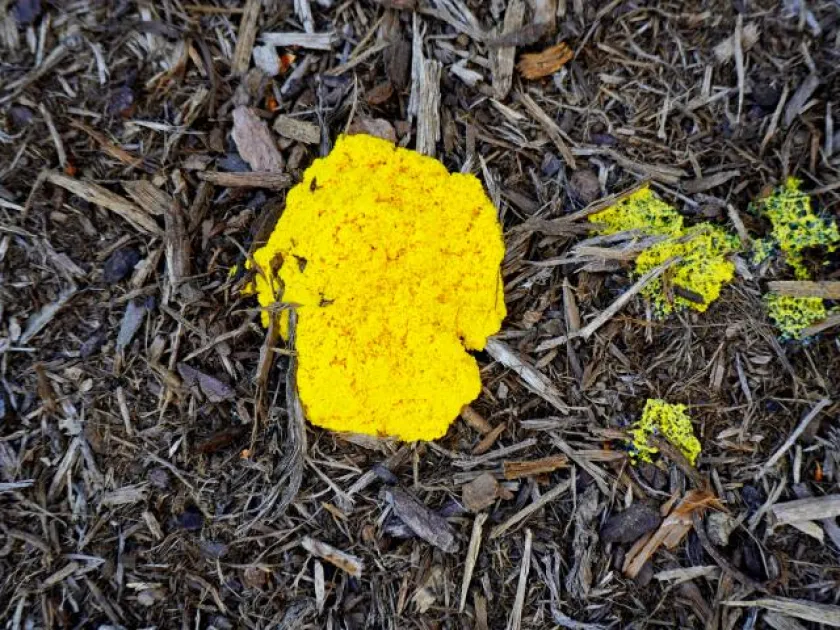
The most recognizable sign of Fuligo septica is the appearance of a spongy, cushion-like mass that is usually bright yellow or orange in color.
Initially, the organism appears as a soft, slimy, and mobile mass that can gradually spread across soil or the lower parts of plant stems.
Over time, the mass hardens into a structure called an aethalium, which eventually turns brown or gray as it matures and prepares to release spores.
The texture of the mature mass is often compared to a scrambled egg, which is why it is colloquially known as "dog vomit slime mold."
When present on plants, it forms a crust that visibly covers leaves and stems, obstructing the appearance and health of the plant.
Pathogen
Fuligo septica is a large, conspicuous slime mold belonging to the group of myxomycetes. It is not a fungus, but a complex eukaryotic organism with unique biological features.
The organism cycles between a mobile amoeboid stage known as a plasmodium and a sedentary fruiting stage that produces spores for reproduction.
It thrives on decaying organic matter, feeding on bacteria, fungi, and other microorganisms found on the surface of substrates like mulch, bark, and soil.
Because it is not a parasitic pathogen in the traditional sense, it does not infect the internal tissues of plants to obtain nutrients.
Its primary biological role in an ecosystem is that of a decomposer, although its presence on cultivated plants is often viewed as a nuisance.
Conditions for development
High levels of moisture and humidity are the primary drivers for the rapid development and expansion of Fuligo septica plasmodia.
The organism prefers shaded areas where organic debris, such as wood chips or leaf litter, remains consistently damp for extended periods.
Warm temperatures, generally between 20°C and 25°C, significantly accelerate the growth rate of this organism in garden environments.
Poor aeration in the garden and overcrowding of plants contribute to a stagnant microclimate that fosters the spread of this myxomycete.
Spores are dispersed easily by wind, splashing rain, and by the movement of insects, animals, or contaminated garden tools across the landscape.
Why it matters
While not an active parasite, Fuligo septica can cause harm by physically covering plant surfaces, which effectively inhibits normal photosynthesis.
The dense layer of the slime mold blocks gas exchange, leading to potential suffocation of the affected leaves or stems.
Constant contact with the moist mass can create a localized environment that encourages the development of secondary bacterial rot or fungal infections.
The aesthetic value of ornamental plants is severely diminished when they are covered by this unsightly, crusty organism.
In cases of significant coverage, young or sensitive plants may show signs of growth stagnation and physiological stress.
Protection
The most effective management strategy is to adjust the gardening practices to ensure proper drainage and reduce excessive surface moisture.
Removing old, damp mulch or excessive rotting organic material from the vicinity of plants will limit the food supply and habitat for the slime mold.
Manual removal of the organism is recommended as soon as it is spotted; simply scraping or washing it off can prevent further spreading.
Applications of copper-based fungicides can act as a surface disinfectant and suppress the further development of the plasmodium stage.
- Prune plants to increase air circulation and reduce humidity near the soil level.
- Maintain clean tools to avoid cross-contamination of spores.
- Avoid over-mulching in areas prone to poor drainage or low airflow.
Discussion
No discussions yet — be the first.