
Black Sigatoka
Pseudocercospora fijiensis
The causative agent of Black Sigatoka is the ascomycete fungus Pseudocercospora fijiensis (formerly Mycosphaerella fijiensis). This pathogen specifically targets the leaves of banana plants, leading to severe defoliation.
What the section contains
Black Sigatoka
The fungus reproduces through both asexual conidia and sexual ascospores. The ascospores, in particular, are wind-dispersed and can travel long distances, facilitating the rapid spread of the disease across entire regions.
Infection occurs when spores land on the underside of the leaf and penetrate through the stomata. Once inside, the fungus develops mycelium in the intercellular spaces, secreting toxins that destroy the leaf tissues.
Black Sigatoka is recognized as the most devastating disease affecting commercial banana production globally. It poses a significant threat to food security and the livelihoods of millions involved in the banana supply chain.
While various banana cultivars exhibit different levels of susceptibility, the most widely exported varieties, such as the Cavendish group, are highly susceptible and require intensive management to survive.
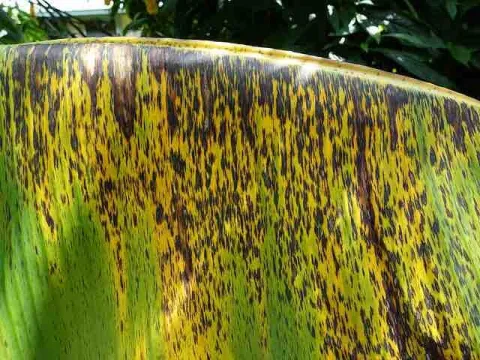
Early symptoms appear as minute, reddish-brown specks on the underside of young leaves. These spots gradually lengthen into narrow, dark streaks that align with the leaf veins.
As the disease progresses, the streaks widen and turn into dark brown or black elliptical spots. Each spot is typically surrounded by a yellow halo, which is a symptom of chlorosis caused by the fungus's toxins.
In advanced stages, these spots coalesce, creating large necrotic areas that lead to the rapid death of the leaf tissue. This significantly reduces the photosynthetic area of the plant.
A diagnostic characteristic is the presence of a dark, velvety layer on the underside of the necrotic spots, which consists of the fungus's reproductive structures producing new generations of spores.
- Small reddish-brown spots on the underside of leaves.
- Elliptical black lesions surrounded by yellow halos.
- Extensive necrosis and premature leaf senescence.
Black Sigatoka thrives in hot and humid conditions. High levels of moisture, such as rain or heavy dew, are essential for the germination of fungal spores on the leaf surface.
The optimal temperature range for the development of Pseudocercospora fijiensis is between 23°C and 28°C. These conditions allow the fungus to complete its life cycle rapidly, often in just a few weeks.
High-density planting that restricts airflow leads to higher relative humidity within the canopy, creating a perfect environment for the pathogen to spread quickly between adjacent plants.
Mechanical injuries to the leaves, whether caused by insects or field operations, provide additional entry points for the fungus, further exacerbating the severity of the infection.
Rain splash is the primary method of short-distance dissemination within a plantation, washing spores from upper leaves onto lower ones, which sustains the epidemic throughout the growing season.
The primary impact of Black Sigatoka is the massive reduction in the photosynthetic capacity of the banana plant. As a result, the plant cannot produce enough energy to support the growth of large, healthy bunches.
Affected plants yield smaller fruits with poor quality, making them commercially unviable. This leads to substantial financial losses for growers who rely on high-quality exports.
The disease also causes premature ripening of the fruit on the plant, which prevents the bananas from being transported over long distances, as they spoil before reaching the consumer.
The high cost of intensive fungicide applications to manage the disease increases production costs, often accounting for a significant portion of the total operating budget of banana farms.
Long-term infestation weakens the plant's overall vigor and root system, resulting in poor yields and reduced longevity of the banana plantation itself.
Fungicide application is the most widely used method to manage Black Sigatoka. Farmers must rotate different classes of fungicides to prevent the fungus from developing resistance to chemical treatments.
Deleafing, the process of removing and destroying severely infected leaves, is a critical cultural practice that significantly reduces the inoculum level in the plantation.
Proper field management, including optimal plant spacing and weeding, improves airflow and reduces humidity, which helps to slow down the infection rate and makes the environment less favorable for the fungus.
Breeding programs focused on developing resistant banana varieties are essential for the long-term sustainability of the industry and for reducing reliance on chemical control methods.
Strict phytosanitary regulations are essential for preventing the introduction of the pathogen into disease-free areas, protecting national and regional banana production from major outbreaks.