
Black rot of cucurbits
Diaporthe cucurbitae
Description
Symptoms
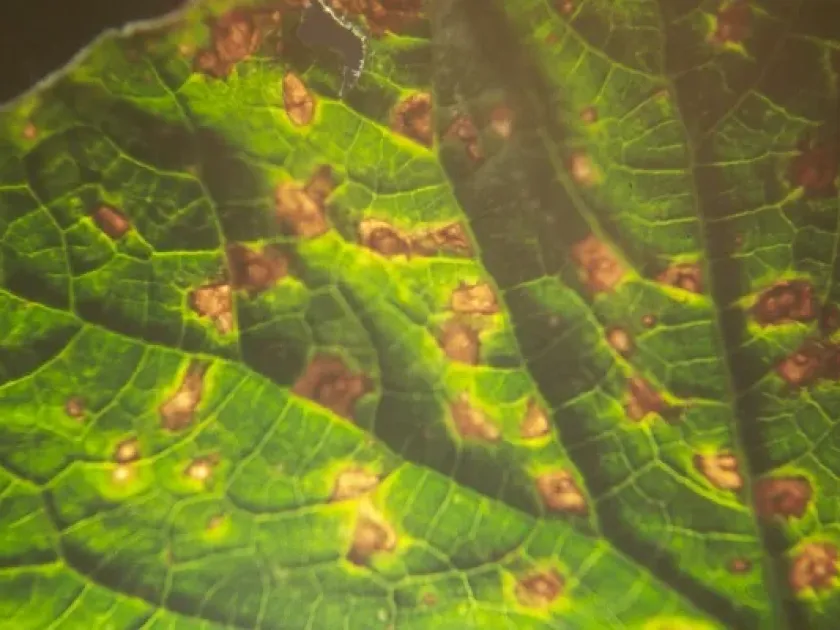
Early symptoms appear as water-soaked spots on leaves and stems, which gradually enlarge and turn dark brown or black.
Stem cankers often develop at the base of the plant, causing girdling that leads to wilting and death of the entire plant or specific branches.
Fruit symptoms are particularly destructive, manifesting as circular, sunken, dark lesions that eventually cover large portions of the rind.
The presence of minute, black pycnidia scattered across the surface of the lesions is a hallmark diagnostic sign of Diaporthe cucurbitae.
Under humid conditions, infected fruit tissues become soft, watery, and eventually collapse, often covered in a fungal mass.
Pathogen
The disease is caused by the fungus Diaporthe cucurbitae (anamorphic state Phomopsis cucurbitae), which is a serious pathogen of various cucurbit crops.
The fungus produces spores in pycnidia, which serve as the primary inoculum for spreading the infection during favorable weather conditions.
This pathogen persists in soil debris and on infected plant parts, allowing it to survive through winter and initiate new infections in the spring.
Seeds can also act as carriers for the fungus, leading to systemic infections or early seedling death when contaminated seeds are planted.
The biological cycle of the fungus is highly adaptive, allowing it to thrive as a parasite on living tissues and as a saprophyte on decaying organic matter.
Conditions for development
The development of black rot is highly dependent on prolonged periods of high humidity, such as frequent rainfall, fog, or heavy morning dew.
Temperatures ranging from 20°C to 28°C provide the optimal environment for spore germination and colonization of the host plant tissue.
Poor ventilation within the field, especially in greenhouses or closely spaced plantings, significantly accelerates the spread of the pathogen.
Wounds caused by insects, mechanical damage during cultivation, or hail make the plant much more susceptible to infection.
A history of continuous cropping with susceptible species leads to a high buildup of the pathogen in the soil, increasing the disease pressure each year.
Why it matters
The economic impact of black rot is severe, resulting in significant losses during both the growing season and the post-harvest storage period.
Young seedlings may be completely destroyed by the disease, leading to poor stand establishment and the need for costly replanting.
Infected fruits lose all market value and are highly susceptible to secondary bacterial pathogens, which further rot the produce.
Premature leaf drop reduces the photosynthetic capacity of the plants, resulting in stunted fruit development and decreased overall yields.
Control costs escalate due to the requirement for repeated fungicide applications and the loss of produce that could have been sold or processed.
Protection
Implementing a long-term crop rotation strategy is the most effective cultural practice to reduce soil-borne inoculum levels.
Sanitation is crucial; all crop residues should be removed and destroyed or buried deeply after harvest to eliminate fungal survival sites.
Selection of certified, disease-free seeds and performing seed treatments can prevent the introduction of the fungus into the field.
Regular monitoring of fields allows for early detection of symptoms, which is essential for successful intervention with chemical or biological fungicides.
- Use of disease-resistant cultivars
- Improvement of soil drainage
- Maintenance of proper plant spacing
- Avoiding overhead irrigation to keep leaves dry
Discussion
No discussions yet — be the first.