
Black rot of carrot
Alternaria radicina
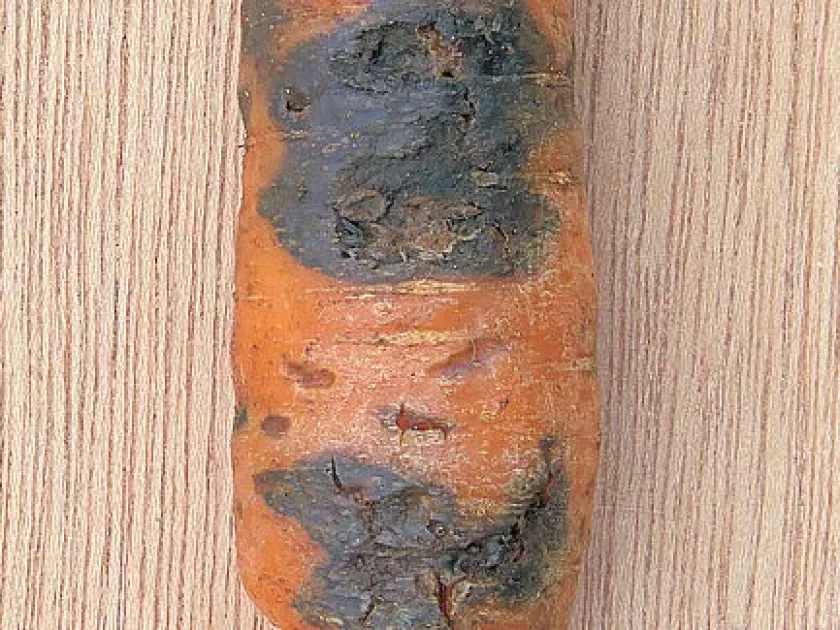
Description
Symptoms
The first symptoms appear as black, dry, sunken spots on the roots. These lesions often have distinct margins, and the tissue beneath the spot turns dark brown or coal-black, becoming firm and dry as the infection progresses.
In young seedlings, the disease manifests as black leg, where the base of the stem turns black and shrivels, leading to lodging and the eventual death of the sprouts. Under high humidity, lesions may be covered by an olive-black velvety layer of fungal spores.
During storage, localized lesions often coalesce, covering a large surface area of the carrot root. Unlike soft rot, the tissues affected by Alternaria radicina remain firm but may eventually develop crater-like depressions due to internal tissue dehydration.
In the field, leaves of adult plants may develop small brown spots surrounded by a yellow halo. In cases of severe infection, the foliage prematurely turns yellow, withers, and dies, which directly impacts the quality and weight of the harvest.
Early diagnosis is often difficult because the disease can remain latent until the roots are placed in storage. Internal tissues may appear healthy at harvest, only for the fungus to trigger rapid decay once the roots are placed in confined, humid storage environments.
Pathogen
The causal agent of this disease is the imperfect fungus Alternaria radicina (synonym Stemphylium radicinum). This pathogen is a member of the Hyphomycetes family and is highly resilient, capable of surviving for long periods in soil, plant debris, and within seeds.
The fungus produces conidiophores with dark multicellular conidia that are easily dispersed by wind, rain splashes, and insects. In the soil, the pathogen can remain viable for 3 to 5 years, creating a persistent infection source for subsequent crop rotations.
A critical biological characteristic of the pathogen is its ability to develop across a wide temperature range. The fungal mycelium remains viable even at near-freezing temperatures, which makes it a major concern during the winter storage of carrots.
The infection enters carrot tissues either through mechanical injuries to the skin or directly through the intact epidermis. The aggressiveness of the fungus increases significantly when the plant is stressed or weakened by poor cultivation practices.
Black rot primarily affects Apiaceae crops: carrots, parsley, celery, and parsnips. Among these, carrots suffer the most significant economic losses, ranging from seedling damping-off in the field to severe root decay in storage facilities.
Conditions for development
The primary factor for disease spread is high humidity combined with moderate temperatures (optimum +18...+25°C). Rainfall late in the growing season significantly increases the risk of root infection before harvest.
Failure to implement crop rotation is the main condition for pathogen buildup in the soil. Repeatedly growing carrots in the same field for more than two consecutive years leads to epiphytotic development of the fungus.
Poor soil aeration and waterlogging facilitate the germination of fungal conidia. Furthermore, mechanical injuries caused by weeding, inter-row cultivation, or rough harvesting methods provide easy entry points for the pathogen.
During storage, the risk increases when temperature control is neglected. Temperatures above +2°C in storage facilities create ideal conditions for the slow but steady progression of black rot on previously healthy carrots.
Inadequate ventilation leads to condensation on the carrot surface, which provides the perfect moisture level for spore germination. The use of contaminated seeds also serves as a primary source of infection from the very moment of seedling emergence.
Why it matters
The main economic impact is the loss of commercial quality and significant yield reduction. A large percentage of roots may be rejected during sorting due to deep-seated tissue decay caused by the black rot fungus.
When seedlings are attacked, the stand density decreases, requiring replanting and significantly increasing production costs. Diseased seedlings are generally untreatable and must be removed to prevent further spread.
In storage facilities, black rot can cause losses ranging from 20% to 50% of the entire crop. Even visually healthy carrots that have been in contact with infected ones can harbor latent infections that appear during distribution or retail.
The presence of fungal spores on seeds reduces germination energy and overall seed viability. This leads to uneven stands, complicating agronomic maintenance and reducing the overall profitability of the vegetable farming operation.
The disease negatively affects the flavor and texture of the carrots, making them unsuitable for long-distance transport or industrial processing. Affected areas often become entry points for secondary bacterial soft rot, which can destroy entire batches of produce.
Protection
The foundation of effective management is strict crop rotation, with a minimum 4-5 year gap between carrot crops. The best preceding crops include tomatoes, cucumbers, cabbage, or cereal grains.
It is essential to use only certified, disease-free seeds that have undergone mandatory fungicide treatment. This step is crucial for eradicating the pathogen located on the seed surface or within the seed coat.
Good agricultural practices, such as deep fall plowing, help bury crop debris where the fungus overwinters, accelerating decomposition and significantly lowering the primary inoculum level in the field.
Timely harvest during dry weather and careful handling during transport minimize root injuries. Before storage, it is vital to meticulously cull any damaged or diseased roots and ensure that the storage facility is thoroughly disinfected.
During the growing season, if symptoms appear, application of systemic or contact fungicides—such as copper-based, azoles, or strobilurins—may be necessary. Always follow label dosage and pre-harvest interval (PHI) requirements to ensure safety.
Discussion
No discussions yet — be the first.