
Description
Symptoms
The first visual sign of infestation in trees, particularly Douglas fir, is a fading of needles, which gradually turn yellowish or reddish-brown. This color change often occurs progressively, starting from the crown or individual branches, indicating a disruption in nutrient uptake.
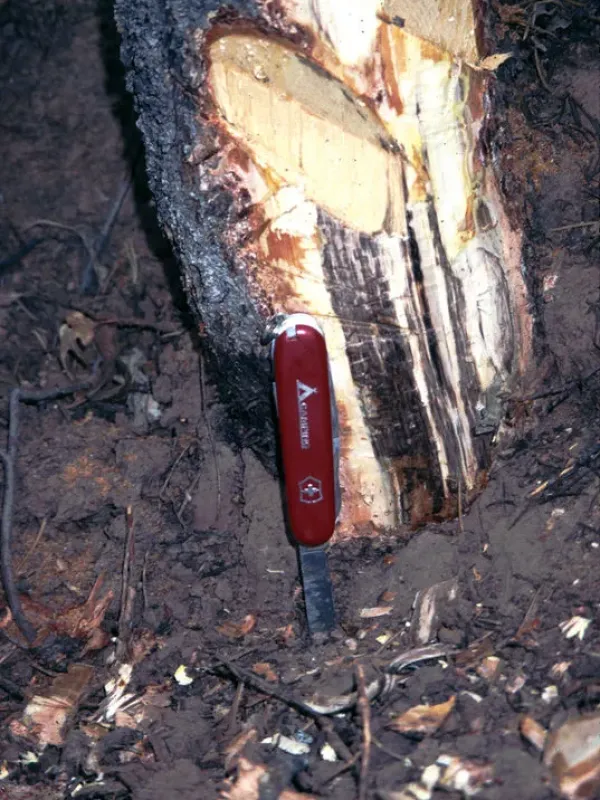
A second characteristic symptom is revealed during inspection of the root system and the root collar. Dark brown or almost black necrotic patches and streaks appear under the bark of infected trees, penetrating deep into the root wood.
When the bark is removed from the roots or the base of the trunk, resinous exudates mixed with the fungus mycelium are clearly visible. The wood in the affected area becomes dark, brittle, and often emits a specific rotting odor.
In affected mature trees, significant thinning of the canopy is often observed due to premature needle drop. Diseased specimens become highly susceptible to secondary pests, such as bark beetles, which rapidly colonize the weakened plants.
In advanced cases, the tree stops growing in height and diameter, leading to its eventual death. A cluster of infected trees often forms a characteristic "gap" in the stand, where the decline spreads centrifugally.
Pathogen
The causative agent of the disease is the ascomycete fungus Leptographium wageneri. This pathogen specializes in attacking the root systems of coniferous species, causing the clogging of vascular tissues.
The fungus's life cycle involves the production of conidia, which are dispersed by soil-dwelling insects, such as weevils, that damage roots. Tissue damage serves as an "entry point" for the infection.
The fungus can persist for long periods in the remains of roots of dead trees in the soil. This makes it extremely dangerous for future plantings on the same sites where infected specimens previously grew.
The biology of the pathogen is closely linked to the development of mycelium within root tracheids, which prevents normal upward water flow. This leads to physiological drought of the plant even when soil moisture is adequate.
The fungus has several specialized forms (varieties), each adapted to specific host species, which determines the high specificity of the disease's spread in forest ecosystems.
Conditions for development
The development of the infection is favored by high planting density, which facilitates the transmission of the fungus from diseased to healthy trees through root grafts. In such conditions, the fungus spreads through the stand much faster than in widely spaced stands.
A favorable factor for infection is the presence of insect vectors in the soil. Their activity depends directly on soil temperature and humidity, which also influence the rate at which the fungus colonizes the roots.
The disease develops more intensively in weakened trees growing in unfavorable soil and climatic conditions. Stress caused by drought or excessive soil compaction reduces the natural immunity of the Douglas fir.
The spread of the pathogen in the forest often occurs in pockets. A key role in this process is played by contact transmission of the mycelium through physical contact between the roots of adjacent trees in the root zone.
The seasonality of the infection is most pronounced during periods of active root growth and vegetative development, when the fungus has access to fresh tissue through mechanical injuries to the root system.
Why it matters
Black stain root disease is one of the most dangerous diseases for Douglas fir and other conifer species. It is capable of destroying entire sections of forest stands and nurseries in a short period of time.
The main economic damage is associated with the loss of merchantable timber and the need to clear-cut infected areas. This leads to the fragmentation of forest cover and the need for costly restoration efforts.
Fungal infection leads to irreversible disruption of physiological processes in the tree. Even partial damage to the root system renders the tree unsuitable for further use, as the wood loses its technical properties.
Stands affected by this fungus lose their capacity for normal regeneration. The soil in such areas remains contaminated with spores and mycelium for many years, precluding the planting of susceptible species.
In forest parks and gardens, the disease leads to a loss of ornamental value, turning trees into a source of infection for healthy plants located within the pathogen's reach.
Protection
The primary method of control is the strict adherence to sanitary regulations in the forest. Infected trees must be timely removed, including their root systems, to prevent further spread of the fungus.
To prevent the infection of new plantings, careful culling of seedlings in nurseries is recommended. Planting material with any signs of root damage should never be used.
Creating mixed-species stands is an effective biological method of prevention. Using resistant tree species that are not hosts to Leptographium wageneri prevents the transmission of the infection through the roots.
In high-risk zones, it is recommended to conduct soil chemical treatments or to minimize root system damage during agricultural activities (cultivation, weeding).
- Monitoring of root health.
- Stump removal to break root contact points.
- Application of fungicides in nurseries at the first signs of disease.
- Planting resistant tree species.
Pathogens and affected parts
Affects crops · 1
Discussion
No discussions yet — be the first.