
Black witch's butter
Exidia glandulosa
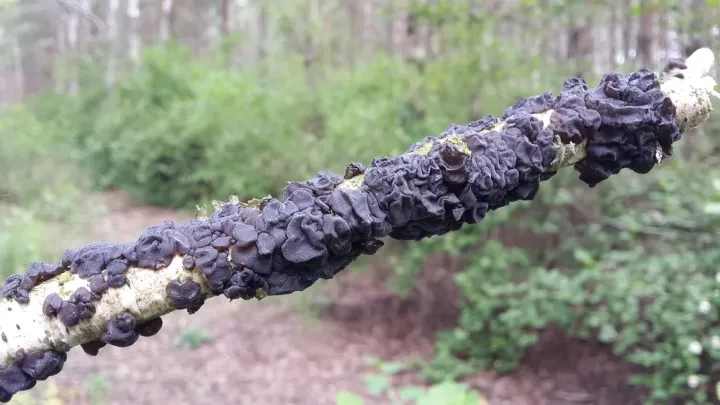
Description
Symptoms
The primary sign of Exidia glandulosa is the presence of black, jelly-like growths on the bark of deciduous trees, particularly oaks, alders, and birches.
In wet conditions, these growths appear as shiny, black, wavy, or folded masses. They are soft to the touch and can sometimes merge into larger colonies covering significant areas of the dead wood.
During dry weather, the fruiting bodies dehydrate and look like small, inconspicuous black patches or scabs on the bark. They are easily overlooked by casual observers when the air is dry.
The fungus is most frequently spotted in cracks and fissures of the bark where moisture tends to persist for longer periods. These areas provide the necessary hydration for the fungus to expand.
While the surface of the bark may appear dark and damp, the underlying wood usually shows signs of structural decay, consistent with the saprophytic activity of the fungus.
Pathogen
Exidia glandulosa, commonly known as black witch's butter, is a saprophytic fungus belonging to the Auriculariales order. It is crucial to note that this fungus is a decomposer and not a primary pathogen for living plants.
The mycelium of this fungus thrives exclusively on dead wood, breaking down complex organic compounds like lignin and cellulose. It lacks the ability to penetrate healthy, living bark or active vascular systems of trees.
The fruiting bodies are gelatinous, black, and often clustered. Their unique texture allows them to swell significantly during wet weather, while they shrink and harden into dark crusts during dry conditions.
In the natural environment, Exidia glandulosa plays a positive role by accelerating the decomposition of fallen branches and dead wood, which helps return nutrients back into the soil cycle.
From an agronomic perspective, observing this fungus on a tree is a diagnostic indicator that the wood is already dead or highly necrotic, rather than a cause of the tree's poor condition.
Conditions for development
High humidity and cool temperatures are the primary drivers for the development of black witch's butter. It is most active during the autumn, winter, and early spring months.
The fungus requires a damp surface to produce its fruiting bodies. Frequent rainfall, morning dew, and fog provide the optimal environment for the mycelium to push through the bark and form the jelly-like masses.
Shaded, north-facing sides of trees that do not dry out quickly are preferred by the fungus. Lack of proper airflow in dense tree canopies can also foster the necessary dampness for its growth.
The presence of dead wood substrate is the absolute requirement for colonization. Without a source of decaying organic matter, the fungus cannot establish or spread within the garden area.
Temperatures near freezing do not inhibit the fungus; rather, they can be conducive to its growth, as the fungus is well-adapted to the damp and cold conditions of the dormant season.
Why it matters
Exidia glandulosa poses no harm to healthy, vigorous trees. It does not possess the enzymes required to infect live, healthy plant tissue, making it harmless to the productive parts of a garden.
The only indirect impact is the rapid decay of existing dead branches. If a tree is already in decline, the presence of the fungus might suggest an underlying issue that needs to be addressed.
It acts as a visual warning signal for the grower. If this fungus is widespread, it is highly likely that the tree or its branches have been dead for some time, necessitating sanitation.
It does not affect fruit quality, yield, or overall tree longevity. The fungus is simply a scavenger performing its ecological duty in the garden ecosystem.
Gardeners should not treat this as a disease to be cured with fungicides, as it is a natural component of wood degradation and does not threaten the tree's health directly.
Protection
The most effective management strategy is regular sanitation. Pruning and removing dead, diseased, or broken branches eliminate the food source for the fungus.
Proper garden maintenance, including regular feeding and adequate watering, helps maintain the overall immunity of the trees, preventing the accumulation of dead wood that could attract saprophytes.
Always apply a wound sealant or an appropriate antiseptic paste to fresh pruning cuts to ensure that no opportunistic fungi or bacteria can colonize the exposed wood.
Prune trees to improve crown ventilation and sunlight penetration. A well-lit and airy canopy dries out faster after rainfall, which makes the bark surface unsuitable for fungal growth.
Collect and dispose of all dead branch material by burning or composting it away from the trees to minimize the presence of fungal spores in the immediate vicinity.
Discussion
No discussions yet — be the first.