
Black rot of apple
Diplodia malorum
Black rot is caused by the fungus Diplodia malorum (also known as Botryosphaeria obtusa). This pathogen affects bark, leaves, and fruit, acting as both a parasite on living tissue and a saprophyte on dead wood.
What the section contains
Black rot of apple
The fungus overwinters as mycelium and pycnidia within infected wood, twigs, and mummified fruits left on trees or the ground. In spring, spores are released during wet weather and disseminated by rain, wind, and insects.
Infection primarily occurs through entry points such as pruning wounds, frost cracks, sunscald injuries, and mechanical damage to the bark. Once inside, the fungus colonizes the cambium and xylem tissues.
The incubation period varies depending on weather conditions and the host's vigor. Stressed or weakened trees are significantly more susceptible to successful fungal colonization than healthy ones.
Because the pathogen can persist on decaying plant matter for extended periods, it establishes a long-term reservoir for infection within the orchard environment, complicating eradication efforts.
The disease manifests as sunken, reddish-brown to dark lesions on branches and trunks. As the infection progresses, the bark becomes brittle, cracks, and appears charred, often referred to as a "frog-eye" look.
Numerous small, black, pimple-like structures called pycnidia appear on the surface of the dead bark. These are reproductive bodies that produce spores for the next generation of the fungus.
Leaf infection typically presents as circular spots with a dark margin and a lighter center, often described as "frog-eye leaf spot." Severe infections can lead to premature leaf drop, weakening the tree's photosynthetic capacity.
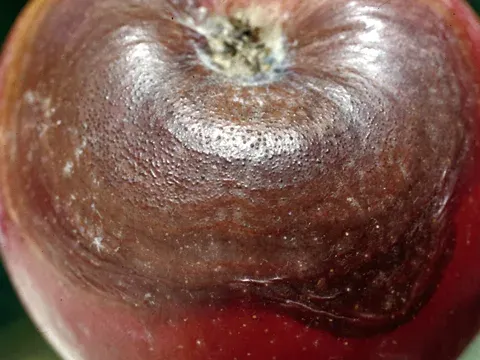
Fruit symptoms involve firm, brown rot that starts near the blossom end. Eventually, the entire fruit decays, turns black, and becomes a shriveled "mummy" that often remains attached to the branch.
Cankers on the main trunk can enlarge and girdle the tree. When the trunk is girdled, the transport of water and nutrients is severed, resulting in wilting, branch dieback, and eventually the death of the entire tree.
Black rot development is strongly favored by warm, humid weather. Spore release and germination are most aggressive during periods of frequent rainfall and temperatures between 20°C and 28°C.
Poor orchard hygiene significantly contributes to disease pressure. Failing to remove dead wood or diseased fruit provides a continuous source of inoculum that can infect new growth every season.
Environmental stress, such as winter injury or sunscald, is a major factor in disease susceptibility. These injuries provide the necessary entry wounds for the fungus to bypass the tree's natural defenses.
Orchards with high density and poor air circulation maintain high humidity within the canopy, creating an optimal microclimate for fungal infection and secondary spread.
Nutritional deficiencies, particularly those affecting the tree's overall vigor, reduce the natural defensive barriers of the bark, making the tree more vulnerable to Diplodia malorum invasion.
Black rot is a major limiting factor in apple production, capable of causing the rapid decline and death of mature, productive apple trees within a few seasons.
The disease causes direct financial losses by rotting fruit on the tree, rendering it completely unmarketable and unsuitable for processing or storage.
Structural damage is a significant concern. Cankers weaken the scaffold branches and trunks, making them prone to snapping under heavy crop loads or during windstorms, leading to permanent tree loss.
The insidious nature of the disease, often hidden within the canopy or behind the bark, means that significant damage can occur before the grower realizes the severity of the infection.
Chronic infection drains the tree’s energy reserves, leading to stunted growth, reduced yields, and increased susceptibility to other pests and opportunistic diseases.
Sanitation is the most critical control measure. Growers must prune out and burn all infected wood, ensuring cuts are made into healthy tissue and tools are sanitized between cuts.
To prevent infection, protect trunks from sunscald by applying white latex paint. This practice minimizes temperature fluctuations on the bark, preventing the cracking that invites fungal entry.
Fungicide applications, specifically copper-based compounds, are effective when applied at the green tip stage and during bloom to protect new growth from spore colonization.
- Regularly remove mummified fruit from the orchard.
- Maintain optimal tree vigor through balanced fertilization and irrigation.
- Avoid heavy mechanical pruning during wet, humid weather.
- Treat established cankers by scraping dead tissue and applying wound sealants.
Long-term management focuses on monitoring the orchard for early symptoms and maintaining strict hygiene practices to break the fungal life cycle and prevent future outbreaks.