
Black spot ascochyta
Ascochyta nigripycnidia
Description
Symptoms
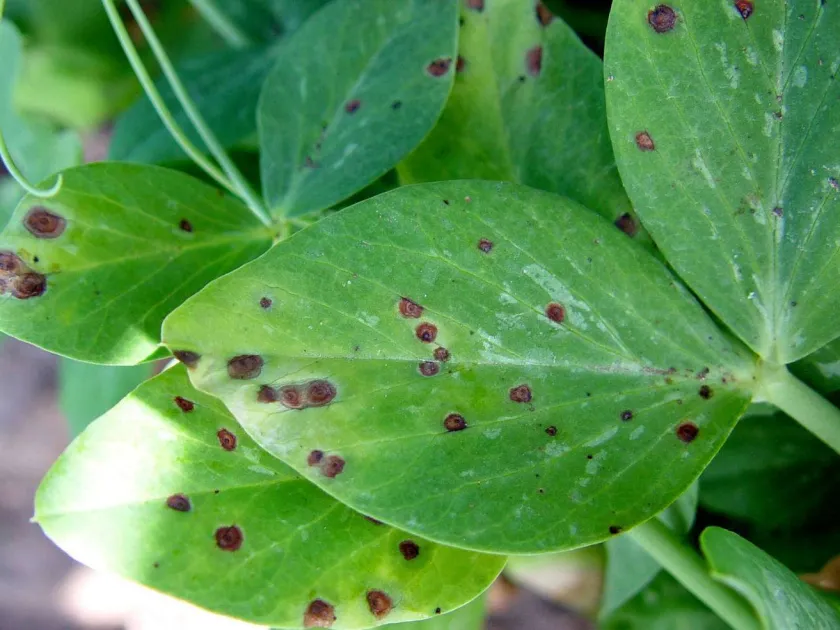
The primary symptoms appear as small, dark, or black spots on leaves, stems, and pods. These spots are often clearly defined and may have a lighter margin, which helps in field identification.
A distinctive feature of this disease is the appearance of tiny black dots in the center of the spots. These are the pycnidia of the fungus, which are clearly visible to the naked eye or with a magnifying glass.
On stems, the spots can develop into elongated, sunken lesions. If these lesions grow large enough, they can girdle the stem, causing the plant to weaken, break, or die prematurely.
Leaves affected by the disease may show yellowing (chlorosis) followed by necrosis. Extensive leaf damage significantly reduces the plant's photosynthetic capacity, stunting its growth.
Infection of the pods is particularly dangerous as it allows the fungus to penetrate the seeds. Such seeds often become shriveled, discolored, and carry the inoculum for the next crop cycle.
Pathogen
The causative agent of the disease is the imperfect fungus Ascochyta nigripycnidia, belonging to the class Coelomycetes. This pathogen is specialized in infecting various leguminous plants and is highly adapted to persistence in agricultural ecosystems.
The fungus survives in the soil and on crop residues in the form of pycnidia, which are small, dark fruiting bodies. These structures protect the fungus from environmental stress during off-seasons.
The life cycle is triggered by moisture. When wet, pycnidia release spores (pycnospores) that spread via rain splashes and wind to reach healthy plant tissues. High humidity is a key factor for the successful spread of the pathogen.
Seed transmission is another significant pathway. If seeds are harvested from infected crops, the pathogen remains dormant until conditions become favorable, allowing the fungus to infect seedlings immediately upon germination.
The biological success of Ascochyta nigripycnidia lies in its ability to quickly produce multiple generations of spores within a single growing season, leading to rapid disease escalation in favorable climates.
Conditions for development
High moisture and frequent rainfall are the most critical conditions for the development of Ascochyta nigripycnidia. Free water on plant surfaces is necessary for spores to germinate and penetrate the tissue.
The fungus thrives in moderate temperature ranges, typically between 18 and 25 degrees Celsius. These conditions are common during the active growth phase of many legumes, making them highly vulnerable.
Dense crop stands inhibit airflow, which keeps the leaf surface wet for longer periods, thereby providing a perfect environment for the fungus to establish and spread.
Poor soil management, which leaves large amounts of infected crop debris on the surface, provides a direct source of infection for the upcoming season.
Low plant vigor caused by nutrient deficiencies, particularly potassium and phosphorus, reduces the plant's innate resistance and makes it easier for the pathogen to cause severe infection.
Why it matters
Black spot ascochyta causes significant economic losses by reducing both the quality and the quantity of the harvested product. Yield losses can be substantial, especially in wet years.
The disease impairs the physiological functions of the plant, leading to stunted growth, reduced seed filling, and lower protein content in the grains, which lowers their market value.
Infected seeds have significantly lower germination rates, leading to gaps in the field during the next season, which necessitates replanting and increases production costs.
The necessity for chemical fungicide applications adds to the cost of production and requires complex management strategies to ensure food safety and environmental protection.
The widespread presence of the pathogen on a farm can limit the crop choices for future rotations, necessitating long-term field management plans to lower the inoculum level.
Protection
The foundation of effective control is a sound crop rotation policy. Avoiding the cultivation of the same leguminous crop on the same field for at least 3-4 years significantly reduces the risk of infection.
Only healthy, certified, and fungicide-treated seeds should be used for sowing. This is the most efficient way to prevent the primary introduction of the pathogen into clean fields.
- Deep plowing or soil incorporation of crop residues to promote decomposition.
- Selection of resistant or tolerant varieties of leguminous crops.
- Application of appropriate fungicides when the first symptoms appear.
- Effective weed control to eliminate alternative hosts for the fungus.
- Monitoring the field density to ensure good ventilation and reduce humidity.
Regular monitoring of the crops during the growing season allows for early detection of the disease. Timely interventions with fungicides can stop the spread of the pathogen before it reaches epidemic levels.
Providing balanced fertilization supports overall plant health, making the crop more robust and better capable of withstanding potential fungal challenges.
Discussion
No discussions yet — be the first.