
Black Trumpet
Craterellus fallax
Description
Symptoms
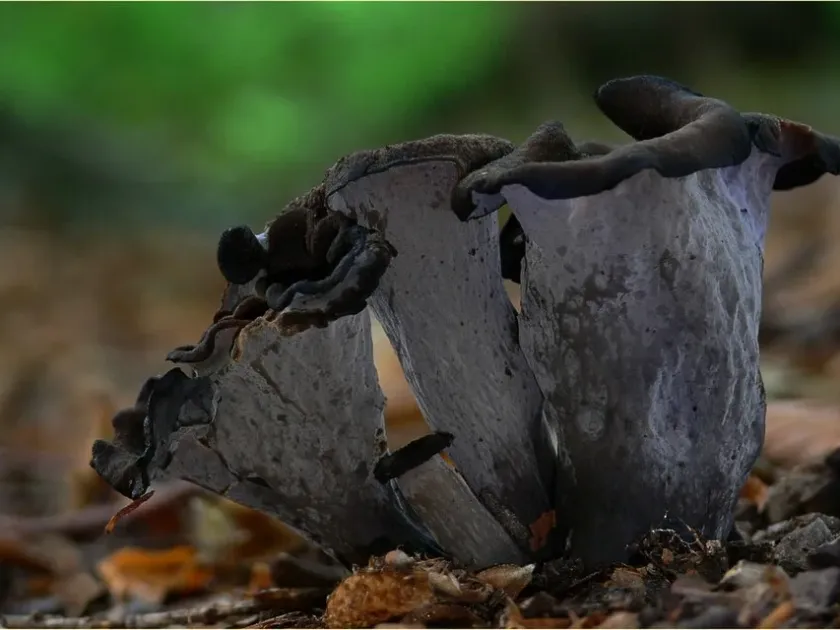
The fungus produces a funnel-shaped, trumpet-like fruiting body that is hollow from the top down to the base.
The color is typically dark gray, brownish-black, or nearly black, especially when saturated with moisture.
The texture of the cap is thin and often possesses wavy, lobed, or irregular margins that give it a crumpled appearance.
The fertile spore-bearing surface is located on the exterior of the trumpet and is smooth or slightly wrinkled.
They are rarely found alone, usually appearing in dense, crowded clusters tucked into thick leaf litter.
Pathogen
Craterellus fallax, commonly known as the Black Trumpet, is not a plant pathogen and does not cause agricultural diseases.
In biological terms, this organism is a saprotrophic and mycorrhizal fungus that plays a vital role in woodland ecosystems.
It maintains a symbiotic relationship with specific tree species, enhancing nutrient uptake rather than attacking the plant host.
There is no evidence in scientific literature classifying this fungus as a cause of necrosis, rot, or any plant illness.
Labeling this species as a plant disease is a taxonomic error that ignores its actual ecological significance as a symbiont.
Conditions for development
This mushroom thrives in moist, shaded environments, particularly in deciduous forests rich in leaf litter and humus.
It requires consistent humidity and cool temperatures, typically emerging during late summer and autumn months.
Mycorrhizal association with host trees like oak or beech is essential for the colonization of a specific site.
Optimal growth occurs in well-drained, nutrient-rich soils that support the development of complex soil fungal networks.
Spore dispersal is facilitated by wind currents, which allows the species to spread efficiently across forest floors.
Why it matters
This fungus causes no damage to crops, vegetables, or ornamental plants, making it a non-harmful organism.
It acts as a decomposer, breaking down complex organic matter and recycling nutrients back into the soil.
Unlike parasitic fungi that drain resources from plants, the Black Trumpet contributes to a healthy soil structure.
Its presence is actually a positive indicator of ecological health, reflecting a diverse and active fungal community.
No economic losses in agriculture are associated with this species, confirming its benign status in farm environments.
Protection
No control measures are necessary for this mushroom, as it does not negatively impact cultivated plants.
If the growth of fruiting bodies is problematic in a domestic garden, they can be manually removed or plucked.
Fungicides should never be applied for this organism, as it is harmless and ecologically important for forest soils.
Standard gardening practices, such as maintaining proper aeration and soil health, are sufficient for general management.
Conservation of natural habitats is recommended to ensure the continued survival of this beneficial woodland species.
Discussion
No discussions yet — be the first.