
Black root stain
Grosmannia wageneri
Description
Symptoms
The primary symptom is the gradual yellowing of needles, often referred to as chlorosis, which eventually leads to the browning and casting of the foliage across the entire crown.
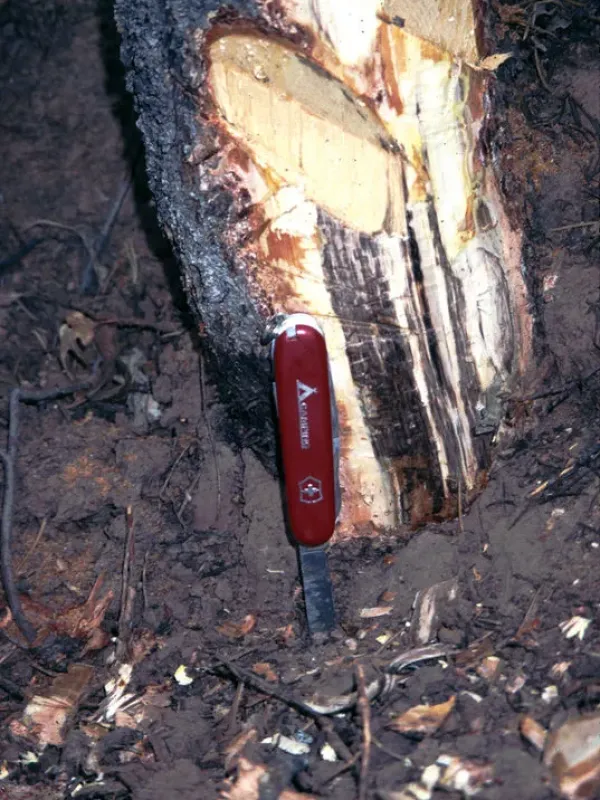
A diagnostic sign is the presence of black or dark brown staining in the wood of the roots and the root collar, visible upon removing the bark or cutting into the wood.
Infected trees exhibit significantly reduced growth, with shortened internodes and a sparse crown, indicating a decline in the overall vigor and physiological health of the tree.
While the tree may initially appear healthy, internal damage to the vascular system progresses slowly until the tree reaches a point where it can no longer support its water requirements.
In advanced stages of the disease, roots become brittle and necrotic, leading to increased susceptibility to windthrow and secondary infestations by wood-boring insects.
Pathogen
The disease is caused by the ascomycete fungus Grosmannia wageneri, formerly classified as Leptographium wageneri. It is a highly specialized pathogen that targets the vascular tissues of conifers.
This fungus predominantly affects coniferous species such as Douglas-fir, ponderosa pine, and other pines, causing severe disruption to the tree's water-conducting systems.
The life cycle involves the formation of conidia, which are critical for the spread of the pathogen through insect vectors or contaminated soil, and the growth of mycelium within the host tissues.
Once established, the mycelium spreads systemically through the roots and the lower trunk, causing a distinctive staining pattern in the xylem that gives the disease its common name.
The pathogen is known for its ability to persist in dead root tissue and stumps for several years, posing a long-term threat to subsequent plantings in infected areas.
Conditions for development
The development of Black root stain is heavily influenced by site conditions, particularly in areas with poor soil drainage where waterlogging stresses the root system.
The disease frequently emerges in stands where root systems are in close contact, allowing the fungus to move efficiently from one host tree to another via root grafts.
Environmental stress, such as prolonged drought or physical root damage during logging operations or site preparation, creates favorable entry points for the pathogen.
Moderate temperatures and adequate soil moisture during the spring and fall are optimal for the growth and colonization of Grosmannia wageneri within the tree.
The presence of specific bark beetles and weevils in the stand acts as a primary transmission mechanism for fungal spores, facilitating the rapid spread of the disease across the landscape.
Why it matters
The economic impact of this disease is significant, as it leads to widespread tree mortality, particularly in forest plantations, causing substantial timber volume losses.
In ornamental landscapes and nurseries, the disease leads to the total loss of infected trees and the necessity for costly soil replacement or quarantine measures.
Black root stain creates gaps in forest stands, which alters the microclimate and reduces the overall ecological stability and productivity of the forest ecosystem.
The disease reduces the quality of wood for commercial use, as the extensive staining and necrosis affect the structural integrity and aesthetic value of the harvested timber.
Infected sites often become unsuitable for replanting with susceptible conifer species for extended periods, complicating long-term forest management and regeneration plans.
Protection
Effective management begins with strict site selection, avoiding areas with known histories of the disease or poorly drained soils that encourage fungal growth.
Preventative measures include maintaining tree vigor through appropriate thinning and nutrient management to increase the trees' natural resistance to infection.
Sanitation is crucial; infected trees should be promptly removed, including their stumps and as many root fragments as possible, to reduce the local inoculum density.
Controlling the populations of insect vectors, particularly root-feeding beetles, using targeted insecticide applications can reduce the transmission rate in high-risk areas.
- Monitor stands regularly for early symptoms of crown decline.
- Avoid damaging tree roots during maintenance or harvesting.
- Replant with non-host species if the infection pressure is high.
Discussion
No discussions yet — be the first.