
Description
Symptoms
Initial symptoms of the disease are often observed in the aerial parts of the plant. Infected crops show stunted growth, yellowing leaves, and wilting, even when soil moisture levels are adequate.
A closer inspection of the root system reveals characteristic blackening and decay of the primary roots and the crown. The outer bark of the root becomes soft and easily sloughs off, exposing the rotting wood underneath.
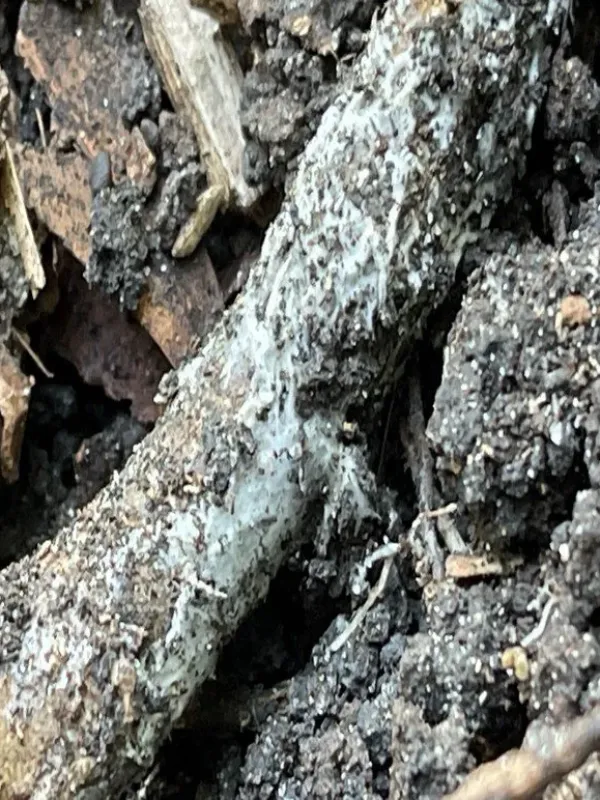
White to black mycelial mats may be visible on the surface of the roots or the base of the stem. In advanced stages of infection, tiny black reproductive structures called perithecia may develop on the surface.
Affected plants often die prematurely, especially if the root system is severely compromised. In field settings, the disease manifests as distinct patches where plants are dying or growing poorly.
In the case of root crops, the edible parts may show dark, sunken lesions or complete tissue decay, rendering the harvest unmarketable and susceptible to further rot during storage.
Pathogen
Black root rot is caused by the soil-borne fungus Rosellinia bunodes, an ascomycete pathogen. It is a highly destructive disease known for its ability to infect a wide variety of plant species.
The fungus produces thread-like structures called rhizomorphs. These black, root-like mycelial cords spread through the soil, allowing the pathogen to move effectively between host plants.
Upon reaching a susceptible host, the fungus colonizes the root cortex and the base of the stem. It destroys the vascular system of the plant, preventing the uptake of water and essential nutrients from the soil.
Rosellinia bunodes can survive in the soil for extended periods by feeding on decomposing organic matter. This saprophytic phase makes it difficult to eliminate from infested fields.
Crops such as cocoa, oilseed rape, Indian mustard, turnip, and radish are known to be vulnerable to this pathogen, especially in warm and humid agricultural environments.
Conditions for development
Rosellinia bunodes thrives in warm climates with high soil moisture. Persistent wet conditions are the primary driver for the rapid proliferation of the fungal mycelium.
High levels of undecomposed organic matter in the soil serve as a primary food source for the fungus, allowing it to maintain a high inoculum density in the field before attacking living roots.
Poor soil drainage and waterlogging significantly increase the risk of infection. These conditions limit root aeration, making plants more susceptible to fungal colonization.
Acidic soil conditions are often correlated with increased severity of the disease, as they may favor the growth and activity of this specific fungus over beneficial soil microorganisms.
The spread of the fungus is frequently facilitated by human activity, including the movement of contaminated soil through agricultural machinery or the use of infected seedlings.
Why it matters
The primary damage caused by black root rot is the total loss of the crop due to root system destruction. The plant is unable to sustain itself, leading to collapse and death.
For cash crops like oilseed rape, the disease can cause significant economic losses by reducing plant density and yields, often making the field unproductive.
In cocoa plantations, Rosellinia bunodes is a major concern that necessitates the removal of infected trees and the implementation of strict sanitation procedures to protect surrounding healthy plants.
The persistence of the pathogen in the soil means that the same field may remain unsuitable for susceptible crops for several years, forcing farmers to change their production plans.
Beyond yield loss, the infection reduces the overall quality of agricultural produce, specifically for root vegetables, which become prone to secondary infections and rapid spoilage.
Protection
Effective management begins with strict crop rotation. Avoiding host crops on infested land for at least 4 to 5 years helps to starve the fungus and reduce the inoculum level.
Sanitation is critical; all infected plant material should be carefully removed and destroyed, rather than incorporated into the soil, to prevent the spread of the pathogen.
Improving soil drainage and soil structure is essential. Proper land leveling and the use of drainage systems prevent the waterlogging that encourages fungal growth.
Applying lime to correct soil acidity can create an environment less favorable for the fungus. Additionally, the use of certified, disease-free planting material is a key preventative measure.
In areas with high disease pressure, localized soil treatment or the use of targeted fungicides may be required to contain the infection and prevent further spread across the farm.
Pathogens and affected parts
Affects crops · 5
Discussion
No discussions yet — be the first.