
Description
Symptoms
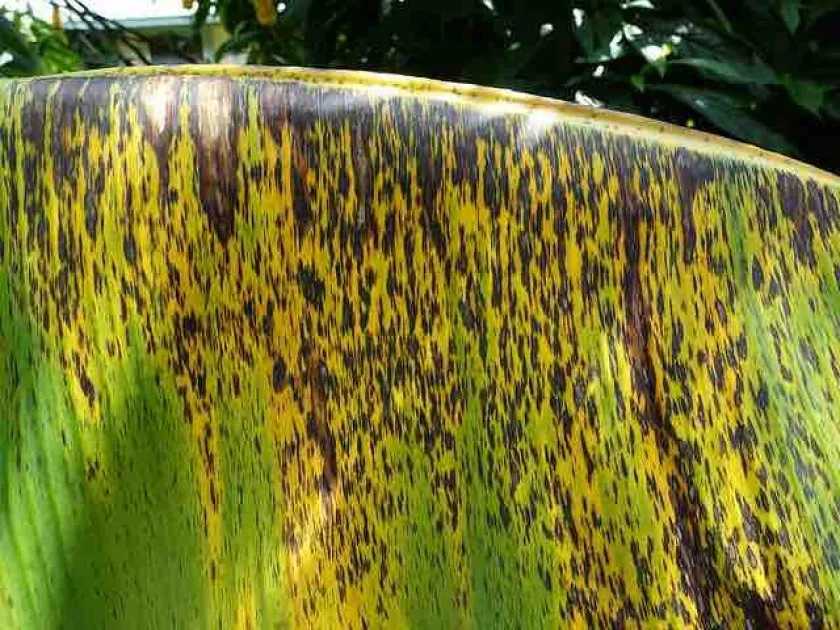
Initial symptoms are characterized by tiny, pale, or reddish-brown specks that appear on the abaxial side of the leaf, slowly transforming into thin, dark streaks.
As the disease progresses, these streaks widen into dark, elongated spots, often bordered by a yellow chlorotic halo caused by the systemic release of fungal toxins.
A hallmark of Black Sigatoka is the rapid coalescence of these spots, resulting in large, necrotic black patches that lead to the complete death of the leaf blade.
Unlike less aggressive leaf spot diseases, Black Sigatoka causes the leaves to dry out significantly faster, creating a scorched appearance across the entire plantation.
In humid conditions, dark, velvety tufts of fungal spores appear on the underside of the necrotic leaf tissue, acting as a source for further disease transmission.
Pathogen
Black Sigatoka is caused by the ascomycete fungus Mycosphaerella fijiensis, which is widely recognized as one of the most destructive pathogens for banana plantations worldwide.
The fungus reproduces through both sexual and asexual means, enabling it to spread rapidly via wind-dispersed ascospores and rain-splashed conidia across large areas.
The pathogen primarily colonizes the stomata of banana leaves, where it initiates an infection that leads to rapid tissue necrosis and systemic weakening of the plant.
Genetic plasticity is a key feature of this fungus, allowing it to adapt to various environmental conditions and overcome many of the chemical control methods currently in use.
The mycelium resides within the leaf tissues, producing toxins that kill host cells and facilitate the transition from localized spots to total leaf decay.
Conditions for development
The disease thrives in tropical regions where high humidity and warm temperatures provide the ideal environment for fungal growth and sporulation.
Optimal infection temperatures range between 24°C and 28°C, with high precipitation levels being the main driver of spore dispersal between individual plants.
Prolonged leaf wetness, often caused by dew or heavy rainfall, is essential for the germination of spores and their subsequent penetration through the plant's stomata.
High planting density often restricts airflow, leading to microclimates that retain moisture and promote the rapid spread of the pathogen throughout the canopy.
Seasonal weather patterns have a significant impact on the disease, with epidemic peaks often occurring during periods of high rainfall and cloudy weather.
Why it matters
Black Sigatoka is a major economic constraint in banana production, capable of reducing total fruit yield by up to 80% if left unmanaged.
The primary impact is the significant loss of the plant's photosynthetic surface, which prevents the proper development and filling of fruit bunches.
Infected plants produce smaller, inferior-quality fruits that often ripen prematurely, rendering them unsuitable for export or international trade markets.
Chronic infestation weakens the overall vigor of the banana plant, making it more susceptible to secondary infections and reducing the success of subsequent crop cycles.
Farmers face substantial financial pressure due to the heavy reliance on costly fungicide applications, which are often required on a weekly basis.
Protection
Effective management relies on a combination of chemical and cultural practices, including the rotation of fungicides to prevent the emergence of resistant fungal strains.
Sanitation is a critical step; by regularly removing and destroying severely infected leaves, growers can significantly reduce the local inoculum density.
Improving plantation management through proper spacing and drainage helps ensure better air circulation, which helps keep leaves dry and limits fungal germination.
Biological and genetic approaches, such as the development of resistant cultivars, remain the most sustainable long-term strategy for fighting the pathogen.
- Applying systemic and protectant fungicides based on climate models.
- Implementing strict quarantine protocols for all planting material.
- Using forecasting systems to time spray applications effectively.
Pathogens and affected parts
Affects crops · 1
Discussion
No discussions yet — be the first.