
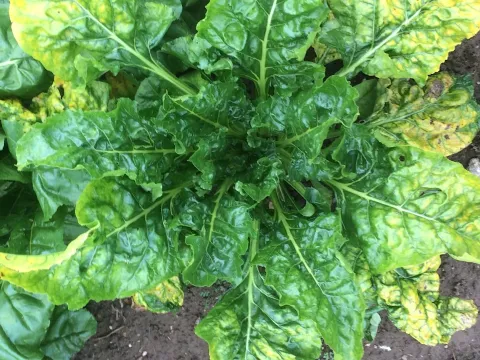
Beet western yellows
Beet western
The disease is caused by the Beet western yellows virus (BWYV), a member of the genus Polerovirus. This virus has a unique biological cycle that relies entirely on insect vectors for transmission within plant communities.
What the section contains
Beet western yellows
The virus is transmitted by aphids in a persistent manner. When an aphid feeds on an infected plant, it ingests the virus, which then travels through the gut to the salivary glands. Once the incubation period inside the insect is complete, the aphid remains infectious for its entire life.
It is crucial to note that the virus is not transmitted via seeds or mechanical contact. This characteristic makes insect population management the primary pillar of any disease control strategy.
BWYV has an exceptionally wide host range, infecting various economically important species. Its main hosts include fodder and sugar beets, peppers, soybeans, lettuce, and spinach, creating significant challenges for farmers.
Many common weeds, such as those from the Brassicaceae family, act as year-round reservoirs for the virus. These weeds allow the pathogen to survive during winter months, ensuring a continuous supply of inoculum for the next growing season.
The most distinctive symptom is the interveinal yellowing of leaves. This chlorosis typically begins on the older, lower leaves and gradually progresses toward the younger, upper foliage of the plant.
In sugar and fodder beets, the yellowing is often accompanied by a reddening or bronzing of the leaf margins. Furthermore, infected leaves tend to become thickened, leathery, and brittle compared to healthy green foliage.
For leafy greens like spinach and lettuce, the virus causes stunted growth and the formation of distorted, undersized rosettes. This renders the crop completely unmarketable and unsuitable for processing.
In peppers and soybeans, the infection manifests as general plant debilitation, reduced vigor, and chlorotic leaves. The lack of proper photosynthesis leads to smaller fruit sets and reduced seed yield.
- Interveinal chlorosis of older leaves
- Thickening and brittleness of leaf blades
- Reddening of leaf edges in beets
- Significant stunting of plant growth
- Reduced overall biomass and fruit production
Disease outbreaks are closely linked to aphid population dynamics. Mild, dry weather conditions are ideal for aphid proliferation and migration, which directly correlates with the rate of virus spread.
Weed management in and around the field is critical. High densities of reservoir weeds allow aphids to pick up the virus easily and transfer it to the main crop immediately after arrival.
Environmental factors that suppress natural aphid predators allow the insect population to boom. When natural controls fail, the virus can spread rapidly across vast areas within a short time frame.
Crop rotation practices can influence the severity of the disease. Planting susceptible crops in close succession increases the risk of early-season infection from existing local sources.
The migration of winged aphids, aided by wind currents, is a primary driver of disease distribution. These long-distance flights can introduce the virus into clean fields, bypassing localized sanitation efforts.
The primary damage caused by BWYV is the significant reduction in photosynthetic efficiency. By damaging the vascular tissues, the virus hinders the plant's ability to transport carbohydrates to storage organs.
In sugar beets, this results in a drastic reduction in root weight and sugar accumulation, leading to lower yields and lower quality of the harvest. Losses can range from 20% to over 50% depending on timing.
In vegetable crops like spinach and lettuce, the virus completely destroys the commercial value of the crop. Discolored and stunted leaves cannot be sold, resulting in total loss for the producer.
Soybean plants infected with BWYV show reduced pod counts and lower seed weights. This directly affects the total tonnage of grain harvested and can reduce the protein content of the crop.
Economic impact is compounded by the high costs of frequent insecticide applications required to control aphid populations, which increases the overall production budget for farmers.
Effective weed control is the first line of defense. By removing reservoir weeds from field edges and ditches, the primary source of the virus is significantly diminished.
Implementing a strict monitoring program for aphid presence is essential. Once threshold levels of aphids are detected, systemic insecticides should be applied to prevent virus transmission.
Adjusting planting dates can help the crop bypass periods of peak aphid migration. Establishing a healthy, robust plant stand early in the season makes the crop more resilient to infection.
Whenever possible, utilize virus-resistant cultivars. Although resistance to BWYV is not universal, modern breeding has provided hybrids that can withstand infections with minimal yield loss.
For protected cultivation (greenhouses), the use of fine mesh screens to exclude aphids is the most efficient method to prevent the virus from entering the facility and infecting valuable vegetable crops.