
Description
Symptoms
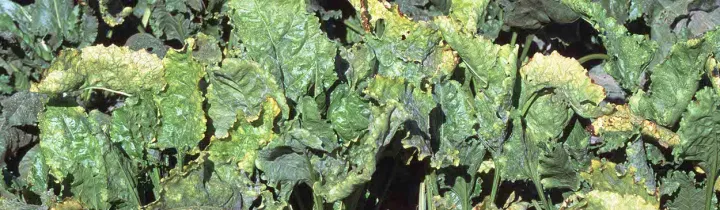
Initial symptoms are characterized by chlorosis, appearing first on the older, lower leaves of the beet plant's rosette.
The interveinal areas of the leaves turn a distinct lemon-yellow or orange color, while the veins often remain green for an extended period.
Leaves affected by the virus become thick, brittle, and may roll downwards, giving the plant a stunted and rigid appearance.
As the disease progresses, the chlorosis spreads to younger leaves, leading to significantly slowed growth and developmental abnormalities.
In field conditions, infected plants usually appear in patches, reflecting the distribution patterns of aphid colonies on the crop.
Pathogen
The causative agent of this disease is the Beet yellows virus (BYV), a member of the Closteroviridae family characterized by thread-like viral particles.
This virus is an obligate parasite that does not persist in soil or dead organic matter, surviving instead in host plants like beet seed crops and weeds.
Transmission occurs primarily through insect vectors, with various aphid species serving as the main carriers of the viral infection.
The green peach aphid (Myzus persicae) is recognized as the most efficient vector for transmitting the virus from infected hosts to healthy sugar beet plants.
Infection cycles begin when aphids migrate to crop fields, often during the early vegetative stages of the beet crop's growth.
Conditions for development
The development and spread of the virus are heavily influenced by environmental conditions that favor aphid reproduction and migratory activity.
Warm, dry weather is particularly conducive to rapid aphid population growth, increasing the probability of widespread transmission within a field.
Proximity to overwintering sources, such as volunteer beets or weed reservoirs, significantly heightens the risk of early-season outbreaks.
Fields with sparse plant density or nutritional deficiencies may show higher susceptibility to the impact of the virus due to decreased plant vigor.
Managing the timing of migration is critical, as early infection leads to the most severe damage to the overall crop yield.
Why it matters
Beet yellows infection causes significant reduction in both root weight and sucrose content, leading to substantial economic losses.
The virus disrupts photosynthetic processes, causing premature senescence of the foliage and reducing the total biomass of the plant.
Beyond sugar and fodder beets, the virus also affects other species, including lettuce, posing risks to diverse agricultural systems.
Chronic infection results in poor quality raw material, which is highly detrimental to the sugar processing industry's efficiency.
In severe years, yield losses can range from 30% to 50%, depending on the timing of the initial infestation and environmental conditions.
Protection
Management strategies focus on reducing aphid populations and eliminating potential viral reservoirs surrounding the production fields.
Timely application of systemic insecticides is vital to control aphid vectors before they reach critical density levels within the crop.
Maintaining spatial isolation between new beet fields and old seed beet crops is essential to minimize the risk of primary infection.
Effective weed control in and around the fields is necessary to remove overwintering sites for both the aphids and the virus itself.
- Regular monitoring of aphid populations using yellow sticky traps.
- Strategic insecticide applications targeted at early-season migration.
- Sanitation practices including the removal of volunteer beets after harvest.
- Cultivation of virus-tolerant or resistant hybrids where available.
Pathogens and affected parts
Affects crops · 2
Discussion
No discussions yet — be the first.