
Beet phoma leaf spot
Phoma schachtii
Description
Symptoms
Symptoms on leaves typically appear as circular, light-brown spots with a darker border. As the disease progresses, numerous minute, black pycnidia develop in the center of these necrotic lesions.
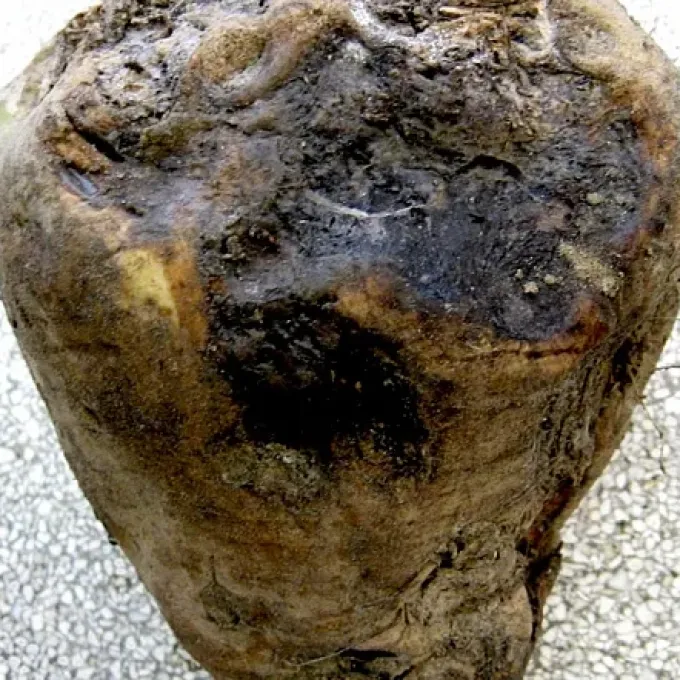
Infection of the root often begins at the crown or the sides of the beet. The tissue becomes firm and turns dark brown to black, a condition commonly known as dry rot.
Seedlings are highly susceptible to the "damping-off" phase. The base of the stem becomes thin, dark, and constricted, leading to the collapse and death of the plant before or shortly after emergence.
During storage, dry rot can progress, especially if humidity levels are high, creating conditions that encourage the development of secondary pathogens, leading to total root decay.
- Light-brown leaf lesions with distinctive dark margins.
- Presence of black pycnidia within leaf spot centers.
- Dark, firm, sunken spots on the beet root surface.
- Seedling death and damping-off in the field.
- Reduced plant vigor and yellowing of the foliage.
Pathogen
The fungus Phoma schachtii (syn. Phoma betae) is the causative agent of phoma leaf spot and root rot in beets. This pathogen is a facultative parasite that belongs to the class of Coelomycetes, characterized by the production of pycnidia.
The pathogen survives in the soil within infected crop residues for several years. Furthermore, it is seed-borne, making contaminated seeds a primary source of infection that can spread the disease across large geographical areas.
It infects sugar beet, red beet, and fodder beet. The pathogen can attack all parts of the plant, including leaves, stems, and the root system, at various stages of plant growth.
The life cycle involves the production of conidia within pycnidia, which are dispersed by rain splash and irrigation water, allowing the fungus to spread rapidly within a field under favorable conditions.
Due to its high adaptability, Phoma schachtii can persist in agricultural environments, remaining viable even when host plants are not actively growing, thanks to its ability to colonize decaying organic matter.
Conditions for development
High humidity and cool to moderate temperatures (around 18–22°C) are optimal for the growth and sporulation of the fungus. Excessive rainfall significantly increases the risk of infection.
Boron deficiency is a major factor that predisposes beet plants to infection. Plants grown in boron-deficient soils show significantly lower resistance to Phoma schachtii penetration.
Improper crop rotation, where beets are planted repeatedly on the same land, allows the pathogen to accumulate in the soil, leading to an increasing disease pressure year over year.
Poor soil structure and high acidity also create conditions that favor the pathogen, hindering the plant's natural defense mechanisms and slowing its recovery from minor infections.
Dense planting configurations that restrict air circulation increase the duration of leaf wetness, providing an ideal environment for spore germination and lesion development.
Why it matters
Phoma infection causes substantial yield losses by reducing the size and weight of individual roots. The pathogen disrupts the plant's vascular system, hindering the transport of water and nutrients.
The sugar content in infected beets is significantly reduced, as the fungus consumes the energy reserves intended for the plant's growth, making the crop less valuable for processing.
Field stands are often severely thinned due to damping-off, forcing producers to accept lower plant populations or incur the costs associated with reseeding the affected areas.
Storage losses are a major economic concern, as infected roots can easily spread the pathogen to healthy ones in storage facilities, leading to mass rot and post-harvest failures.
Infected seed crops suffer from poor quality, reduced germination rates, and lower seed weight, which can perpetuate the disease cycle in subsequent planting seasons.
Protection
Crop rotation remains the most critical practice for managing phoma, with a minimum interval of 3 to 4 years between planting host crops to allow for the natural decay of the inoculum in the soil.
Using high-quality, fungicide-treated seeds is an essential prophylactic measure to ensure early protection of young seedlings against both soil-borne and seed-borne pathogens.
Optimizing soil nutrient levels, particularly the application of boron, helps strengthen cell walls and improves the overall disease resistance of the beet plants during the season.
Deep plowing following the harvest helps bury crop residues, accelerating their decomposition and reducing the survival chances of the pathogen in the upper soil layers.
Integrated pest management, including monitoring of leaf spot development and timely application of systemic fungicides, is necessary to mitigate damage in high-risk areas during wet growing seasons.
Discussion
No discussions yet — be the first.