
Beet wart
Urophlyctis leproides
Description
Symptoms
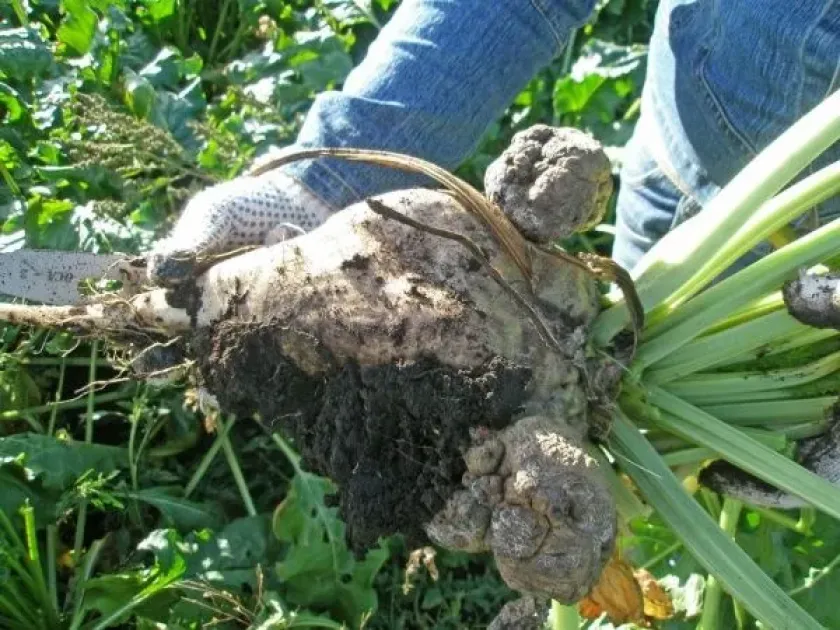
The most distinctive symptom of beet wart is the development of warty, cauliflower-like outgrowths on the roots and crown of the plant. These growths are typically irregular in shape and have a rough, crinkled surface.
Initially, these tumors may appear whitish or cream-colored. As they grow and the plant tissue begins to age, the color changes to a deep brown or blackish hue, reflecting the breakdown of the plant material.
The galls are usually concentrated around the crown area, but in severe cases, they can cover the entire surface of the root crop. This deformation drastically affects the size and marketable quality of the beetroot.
On the interior, the gall tissue is dense but fragile. Over time, these tumors become highly susceptible to secondary colonization by bacteria, which leads to wet rot, a foul odor, and the total destruction of the taproot.
Affected plants often display symptoms of systemic stress, including yellowing leaves, stunted growth, and a reduced capacity for nutrient absorption, leading to significant yield gaps compared to healthy plants.
Pathogen
Beet wart is caused by the fungus Urophlyctis leproides (also classified as Physoderma leproides), which belongs to the Chytridiales order. It is an obligate parasite that specifically targets beet crops, inducing tumor-like growths on the root system.
The pathogen survives in the soil primarily as resting spores (zoosporangia). These structures are incredibly durable and can persist in the ground for many years without a host, making the disease difficult to eradicate once established.
Infection is triggered when environmental conditions provide sufficient moisture for the spores to germinate and release motile zoospores. These zoospores swim through the soil water film to infect the root tissue of the beet plant.
The spread of the fungus is largely mechanical, occurring through contaminated soil attached to agricultural machinery, contaminated tools, or irrigation water flowing across infested fields. This facilitates the transport of the pathogen over long distances.
The biological nature of the parasite allows it to thrive in the vascular tissues of the host, where it alters the hormonal balance of the plant, forcing abnormal cell division and the formation of characteristic galls.
Conditions for development
High soil moisture is the critical factor for the development of beet wart. The disease is most prevalent in low-lying areas, poorly drained fields, or during seasons with excessive rainfall, as the pathogen requires free water to move and infect.
The fungus thrives within a moderate temperature range, typically between 15°C and 20°C. This period often coincides with the peak growth phase of the beet crop, making the plants highly vulnerable during these weeks.
Soil structure plays a significant role in the severity of the outbreak. Heavy, clay-based soils that retain water are far more conducive to Urophlyctis leproides than light, well-drained sandy soils.
Continuous monoculture is the primary driver of pathogen buildup. When beetroot is grown repeatedly in the same field, the population of resting spores in the soil increases exponentially, leading to severe outbreaks.
Additionally, the presence of weed species from the Amaranthaceae (Chenopodiaceae) family can sustain the fungus even when the primary crop is not present, acting as a reservoir for the disease between planting cycles.
Why it matters
Beet wart poses a severe threat to commercial agriculture due to both quantity and quality losses. Deformed roots are rejected by processing plants and supermarkets, leading to direct economic loss for the farmer.
Storage is another major issue, as roots affected by beet wart are unstable. If even a small percentage of contaminated beets enter storage, they can trigger secondary rot outbreaks that ruin entire harvests in a short time.
The nutritional profile of the crop is compromised, including a significant drop in sugar content. This is particularly devastating for the sugar beet industry, where crop value is directly tied to sucrose percentage.
Management costs increase significantly due to the need for field disinfection, quarantine measures, and the forced shift in crop rotation patterns. Farms with established infestations often face long-term land-use restrictions.
Ultimately, the presence of the disease lowers the overall productivity of the land, forcing farmers to avoid one of their most profitable crops for several years to allow the soil pathogen population to naturally decline.
Protection
The primary control strategy for beet wart is rigorous adherence to crop rotation. A break of at least 4 to 6 years between susceptible crops is necessary to reduce the number of viable spores in the soil to acceptable levels.
Improving soil drainage is essential for infested fields. Implementing subsoil drainage or raised beds helps prevent the waterlogged conditions that are required for the motile zoospores of the fungus to reach host tissues.
Sanitation is a vital part of management. All crop residues should be removed and destroyed immediately after harvest. Deep plowing can also help by burying the spores deeper in the soil profile, reducing their impact on the next planting.
Using resistant crop varieties is the most effective long-term solution. Breeders are actively working to develop beetroot lines that possess genetic resistance to Urophlyctis leproides to sustain production in endemic regions.
- Sterilize all farm machinery before moving between different fields to prevent pathogen spread.
- Avoid over-irrigation to maintain drier soil conditions during the peak infection window.
- Regularly monitor fields and remove symptomatic plants immediately to prevent further spore production.
- Eliminate alternative weed hosts such as lamb's quarters or other wild Chenopodium species.
Discussion
No discussions yet — be the first.