
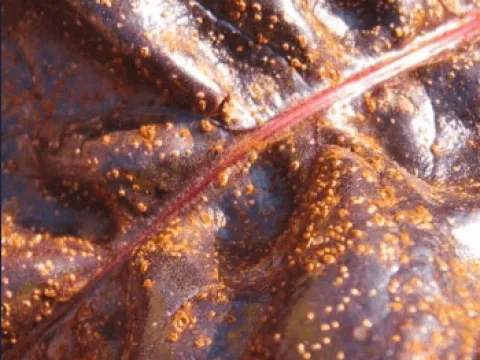
Beet rust
Uromyces betae
Beet rust is caused by the specialized parasitic fungus Uromyces betae, which belongs to the class of Basidiomycetes. This pathogen is highly specialized, completing its entire life cycle on a single host plant, which poses a significant threat to beet crops.
What the section contains
Beet rust
The fungus overwinters as aeciospores and urediniospores on crop debris or biennial beet seed crops. During the growing season, the pathogen can produce multiple generations of spores, facilitating rapid spread across the fields.
The fungal mycelium develops within the intercellular spaces of leaf tissues, gradually disrupting cellular structures. This reproductive process leads to the formation of pustules that rupture the leaf epidermis, releasing large quantities of spores.
The host range of Uromyces betae is restricted to the Amaranthaceae family. It primarily affects sugar beets, table beets, fodder beets, and Swiss chard, creating severe risks for specialized agricultural production.
The pathogen’s life cycle is characterized by rapid development under favorable environmental conditions. Repeated cycles of spore production allow the disease to cover vast agricultural areas in a very short period.
Initial symptoms of the disease appear as small, light-yellow spots on both sides of the leaf blades. As the infection progresses, small yellowish pustules (aecia) form in the centers of these spots.
Subsequently, rust-colored or brownish pustules containing urediniospores emerge on the leaves. In cases of severe infection, leaves acquire a characteristic rusty hue, turn yellow prematurely, and begin to wither.
Infected leaves lose their photosynthetic capacity, which adversely affects the metabolic processes of the plant. The infection typically starts on the lower leaves of the rosette and gradually spreads upward.
Toward the end of the growing season, dark brown or nearly black telia may form on leaves and petioles. These structures indicate the fungus is entering a dormant phase or completing its reproductive cycle.
The disease is easily diagnosed by the powdery rust-colored deposit on the leaves; touching an infected plant leaves a distinct rusty residue on clothing or agricultural tools.
Optimal conditions for beet rust infection include moderately warm weather combined with high relative humidity. Temperatures between 18–22°C are most favorable for active spore germination.
Heavy dew and fog play a critical role in spreading the disease, as moisture is essential for spores to penetrate the leaf tissue. Without adequate humidity, the pathogen’s activity is significantly reduced.
Dense, poorly ventilated crop stands create a microclimate with high humidity, which often triggers disease outbreaks. Poor air circulation allows spores to be easily wind-dispersed to neighboring healthy plants.
Excessive nitrogen fertilization promotes lush vegetative growth, which delays tissue maturity and makes plants more susceptible to the pathogen. This imbalance weakens the plant's natural defense mechanisms.
Poor crop rotation practices and leaving harvest residues in the field contribute to the accumulation of inoculum. High concentrations of spores in the soil increase the risk of early-season infection in subsequent years.
Beet rust causes significant yield losses by inducing premature death of the leaf canopy. The reduction in functional leaf area leads to decreased photosynthesis and lower sugar accumulation in the roots.
Under heavy infection, root weight can decrease by 15–30%, depending on the timing of the outbreak. Furthermore, the disruption of nutrient transport negatively impacts product quality and storability.
Plants stressed by rust infection become more susceptible to secondary storage rots. Reduced vigor significantly compromises the shelf life and safety of the harvested crop.
For seed production facilities, rust infection is critical, as it leads to shriveled seeds and poor germination rates. This results in significant economic losses and requires expensive seed replacement.
Economic damage stems from both direct yield loss and the costs associated with fungicide applications. The loss of sugar content is a particularly damaging factor for the sugar beet processing industry.
A primary preventive measure is strict adherence to crop rotation, ensuring a minimum 3–4 year gap before planting beets in the same field. Spatial isolation between commercial beet fields and seed crops is also essential.
Cultural practices include deep plowing of crop residues to accelerate the decomposition of fungal inoculum in the soil. Timely destruction of volunteer beet plants is mandatory, as they serve as reservoirs for the fungus.
Chemical control involves the use of triazole or strobilurin fungicides. Applications should begin as soon as the first pustules are observed to prevent the mass spread of spores throughout the crop.
Using resistant beet hybrids is the most cost-effective long-term strategy for disease management. Breeding varieties with high levels of natural resistance minimizes the need for chemical intervention.
- Regular field monitoring during July and August.
- Balanced potassium and phosphorus fertilization to boost immunity.
- Weed control, targeting members of the Amaranthaceae family.
- Maintaining optimal plant density to improve air circulation.