
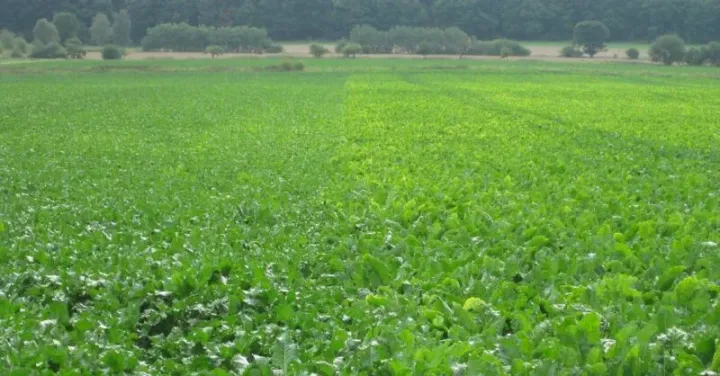
Description
Symptoms
Initial symptoms include interveinal chlorosis appearing on older leaves, which gradually spreads to the younger foliage.
The tissue between leaf veins turns yellow, while the veins themselves often retain their green color, creating a distinct mosaic pattern.
Leaves of infected plants become thick, brittle, and leathery, indicating a significant disruption in normal physiological processes.
In watermelon, the infection leads to severe growth stunting, yellowing of the foliage, and a significant reduction in vine vigor.
Severely affected plants appear stunted and show a "stiff" growth habit, failing to thrive or produce quality yields.
Pathogen
The disease is caused by the Beet pseudoyellows virus (BPYV), which is classified within the genus Crinivirus.
This virus is transmitted in a semi-persistent manner, requiring the whitefly vector to feed on an infected plant for a specific period to acquire the virus.
The primary vector for the spread of this pathogen in agricultural ecosystems is the greenhouse whitefly (Trialeurodes vaporariorum).
The virus particles are restricted to the phloem tissue of the host, where they interfere with the translocation of photoassimilates.
It has an extensive host range, affecting not only sugar and table beets but also various horticultural crops, including watermelon and cucumber.
Conditions for development
Disease progression is highly dependent on the population density of the greenhouse whitefly vector, which thrives in warm environments.
Greenhouse conditions, characterized by stable temperatures and high humidity, provide an ideal environment for rapid virus spread.
Weeds surrounding the cultivation area act as reservoir hosts, allowing the virus and its vector to persist throughout the year.
Periods of dry, warm weather facilitate the mass migration of whiteflies, leading to rapid infection across large fields.
The lack of adequate crop rotation or spatial separation between susceptible crops significantly increases the risk of viral outbreaks.
Why it matters
The primary economic impact is a drastic reduction in root weight and sugar content in sugar and table beet crops.
In watermelon, the disease reduces fruit size, flavor, and overall yield, making the crop economically non-viable in high-infection areas.
Premature leaf senescence and death caused by the virus reduce the total photosynthetic area, hindering crop development.
Infected plants exhibit increased susceptibility to secondary infections, further compromising the plant's health and productivity.
Due to the systemic nature of the virus, there is no curative treatment, leading to complete loss of marketable produce in affected patches.
Protection
The most effective management strategy is the intensive control of whitefly populations using targeted insecticides and biological control agents.
Sanitation practices, including the aggressive removal of weeds around fields, are essential to eliminate potential virus reservoirs.
Maintaining proper spatial isolation between beet fields and other susceptible vegetable crops reduces the potential for vector migration.
In greenhouse operations, the use of insect-proof netting and yellow sticky traps for monitoring are critical components of an integrated pest management plan.
Choosing planting dates that avoid peak whitefly activity periods can also help in reducing the incidence of infection in certain regions.
Pathogens and affected parts
Affects crops · 1
Discussion
No discussions yet — be the first.