
Bellflower rust
Puccinia campanulae
Description
Symptoms
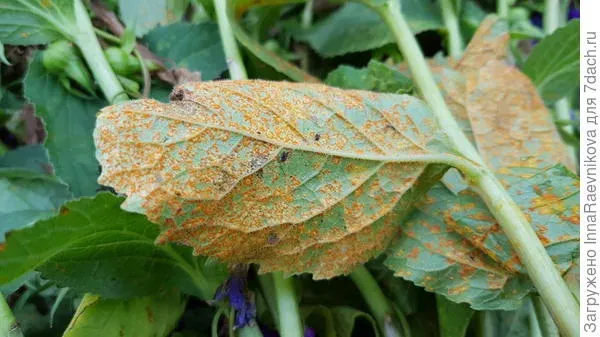
Early symptoms appear in early summer as small, yellowish, or light orange spots on the upper side of the leaves. These spots indicate where the pathogen is colonizing the internal tissue.
On the undersides of the leaves, characteristic raised pustules, known as aecia, begin to develop. These pustules often appear as dusty, orange to rusty-brown cushions that burst through the epidermis.
As the infection progresses, these pustules may merge, leading to premature yellowing and necrosis of the foliage. The plant loses its aesthetic appeal and begins to show signs of severe stress.
In advanced cases, the infection spreads to stems, petioles, and even flower stalks. In these areas, the tissue ruptures, which increases water loss and compromises the plant's structural integrity.
- Yellow spots on the leaf surface.
- Rusty-colored pustules on the leaf undersides.
- Premature leaf drop and wilting.
- Deformed stems and flower stalks.
Pathogen
The causal agent of this disease is Puccinia campanulae, an obligate parasitic fungus classified within the Basidiomycota division. This pathogen specializes specifically in infecting plants belonging to the Campanula genus.
The fungus has a complex life cycle that involves the production of several spore types, enabling it to survive and propagate under various environmental conditions. The mycelium grows within the host plant's tissue, absorbing nutrients and weakening the plant.
Infection spreads through spores that are dispersed by wind, rain splashes, or contaminated gardening tools. This ability to travel makes it a persistent threat to bellflower collections.
The pathogen typically overwinters as mycelium in the rhizomes of perennial bellflowers or in infected plant debris left on the soil surface. As spring temperatures rise, the fungus resumes its growth.
The biological success of Puccinia campanulae is heavily dependent on the host plant's vigor and its physiological state, as high humidity levels within the plant tissues favor the fungus's reproductive phase.
Conditions for development
The development of bellflower rust is primarily driven by prolonged wet weather and high humidity, which create the perfect environment for spore germination.
Optimal temperatures for the rapid spread of the fungus are between 15°C and 22°C. During cool and humid periods, the disease can spread across a garden with significant speed.
Crowded plantings that prevent adequate air circulation are highly susceptible to outbreaks, as they keep the foliage damp for extended periods after rain or dew.
Over-application of nitrogen fertilizers makes the plant tissue succulent and structurally weaker, making it easier for fungal hyphae to penetrate the leaf surface.
Poor garden hygiene, such as failing to remove weeds or debris around the base of the plant, provides a reservoir for the fungus to persist and re-infect new growth.
Why it matters
Bellflower rust significantly degrades the ornamental value of plants, rendering them unsuitable for landscaping or professional floral displays.
By destroying photosynthetic tissue, the disease impairs the plant's ability to produce energy, leading to a decline in bloom quantity and overall plant vitality.
Severe infestations can lead to the death of the plant over winter, as the depleted energy reserves in the roots are insufficient for the plant to survive dormancy.
The pathogen can quickly spread throughout a garden, destroying the aesthetic uniformity of flower beds and requiring costly remediation efforts.
In commercial plant nurseries, this disease is a major limiting factor that necessitates frequent fungicide use and the disposal of infected stock.
Protection
The most effective preventive measure is the prompt removal and disposal of all infected plant debris during the autumn cleanup to eliminate overwintering sites.
When planting, ensure adequate spacing between bellflowers to promote air movement and allow the foliage to dry quickly after rainfall, significantly reducing infection risk.
Upon the first sign of infection, apply appropriate systemic or copper-based fungicides to inhibit the growth and sporulation of the fungus within the plant tissues.
Reduce nitrogen fertilizer usage during high-risk periods; instead, focus on potassium and phosphorus applications to help improve the plant's natural resistance.
Regular monitoring of your garden allows for early detection of the disease, enabling you to isolate and treat infected plants before the pathogen spreads further.
Discussion
No discussions yet — be the first.