
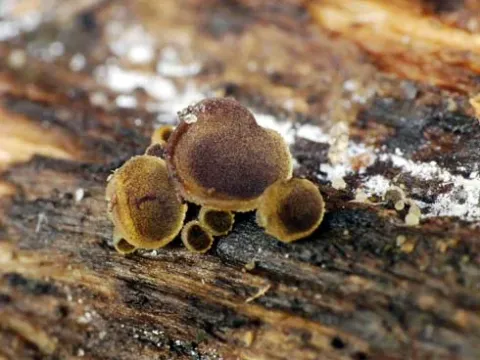
Ascobolus lignatilis
Ascobolus lignatilis
The causal agent is Ascobolus lignatilis, a fungus belonging to the Ascomycota division and the Pezizales order. It is primarily a saprotrophic organism that thrives on decaying woody matter.
What the section contains
Ascobolus lignatilis
The fungus produces small, saucer-shaped fruiting bodies known as apothecia, which appear on the surface of bark or wood when conditions are favorable for reproductive growth.
The mycelium penetrates deep into the plant tissue, secreting enzymes that decompose lignin and cellulose, effectively breaking down the internal structure of the wood.
Spores are dispersed through the air, water, or by insects, allowing the fungus to colonize new substrates. These spores are highly resistant to environmental stress.
While often categorized as a saprophyte, the fungus can behave as a facultative parasite, taking advantage of weakened plant tissues to establish its colony.
The most distinctive signs of infection are the small, fleshy apothecia visible on the surface of the wood. These are typically cup-shaped and clearly defined.
The upper surface of these fruiting bodies often has a dotted or granular appearance, which is caused by the protruding tips of the asci, a classic diagnostic feature of this genus.
Affected wood loses its structural integrity, becoming soft and fibrous. In advanced stages, the wood breaks apart easily when force is applied.
Discoloration of the infected area is common, with the wood often turning gray or dark brown as the cellular components are metabolized by the fungus.
During humid weather, a distinctive earthy or musty odor often emanates from the infected wood, indicating rapid metabolic activity of the fungal mass.
High moisture levels are critical for the survival and expansion of this fungus. It thrives in environments where humidity remains consistently above 80%.
Temperatures ranging from 15°C to 25°C provide an ideal climate for the fungus to develop its fruiting bodies and spread its spores effectively.
Shaded areas with poor airflow are particularly susceptible to colonization, as these spots prevent moisture from evaporating from the bark surface.
Physical injuries, such as frost cracks, sunscald, or insect-bored holes, significantly increase the risk of colonization by providing a direct route for spores to reach inner tissues.
Debris piles and rotting wood stored near living trees provide a constant reservoir for the fungus, increasing the probability of cross-infection.
The primary damage caused by Ascobolus lignatilis is the acceleration of wood decay, which can compromise the structural stability of the host plant.
The damage to the bark creates entry points for secondary pathogens, such as more aggressive fungi or bacteria, which can lead to rapid systemic decline of the tree.
The fungus reduces the market and practical value of timber, making it unsuitable for construction or high-quality wood processing due to its weakened state.
Continuous presence in a landscape increases the spore load, posing a persistent threat to susceptible species and weakening the overall health of the garden ecosystem.
The rotting process triggered by the fungus can disrupt nutrient transport in the tree, gradually leading to stunted growth or eventual death of the affected branches.
Sanitation is the most effective control strategy. Removing dead wood, fallen branches, and highly infected bark significantly reduces the inoculum potential.
Pruning to improve air circulation and sunlight penetration helps keep the bark surface dry, which inhibits the growth of the fungus.
Applying copper-based fungicides to affected areas can help suppress the development of apothecia and limit the spread of spores to healthy tissue.
Disinfecting pruning equipment with alcohol or bleach between plants is essential to prevent the mechanical transmission of the fungus across the site.
- Sealing wounds with pruning paint to prevent colonization.
- Burning or removing heavily infected woody waste from the site.
- Maintaining tree vigor through proper fertilization and irrigation practices.