
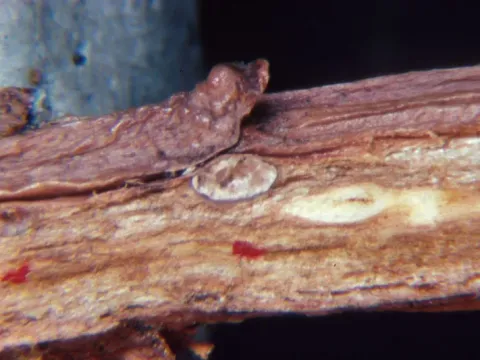
Ascocalyx pine canker
Ascocalyx berenice
The disease is caused by the microscopic ascomycete fungus Ascocalyx berenice. This pathogen is a specialized parasite known to affect various conifer species in temperate climate zones.
What the section contains
Ascocalyx pine canker
The fungus primarily infects the cortical tissues and cambium of young branches. Its life cycle involves the production of small, dark fruiting bodies that release spores for infection.
The pathogen is highly resilient to environmental stressors, allowing it to survive within host tissues throughout the dormant season. It typically gains entry through bark fissures or injuries.
Mycelial growth within the wood disrupts the plant's vascular system, impeding the movement of water and nutrients. This physiological stress eventually leads to tissue death.
The biology of this pathogen is closely synchronized with the phenological development of host conifers, ensuring that infection peaks during the most active growth phases of the trees.
The first noticeable symptom is the discoloration of needles on affected branches, which turn yellow and subsequently dark brown as the branch dies.
Cankers appear on the bark of young shoots. These necrotic areas can cause the bark to crack, peel, and exhibit a distinct depression compared to healthy tissue.
Upon close inspection, small black dots representing the fungal fruiting bodies can be observed protruding through the bark surface during favorable conditions.
Infected branches often remain attached to the tree long after death, creating a characteristic flagging effect that is visible from a distance.
- Yellowing and browning of pine needles.
- Bark necrosis and structural cracking.
- Formation of dark fungal fruiting bodies.
- Twisting and dieback of terminal shoots.
- General loss of tree vigor and growth stunting.
The development of Ascocalyx berenice is favored by high humidity and moderate temperatures. Dense stands with poor air circulation are particularly prone to rapid disease spread.
Trees that are weakened by environmental stress, frost damage, or improper site conditions are significantly more susceptible to successful colonization by this pathogen.
Spore dispersal is primarily driven by splashing rain and wind currents. Water droplets facilitate the transfer of spores to uninfected branches or neighboring trees.
Prolonged wet spring weather provides an optimal environment for mycelial activity and new infections. During these periods, the pathogen spreads most aggressively.
Poor silvicultural practices, such as excessive stand density or lack of sanitation pruning, create a microclimate that supports the long-term survival of the fungus.
Ascocalyx canker poses a severe threat to young conifer plantations and nurseries. It causes structural deformation of branches and can lead to high mortality rates in saplings.
Chronic infection drains the tree's energy reserves, rendering it vulnerable to secondary infections by wood-boring insects and other opportunistic fungal pathogens.
Economic impact is significant in commercial forestry, requiring the removal of infected trees and substantial investment in disease prevention and management.
The aesthetic value of conifer specimens is ruined by the disease, making them unsuitable for landscaping or ornamental use due to distorted crowns and dead patches.
If left unmanaged, the infection can destroy the integrity of the tree's vascular system, leading to complete tree death and long-term loss of forest productivity.
Sanitation pruning is the most effective management strategy. All infected branches must be removed and incinerated to eliminate the source of fungal spores.
Maintaining proper stand density and thinning is essential to improve airflow and reduce humidity levels, which effectively inhibits the growth conditions for the fungus.
Preventative fungicide treatments, particularly those based on copper compounds, can be applied to protect healthy trees during periods of high infection risk.
Enhancing tree vitality through appropriate fertilization and stress management helps the host plant develop a more effective natural resistance against the pathogen.
Early detection through regular field monitoring is critical, as it allows for the implementation of quarantine and control measures before the disease becomes widespread.