
Ascochyta bark necrosis
Ascochyta corticola
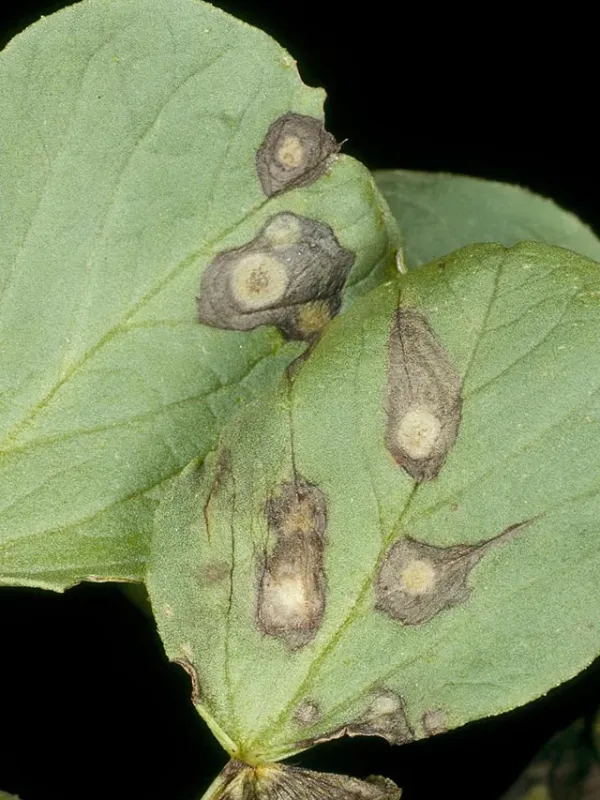
Description
Symptoms
The first symptoms of Ascochyta bark necrosis are small, brownish spots on the bark surface. Over time, these areas become depressed and discolored compared to healthy bark.
As the infection progresses, the bark in the affected areas dies, turns brittle, and cracks. Closer inspection often reveals small black dots, which are the fungal pycnidia.
If the necrosis circles a branch, the flow of nutrients and water is blocked. This causes the foliage above the infection site to wilt, yellow, and eventually die.
Entire branches may die back if the infection becomes systemic or deep enough to girdle the woody structure, leading to a loss of the canopy.
- Brown, depressed spots on the bark
- Cracking and necrosis of bark tissue
- Visible black pycnidia (fruiting bodies)
- Wilting and yellowing of foliage
- Dieback of twigs and branches
Pathogen
The disease is caused by the fungus Ascochyta corticola, a pathogen that specifically targets the bark tissue of woody plants. It belongs to the Coelomycetes group.
The fungus overwinters within infected bark tissues as mycelium and pycnidia. During spring, these pycnidia release conidia, which are then dispersed by rain splashes or wind.
Infection usually occurs when the pathogen enters the plant through wounds, such as pruning cuts, frost cracks, or damage caused by pests and environmental stress.
Once inside, Ascochyta corticola colonizes the bark layers, eventually penetrating the cambium and phloem, which disrupts the tree's internal circulation system.
The pathogen is highly adapted to exploit weakened trees, making it a persistent threat in orchards where maintenance or environmental conditions are suboptimal.
Conditions for development
High humidity and frequent rainfall are the primary drivers for the spread of Ascochyta corticola. Wet conditions facilitate the germination of fungal spores on bark.
Temperatures ranging from +15°C to +22°C (59°F–72°F) provide an optimal metabolic environment for the fungus to grow aggressively within the host tissue.
Orchards with dense canopy structures lack sufficient airflow, which creates a humid microclimate that significantly increases the risk of fungal outbreaks.
Trees that have suffered physical damage, such as sunscald or winter injuries, are particularly susceptible because their natural protective barriers are compromised.
General tree stress, often caused by nutrient deficiencies or improper watering, weakens the plant's immune system, making it easier for the pathogen to establish itself.
Why it matters
The disease causes significant damage by killing bark tissue, which leads to branch dieback and reduces the overall vigor of the tree over several growing seasons.
Because the fungus impairs the conduction of nutrients, fruit production is negatively impacted, resulting in lower yields and smaller, poorer-quality produce.
Severe infections can lead to the death of entire trees, forcing orchardists to incur high costs associated with removing and replacing valuable, mature specimens.
Affected trees are often prone to secondary attacks by wood-boring insects, which exploit the weakened state of the tree and accelerate the decline of the plant.
Maintaining a healthy orchard becomes much more labor-intensive and expensive when a persistent fungal pathogen like Ascochyta corticola is present.
Protection
The primary control measure is the immediate surgical removal of infected branches, ensuring that cuts are made into healthy wood to eliminate all fungal traces.
All pruning tools must be thoroughly disinfected after contact with diseased wood to prevent the accidental transmission of spores to healthy trees.
Applying copper-based fungicides during the dormant season (late winter or early spring) and again after leaf fall provides a protective barrier against fungal infection.
Protecting the bark of the trunk through whitewashing helps prevent sunscald and winter cracks, effectively closing entry points for the pathogen.
Improving general orchard hygiene and ensuring proper tree nutrition helps maintain high plant vigor, which acts as a natural defense against fungal pathogens.
Discussion
No discussions yet — be the first.