
Ascocalyx
Ascocalyx
The disease is caused by the fungus Ascocalyx abietina (also known as Gremmeniella abietina), a serious pathogen of conifers.
What the section contains
Ascocalyx
This fungus is a necrotrophic parasite that attacks the bark, phloem, and cambium of coniferous species, particularly pines and spruces.
The pathogen completes its cycle by producing spores that are released during humid conditions, allowing for widespread aerial dissemination.
It can persist in dead or dying plant tissues, acting as a reservoir for continuous infection within a stand of trees.
The fungus thrives by invading the vascular tissues, effectively blocking the transport of water and nutrients throughout the host plant.
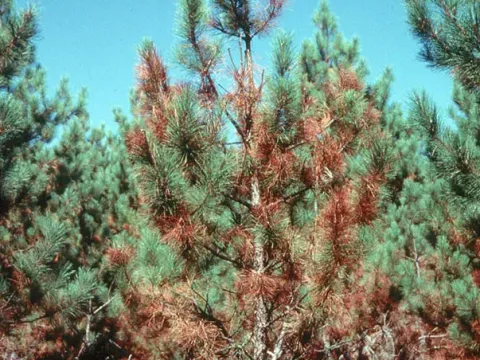
The primary symptom is the browning or reddening of needles on new shoots, which often happens in the spring following infection.
Resin bleeding from the affected stems and branches is a classic defense response, indicating significant internal damage caused by the mycelium.
Necrotic lesions develop under the bark, which can eventually girdle the branches and lead to the death of distal parts of the tree.
In advanced stages, the disease causes crown dieback, starting from the lower branches and slowly progressing upwards.
Small, dark-colored fruiting bodies may appear on the bark of infected twigs, usually visible under close inspection during wet periods.
The development of the disease is heavily favored by cool, wet spring weather and long-lasting humid conditions throughout the year.
Trees subjected to environmental stress, such as poor soil quality or improper climate adaptation, are significantly more susceptible to attack.
High-density planting prevents air circulation, creating a humid microclimate within the forest canopy that accelerates spore germination.
Fluctuating temperatures in winter can cause frost damage to the bark, providing entry points for the fungal spores to colonize the tree.
Excessive moisture retention in the forest floor and dense undergrowth contribute to the longevity and dispersal of the fungal spores.
Ascocalyx disease is a major threat to commercial forestry, capable of causing widespread mortality in pine plantations.
The infection leads to stunted growth, loss of timber value, and can render entire stands of trees economically unviable.
Severe infestations weaken trees to the point where they become magnets for secondary pests and wood-boring insects.
The ecological impact includes the loss of habitat and structural changes in forest ecosystems due to large-scale tree dieback.
Without intervention, the pathogen can quickly spread through a nursery or a young plantation, causing catastrophic losses of seedlings.
The most effective strategy is a combination of rigorous sanitation, including the removal and destruction of all symptomatic trees.
Thinning operations help to improve ventilation within the stand, reducing the humidity levels that favor fungal development.
In nursery settings, systemic fungicide applications can provide protection for young trees during the most vulnerable periods.
Strict quarantine measures are essential to prevent the transportation of contaminated seedlings and wood products to healthy areas.
Selecting genetically resistant varieties and matching species to their optimal site conditions remain the best long-term prevention strategies.