
Ascochyta blight
Ascoporiaceae
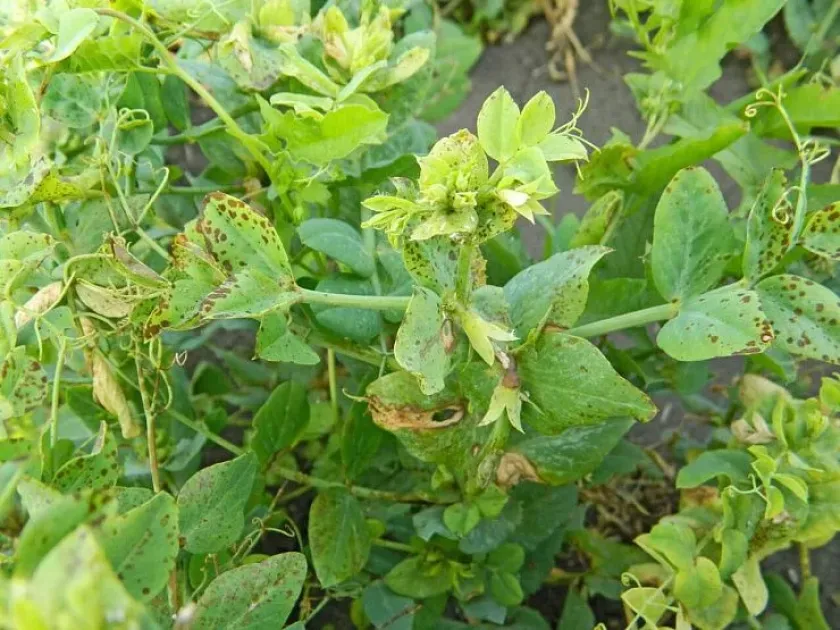
Description
Symptoms
The hallmark symptoms of Ascochyta blight include the appearance of localized spots on leaves, stems, pods, and fruit. These lesions are typically necrotic, with light-colored centers and dark, defined margins.
A diagnostic feature is the presence of small, dark, pimple-like structures in the center of the spots, which are the fungal pycnidia. Observing these with a hand lens confirms the presence of the pathogen.
Stem infections often manifest as sunken, elongated lesions or cankers. These can weaken the plant structure, leading to lodging or stem breakage under stress conditions.
Seed infection is common, often showing dark, sunken areas. Infected seeds may show reduced germination rates, resulting in weak seedlings or damping-off.
- Chlorosis and premature yellowing of leaf tissues.
- Curling and distortion of leaves around necrotic spots.
- Premature senescence and leaf drop in severely affected plants.
Pathogen
Ascochyta blight is caused by various fungal species belonging to the genus Ascochyta, part of the order Sphaeropsidales. These pathogens are highly host-specific, often evolving to target particular crop varieties.
The fungus reproduces through the formation of pycnidia, which are tiny flask-shaped fruiting bodies. These structures release pycnidiospores, which act as the primary inoculants during the growing season.
The pathogen survives primarily in crop debris left in the field and within infected seeds. Seeds serve as the main vehicle for long-distance dissemination of the disease.
Upon infection, the mycelium penetrates the plant tissues, secreting enzymes that degrade cell walls, which allows the fungus to extract nutrients and colonize the host systemically or locally.
Due to its ability to persist in soil and residue, the fungus can remain viable for several years, waiting for favorable conditions to infect a susceptible host crop again.
Conditions for development
The disease thrives in cool to moderate temperatures ranging between 20°C and 25°C, accompanied by high humidity levels. It is particularly prevalent during rainy seasons.
Water splashes from rainfall or overhead irrigation are essential for the dispersal of pycnidiospores from the soil to the lower leaves and stems of the plant.
Dense planting configurations that restrict airflow create a humid microclimate within the canopy, which provides an ideal environment for rapid fungal multiplication and spread.
Prolonged wet weather conditions during the early stages of crop development are critical, as they allow the pathogen to establish a significant infection level early on.
Field conditions such as poor soil drainage and lack of sunlight further exacerbate the disease pressure by keeping the foliage wet for longer periods.
Why it matters
Ascochyta blight causes significant yield losses by reducing the plant's leaf area, which severely impacts photosynthetic efficiency and biomass accumulation.
Infection of the reproductive organs leads to flower abortion and pod deformation, significantly lowering the total number of seeds and fruit produced by the plant.
Poor seed quality caused by the pathogen leads to lower market value and potential rejection of grain lots due to visible discoloration and fungal contamination.
The disease increases management costs as farmers must invest in repeated fungicide applications and rigorous seed cleaning processes to prevent further spread.
In severe cases, the cumulative impact of stem breakage and root infection can lead to entire crop failure, resulting in substantial financial losses for agricultural enterprises.
Protection
Effective management begins with the use of certified, disease-free seeds and the selection of crop varieties that demonstrate genetic resistance to local strains of the fungus.
Implementing a robust crop rotation program, where susceptible crops are grown in a field once every 3 to 4 years, helps to break the pathogen's life cycle.
Sanitary practices, such as deep plowing to bury crop residues, are crucial for reducing the initial inoculum levels before the next planting season begins.
Seed treatments with systemic fungicides are essential to protect developing seedlings from soil-borne and seed-borne infection during the critical early emergence phase.
Regular monitoring of the fields, especially during wet weather, is necessary to trigger timely foliar fungicide applications, which are most effective when applied at the first sign of symptoms.
Discussion
No discussions yet — be the first.