
Ascochyta blight
Stagonosporopsis
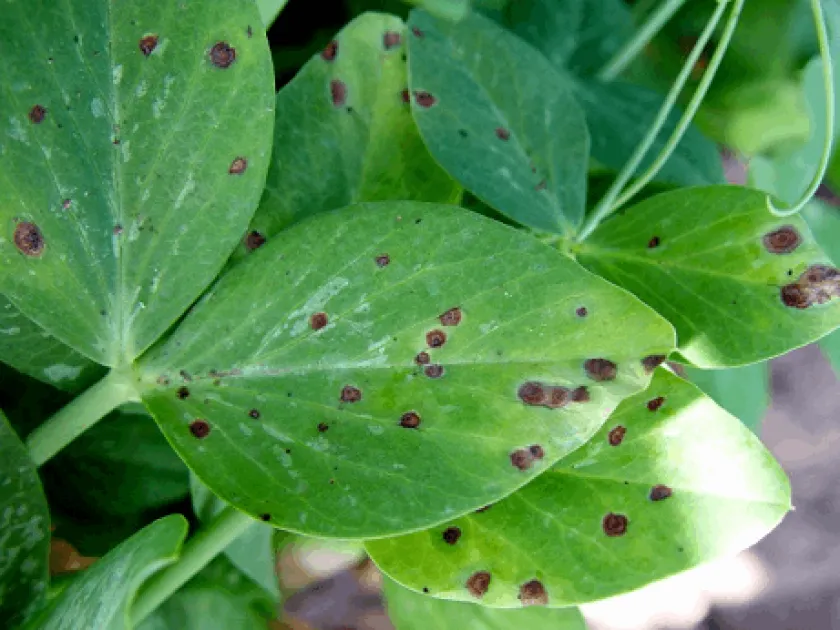
Description
Symptoms
The disease is characterized by the appearance of spots on leaves, stems, and pods, which often feature a darker margin and a lighter, necrotic center.
Upon close inspection, small dark fruiting bodies called pycnidia become visible within the lesions, confirming the diagnosis of Ascochyta infection.
Stem infections can cause girdling, leading to stem breakage and lodging, which severely impacts the plant's ability to transport nutrients and water.
On pods and seeds, the fungus creates sunken lesions that significantly reduce yield quality and decrease the viability of the seed for future planting.
Seedling blight is another common symptom, where emerging plants show discoloration or die completely, leading to thin and uneven crop stands.
Pathogen
Ascochyta blight is caused by fungal pathogens from the genus Stagonosporopsis (formerly classified as Ascochyta), which are significant threats to agricultural productivity.
The pathogen persists in crop residues, soil, and contaminated seeds, making it a persistent problem that requires long-term integrated management.
The life cycle involves the formation of pycnidia, which release numerous conidia. These spores are spread by rain splash and wind, facilitating rapid infection under suitable conditions.
The fungus colonizes various plant tissues, utilizing enzymes to degrade host cell walls, which leads to necrotic lesions and structural weakening of the plant.
Understanding the biology of Stagonosporopsis is crucial, as its ability to survive in a dormant state in the soil allows it to re-emerge whenever favorable conditions arise.
Conditions for development
Ascochyta blight thrives in cool to moderate climates accompanied by high humidity, which is essential for the germination and spread of fungal spores.
Frequent rainfall events play a major role in splashing spores from the soil onto the foliage and spreading the disease throughout the field.
Planting in tight rotations or in fields with abundant crop debris from the previous season significantly increases the primary inoculum load.
Dense canopy cover restricts airflow, maintaining a microclimate around the foliage that is highly favorable for the development of fungal pathogens.
Prolonged periods of cloudy and wet weather act as the primary catalyst for rapid disease progression once the initial infection has been established.
Why it matters
The economic impact of this disease is severe, often resulting in significant yield losses and reduced marketability of the harvested produce.
Photosynthetic capacity is drastically reduced as necrotic lesions spread across the leaves, leading to stunted plant growth and poor grain filling.
Seed quality suffers significantly, as infected seeds carry the pathogen, effectively sabotaging the potential of the next growing season.
Lodging caused by weakened stems makes mechanical harvesting difficult and increases post-harvest losses, complicating field management operations.
In severe outbreaks, the entire crop may be compromised, causing total failure in specific fields and necessitating intensive remedial efforts.
Protection
Effective management begins with the use of clean, certified seeds and resistant cultivars, which are the first line of defense against infection.
Crop rotation remains a fundamental practice, as it breaks the pathogen's life cycle by removing the host plant for several seasons.
Good sanitation, including the deep incorporation of crop residues, helps reduce the amount of inoculum available in the field at the start of the season.
Fungicide applications, when timed correctly during critical growth stages, can significantly mitigate the spread and severity of the disease.
- Seed treatment with appropriate fungicides.
- Deep tillage to bury infected plant material.
- Avoidance of overcrowding in planting patterns.
- Scouting fields regularly during humid weather.
Discussion
No discussions yet — be the first.