
Aschersonia
Aschersonia
Aschersonia is a genus of entomopathogenic fungi that act as natural biological agents, not as plant pathogens.
What the section contains
Aschersonia
These fungi belong to the Ascomycota division and are recognized for their specialized ability to infect and kill insects.
In nature, Aschersonia species are primarily found in tropical and subtropical regions where they maintain the balance of insect populations.
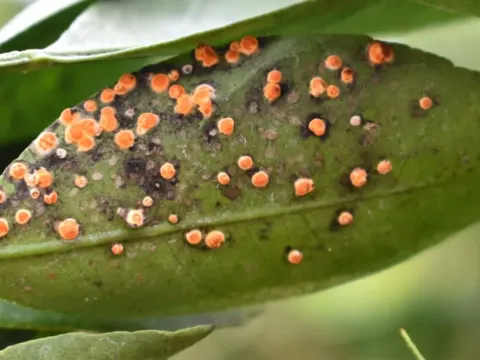
The biology of these fungi involves producing sporodochia on the exoskeleton of the host, which is a key phase in their life cycle.
They are increasingly being utilized in modern agriculture as a viable alternative to synthetic chemical insecticides.
The presence of Aschersonia is indicated by the development of colorful pustules on the surface of the infected insect.
These structures are often bright orange, pink, or white, creating a distinct visual marker of the fungal infection on the host.
As the infection progresses, the insect becomes immobilized and is eventually enveloped by the fungal mycelium.
Signs are most frequently observed on the undersides of leaves where target pests, like whiteflies or scale insects, tend to congregate.
Over time, the insect appears as a mummified shell, with the fungus continuing to release spores to infect nearby hosts.
Successful colonization by Aschersonia is highly dependent on environmental conditions, specifically high relative humidity.
Optimal growth occurs at temperatures ranging between 22 and 28 degrees Celsius, which are typical for greenhouse environments.
The fungus is sensitive to direct sunlight, which can inhibit spore germination and reduce the viability of the fungal culture.
Adequate moisture on plant surfaces facilitates the spread of spores, making the fungus more effective during wet or rainy seasons.
Maintaining a stable, humid environment in indoor growing operations is essential for the effective use of this biological agent.
Aschersonia species do not cause disease or damage to plants; they are strictly parasites of insects.
Their interaction with plants is beneficial, as they reduce the pressure from sap-sucking pests that might otherwise weaken the crop.
Using these fungi helps to minimize the need for chemical applications, promoting safer and more sustainable farming practices.
While the fungi may grow on the surface of leaves while feeding on insects, they do not infiltrate or harm plant tissue.
The economic value of this fungus lies in its efficiency as a self-sustaining pest control mechanism in controlled environments.
Implementing biological control using Aschersonia requires strict management of the greenhouse microclimate, particularly humidity levels.
It is crucial to avoid applying synthetic fungicides, as these can kill the beneficial fungal population and stop the control process.
Commercial bio-insecticides based on Aschersonia aleyrodis are effectively used to suppress whitefly outbreaks in various crops.
Proper ventilation and spacing of crops prevent excessive moisture that could lead to other fungal diseases, while maintaining enough humidity for Aschersonia.
Regular monitoring of pest populations ensures that the biological control agent has sufficient hosts to establish and reproduce effectively.