
Artichoke ascochyta blight
Ascochyta cynarae
Description
Symptoms
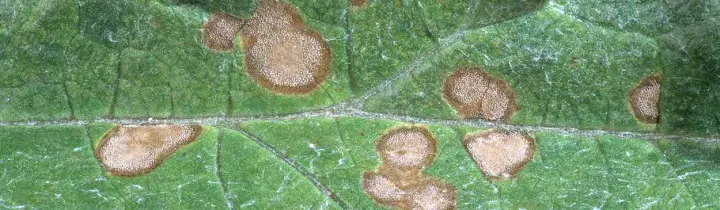
Early symptoms of the disease appear as small, brownish or grayish spots on the leaves. As the lesion expands, it often develops a darker, distinct margin, indicating necrotic development.
A hallmark of the disease is the appearance of tiny, black, pimple-like pycnidia scattered within the center of the lesions. These are diagnostic structures that confirm the presence of the pathogen.
As the disease progresses, heavily infected leaves show signs of yellowing (chlorosis) and eventual browning (necrosis). This leads to premature leaf senescence, reducing the plant's overall vitality.
Stem and petiole lesions can also occur, which may cause structural weakness in the plant. In severe cases, the tissue may split or crack, opening the door for secondary infections.
Infection of the flower heads (the edible part of the artichoke) makes them unsightly and prone to decay, significantly reducing their marketable value for fresh consumption.
Pathogen
The causative agent of this disease is the fungus Ascochyta cynarae. It is a well-known pathogen that primarily affects globe artichoke crops, leading to necrotic tissue damage.
The fungus overwinters in crop residues in the form of pycnidia, which are small black fruiting bodies. These serve as the primary source of inoculum when conditions become favorable in the spring.
Upon infection, the mycelium of the fungus penetrates the host tissues, colonizing the cellular structure and disrupting normal physiological processes of the artichoke plant.
During the growing season, the pathogen produces conidia, which are dispersed by rain splashes, irrigation water, and wind currents. This allows the disease to spread rapidly through the field.
Understanding the life cycle of Ascochyta cynarae is crucial, as its ability to persist in soil and plant debris necessitates strict sanitation and field management practices.
Conditions for development
High humidity and moderate temperatures are the most critical factors favoring the development of ascochyta blight. Frequent rains, dense morning fog, and heavy dew provide the moisture needed for spore germination.
The optimal temperature range for the pathogen's growth typically falls between 18°C and 25°C. Rapid spread of the disease is commonly observed during periods of extended warm and wet weather.
Dense planting patterns reduce airflow around the plants, allowing moisture to remain on foliage for longer periods. This microclimate is highly conducive to the rapid spread of the fungal infection.
Overhead irrigation, especially if applied in the evening, keeps the foliage wet and facilitates the splashing of conidia from infected to healthy plant tissues.
Poorly drained fields that remain saturated for long periods hinder plant health and make the artichokes more susceptible to Ascochyta cynarae throughout the growing season.
Why it matters
Ascochyta blight significantly reduces the marketable yield of artichokes. Infected plants have stunted growth and reduced photosynthetic capacity, directly affecting the size of the flower heads.
The loss of foliage early in the season weakens the plant, often resulting in lower-quality harvests and poor development of the buds required for commercial production.
The disease increases production costs, as farmers are forced to invest in fungicides and extra labor for disease management and sanitation on the field.
Failure to control the disease leads to a buildup of inoculum in the soil, which complicates future planting cycles and limits the rotation options for the affected area.
In extreme cases, the total loss of the crop can occur if the infection reaches the buds early, making the entire harvest unsuitable for the fresh market or canning industry.
Protection
- Practice crop rotation by avoiding planting artichokes in the same field for at least 3 to 4 years.
- Remove and destroy all infected plant material after harvest to eliminate overwintering sites for the fungus.
- Ensure adequate spacing between plants to maximize airflow and minimize leaf wetness.
- Apply preventative copper-based or systemic fungicides upon the first detection of disease symptoms.
- Use certified disease-free planting material to prevent the introduction of the pathogen to new fields.
Discussion
No discussions yet — be the first.