
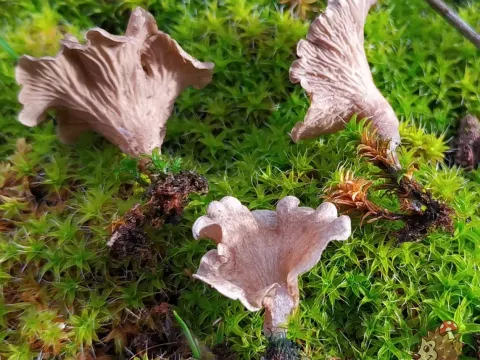
Arrhenia lobata
Arrhenia lobata
Arrhenia lobata is a basidiomycete fungus belonging to the Hygrophoraceae family. In agronomic practice, it is not classified as a destructive plant pathogen, but rather as an indicator of environmental conditions, specifically high soil moisture.
What the section contains
Arrhenia lobata
This fungus features small, spatula-shaped or fan-shaped fruiting bodies, typically grayish or brownish in color. It is often found growing on wet soil or moss-covered areas within or around agricultural fields.
Biologically, Arrhenia lobata acts as a saprotroph, feeding on decaying organic matter. Its presence suggests that the local microenvironment is excessively damp and likely lacks proper oxygenation.
The fungus propagates through spores that spread via wind and water, establishing itself quickly in environments where waterlogging occurs for extended periods throughout the growing season.
While it does not feed on living plant tissues, its physical presence can indicate soil health issues that are detrimental to crop productivity, such as poor drainage or soil compaction.
The primary driver for the development of Arrhenia lobata is persistent soil moisture. The fungus thrives in low-lying areas of fields where water collects following rain or irrigation.
High acidity levels in the soil, combined with poor drainage, create the perfect ecological niche for this fungus to colonize the surface area near crop root zones.
Temperatures ranging from cool to moderate are ideal for the production of its fruiting bodies. Therefore, the fungus is most visible during early spring or late autumn when the soil remains constantly wet.
Over-mulching without proper sunlight exposure can trap moisture on the soil surface, providing a long-term habitat for the fungal mycelium to survive and flourish.
The presence of moss in a field is a strong precursor to the colonization by Arrhenia lobata, as both organisms share similar moisture requirements.
The damage caused by Arrhenia lobata is indirect. By forming mats on the soil surface, the fungus hinders gas exchange, which is essential for the healthy respiration of crop roots.
The anaerobic conditions created by persistent waterlogging, which the fungus exploits, lead to reduced nutrient uptake and potential root rot in sensitive horticultural and grain crops.
The colonization of field surfaces by this fungus indicates that the soil structure is degraded, leading to physiological stress in crops due to lack of air at the rhizosphere level.
Although it does not produce toxic secretions that kill plants, the secondary pathogens that flourish in similar wet conditions are often exacerbated by the presence of this fungus.
Farmers viewing this fungus should treat it as a warning sign of poor water management, which significantly lowers the overall yield potential of the affected plot.
Effective control is achieved primarily through water management. Improving field drainage systems is the most critical step to prevent the recurrence of Arrhenia lobata.
Deep cultivation and mechanical loosening of the soil surface are necessary to improve aeration and break up the fungal habitat, discouraging its growth.
Adjusting the soil pH through liming can make the environment less hospitable for the fungus, as it generally prefers slightly acidic conditions.
- Ensure proper spacing between plants to improve airflow.
- Remove moss patches and excessive organic debris from the field surface.
- Avoid over-irrigation in low-lying areas of the farm.
Fungicidal intervention is rarely required or recommended, as the fungus is a symptom of poor soil maintenance. Improving cultural practices will naturally eliminate the presence of this organism.