
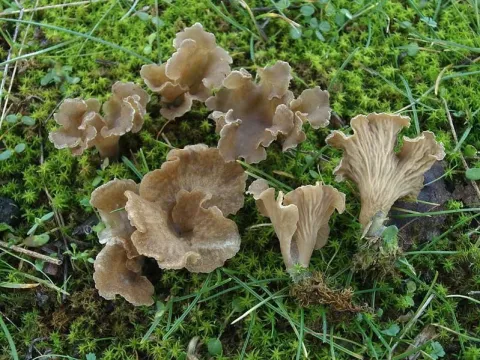
Arrhenia spathulata
Arrhenia spathulata
Arrhenia spathulata is a fungal species within the Hygrophoraceae family that is frequently encountered in turf management, where it behaves primarily as a saprotrophic organism.
What the section contains
Arrhenia spathulata
While often misidentified as a primary pathogen, it typically colonizes decaying organic matter within the thatch layer of lawns and turfgrass areas.
The mycelium of this fungus spreads through the soil, potentially interfering with the root systems of healthy grasses by creating dense mats in the thatch.
It is classified as a basidiomycete, thriving in moist microenvironments where it can efficiently decompose plant residues.
Its presence is a significant indicator of poor horticultural practices, such as excessive thatch buildup and inadequate soil oxygenation.
The most distinctive signs of Arrhenia spathulata are its small, spatula-shaped or fan-shaped fruiting bodies that appear near the soil line.
These fruiting bodies typically exhibit grayish or brownish hues and are found nestled among grass blades or on bare patches of soil.
Affected lawns often show patches of thinning grass, chlorosis, or general decline as the fungal mass begins to disrupt the turf canopy.
During the early colonization phase, a faint grayish mycelial web may be visible upon close inspection of the base of the grass shoots.
Prolonged infestations often lead to the formation of noticeable bald spots, significantly diminishing the uniformity and aesthetic quality of the turf.
High soil moisture combined with poor drainage is the primary condition favoring the establishment and spread of this fungus.
Cool, damp weather conditions, particularly during the transition seasons of spring and autumn, promote rapid reproductive activity.
Thick layers of un-decomposed thatch act as a nutrient reservoir, facilitating the growth of Arrhenia spathulata colonies.
Low light levels and high humidity within the turf canopy create a microclimate that prevents the soil surface from drying out sufficiently.
Acidic soil conditions are also correlated with higher incidences of this fungus, as it is well-adapted to lower pH levels.
The primary damage caused by this fungus involves the displacement of desirable turf species and the overall deterioration of the lawn's physical structure.
Mycelial growth can lead to soil compaction and reduced aeration, which negatively impacts root respiration and nutrient uptake.
Turf areas infected by the fungus show decreased vigor and are more susceptible to secondary biotic stressors and winter kill.
The development of hydrophobic zones in the soil, often induced by fungal mats, leads to uneven moisture distribution and localized dry spots.
Restoring damaged areas requires intensive renovation efforts, resulting in increased financial and maintenance costs for turf managers.
Implementing a robust drainage program is essential to prevent water stagnation, which is the key driver of fungal colonization.
Regular maintenance practices, such as core aeration and dethatching, are critical to removing the organic debris that fuels fungal growth.
Adjusting soil pH through liming helps create an environment that is less hospitable to this fungus while supporting healthy grass development.
When necessary, the application of registered turf fungicides can help manage severe outbreaks and suppress mycelial activity.
Balanced fertilization regimes should be followed to maintain healthy, vigorous grass that can naturally resist colonization by saprotrophic fungi.