
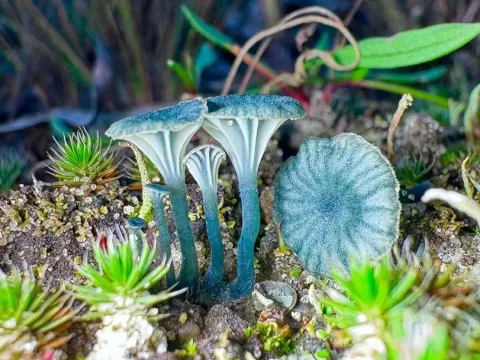
Arrhenia chlorocyanea
Arrhenia chlorocyanea
Arrhenia chlorocyanea is a basidiomycete fungus belonging to the Hygrophoraceae family. It is primarily a saprotrophic organism that lives off decaying organic matter in the soil.
What the section contains
Arrhenia chlorocyanea
Unlike parasitic plant pathogens, this fungus does not infect or kill living plant tissues. It thrives in the thatch layer, which is the accumulation of dead grass and roots on the soil surface.
The fungus is easily recognized by its distinctive blue-green color, which gives it a unique appearance compared to other common lawn fungi.
The mycelium of the fungus extends through the upper soil layers and the root zone of turfgrasses, breaking down organic waste into simpler nutrients.
It is often found in damp environments and is commonly associated with moss-covered areas, serving as an indicator of specific moisture conditions.
Arrhenia chlorocyanea flourishes during periods of high humidity and prolonged rainfall, which keep the soil surface constantly moist.
Compact soil with poor aeration creates an environment where organic matter does not decompose quickly enough, leading to the accumulation of thatch where the fungus thrives.
Mild temperatures ranging from 15 to 22 degrees Celsius provide the ideal conditions for the rapid development of its fruiting bodies.
Areas with poor drainage are particularly susceptible to colonization, as stagnant water supports the sustained growth of the fungal mycelium.
Shaded lawns with low air circulation often experience higher humidity levels, further encouraging the presence of this specific fungal species.
The primary concern with Arrhenia chlorocyanea in landscaping is aesthetic disruption. The sudden appearance of bright blue-green mushrooms can ruin the visual appeal of a manicured lawn.
While not a direct pathogen, the dense growth of mycelium can sometimes cause localized yellowing or thinning of the grass by altering soil nutrient availability.
The fungus is a sign of an unhealthy thatch layer, which can physically prevent water and fertilizers from reaching the grass roots effectively.
The development of the fungus can indicate that the lawn is overly wet, which can eventually lead to other, more harmful root rot diseases if left unaddressed.
In high-traffic areas, the presence of these fungi can make the turf feel spongy or uneven, detracting from the overall quality of the recreational surface.
The most effective strategy for management is regular aeration, which helps break down the thatch layer and improves soil oxygen levels.
Scarifying or dethatching the lawn annually is essential to remove the organic debris that serves as the primary food source for this fungus.
Improving the drainage of the lawn area is critical to prevent the sustained moisture levels that allow the fungus to complete its life cycle.
Manual removal of fruiting bodies should be performed promptly to prevent the spread of spores across the lawn surface.
Adjusting irrigation schedules to allow the soil surface to dry out between watering sessions can significantly reduce the favorability of the environment for fungal growth.