
Arrhenia umbratilis
Arrhenia umbratilis
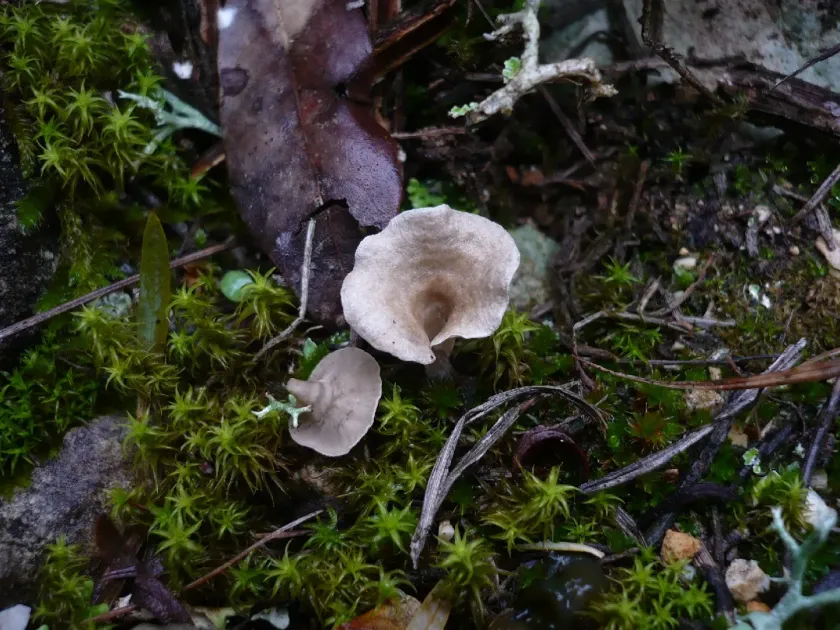
Description
Symptoms
Arrhenia umbratilis is primarily identified by the appearance of small, dark, greyish-brown fruiting bodies appearing on moist soil or decaying organic matter.
These mushrooms often grow in clusters in shaded or poorly ventilated areas, making them easily distinguishable in damp garden corners.
On lawns, the presence of the fungus is often marked by thinning grass or yellowing patches where the mycelium has established a network.
The fungus can form ring-like patterns, colloquially known as fairy rings, which impact the local soil moisture and nutrient availability.
Affected areas may exhibit signs of wilting or complete vegetation loss as the mycelial mat compacts the soil structure.
Pathogen
The pathogen is the basidiomycete fungus Arrhenia umbratilis, a saprotrophic organism that thrives on decaying plant material.
While primarily a decomposer, its biological behavior can negatively impact the health of nearby living plants by altering the local soil environment.
The fungus reproduces efficiently through airborne spores, which allow it to colonize new, suitable habitats rapidly during moist weather conditions.
The underground mycelium acts as a dense, hydrophobic network that restricts water infiltration into the root zone of neighboring vegetation.
It thrives in dark, humid environments, utilizing complex enzymes to break down organic matter, which can subsequently alter soil pH levels.
Conditions for development
High humidity and poor soil drainage are the primary factors facilitating the rapid development and spread of Arrhenia umbratilis.
The fungus requires a steady supply of organic matter, such as leaf litter, old grass clippings, or decaying wood, to serve as its primary energy source.
Persistent cloudy weather with temperatures between 15°C and 22°C creates the optimal environment for the emergence of fruiting bodies.
Lack of proper ventilation and persistent shade from tree canopies or garden structures exacerbate the moisture retention needed for fungal growth.
Over-irrigation, specifically late in the day, prevents the soil surface from drying out, thereby providing the perfect conditions for colonization.
Why it matters
The main harm caused by this fungus is the degradation of aesthetic turf quality and the disruption of local soil nutrient cycles.
By competing for nutrients and water, the fungus stunts the development of healthy garden plants and lawn grasses in the affected area.
The hydrophobic nature of the mycelial mats can lead to localized dry spots, making it difficult for the area to recover even with regular watering.
Persistent infections can lead to the death of lawn patches, resulting in unsightly voids that are susceptible to opportunistic weed colonization.
The presence of the fungus indicates an underlying issue with soil management that, if ignored, can lead to wider ecological imbalance in the garden.
Protection
Effective management begins with improving soil drainage and ensuring that the area is properly graded to prevent standing water.
Routine lawn maintenance practices, including aeration and dethatching, are crucial to breaking up mycelial networks and promoting air circulation.
Remove all accumulated organic debris from the garden regularly to reduce the available substrate that supports fungal proliferation.
Optimize irrigation schedules by watering deeply in the early morning, allowing the surface to dry completely before the onset of nightfall.
Mechanical removal of fruiting bodies is a temporary measure, but it helps limit spore dispersion throughout the growing season.
Discussion
No discussions yet — be the first.