
Arthonia
Arthonia
Arthonia is a diverse genus of fungi that mostly exist in a symbiotic relationship with algae, forming lichens. In the context of agronomy, they are primarily classified as epiphytes that colonize the bark of trees rather than destructive pathogens that actively invade living tissues.
What the section contains
Arthonia
Biologically, these fungi belong to the Arthoniomycetes class. Their mycelium spreads across the superficial layers of the bark, providing structural support while absorbing moisture and nutrients from the air and the surface of the bark, often utilizing the algal component for photosynthesis.
The reproduction of Arthonia is facilitated by spores released from apothecia, which are small, dark, and often line-shaped fruiting bodies. These structures can be immersed in the bark, making them well-adapted to surviving varying weather conditions on the surface of tree trunks.
While Arthonia does not consume living plant cells like true necrotrophic parasites, its presence is a clear indicator of the environmental conditions of the bark. These fungi prefer stable substrates and are common on mature or declining trees that have not been properly maintained.
In modern orchard management, the presence of Arthonia is typically viewed as a secondary issue. It highlights the need for better sanitation practices, as healthy and actively growing bark usually sheds its outer layers frequently enough to prevent the establishment of such lichen colonies.
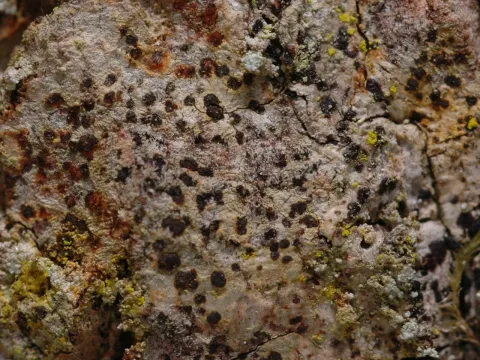
The primary symptom of Arthonia colonization is the appearance of dark, often inconspicuous spots or streaks on the tree bark. Depending on the specific species, these marks can look like small black dashes or irregular patches, sometimes blending into the texture of the bark.
Upon closer examination with a hand lens, the characteristic apothecia of Arthonia can be identified. These are typically thin, dark, and sometimes branched, appearing as if they were carved into the surface of the bark, which distinguishes them from mosses or more prominent crustose lichens.
As the colony expands, the affected area may take on a discolored or rough appearance. The bark might feel coarser, and in advanced cases, the spots can merge to form larger patches that alter the natural aesthetic and surface profile of the trunk.
It is important to differentiate these signs from bacterial cankers or fungal lesions that show clear signs of tissue death, such as weeping sores or deep fissures. Arthonia remains superficial and does not typically cause the localized tissue death characteristic of pathogens.
In addition to the growth itself, the presence of Arthonia often indicates a microclimate conducive to other epiphytes. Observing the density of these spots over time helps in assessing the speed of bark colonization and the overall health of the tree's exterior.
Arthonia thrives in humid and shaded environments where bark surfaces remain damp for extended periods. Dense tree canopies that limit airflow and shade the trunk are ideal habitats for these lichen-forming fungi to establish and grow.
The age and physiological state of the tree are major factors in colonization. Older trees with accumulated, non-shedding bark layers provide the stable substrate necessary for Arthonia. A lack of rapid growth in the tree prevents the natural turnover of the bark surface.
High relative humidity and frequent precipitation patterns promote the dispersal and germination of spores. Regions with consistent fog or orchards located in low-lying areas often see faster proliferation of Arthonia compared to drier, more ventilated landscapes.
Inadequate orchard management, such as the absence of canopy thinning or improper irrigation that sprays directly onto the trunks, significantly increases the risk of colonization. Permanent moisture on the bark surface is a key driver for fungal development.
While some species of Arthonia show sensitivity to high levels of air pollution, many are robust and can successfully colonize trees in varied environments. The absence of regular cleaning or pruning facilitates the rapid spread of these organisms within a garden.
The primary harm associated with Arthonia is its role in providing a sanctuary for various pests. The complex structure of the lichen provides cover for scale insects, mites, and their eggs, protecting them from predators and making chemical pest control much harder.
Dense colonization can inhibit the gaseous exchange of the bark, which is essential for the tree's health, particularly during the transition from dormancy to spring growth. This can lead to a slight decrease in overall vigor and reduced annual shoot growth.
From an aesthetic perspective, heavy colonization can be problematic in high-value ornamental trees or nurseries. The blackened appearance caused by the fruiting bodies of Arthonia can be perceived as a sign of poor tree health, even if the structural integrity remains unaffected.
In cases where a tree is already stressed by other factors, Arthonia may mechanically interfere with the healing of minor bark wounds. By covering cracks, it can impede the formation of callus tissue, keeping the area moist and susceptible to opportunistic infections.
While Arthonia does not directly kill the tree, it is a persistent marker of neglect. Its presence suggests that the tree is in a state of reduced vitality, making it more vulnerable to secondary issues if the underlying environmental stressors are not addressed.
Mechanical cleaning of the bark using stiff brushes or specialized scrapers during the dormant season is the most effective way to manage Arthonia. Removing the outer layer of old bark effectively clears the substrate and reduces the fungal population.
Improving air circulation through regular pruning of the canopy is essential for long-term prevention. Increased light and air movement will dry out the bark surfaces, making them inhospitable for lichen colonization and keeping the tree trunk in a healthier state.
Chemical control can be achieved by spraying the trunk with 3% ferrous or copper sulfate solutions. This should be performed while the tree is dormant to prevent damage to buds, as these solutions effectively kill the fungal colonies on the bark surface.
Applying a lime wash (whitewash) to the trunks in the autumn provides a protective barrier. The alkaline nature of the lime discourages the regrowth of lichens and helps maintain the bark surface in a state that is less prone to fungal colonization.
Overall tree vigor is the best defense. Proper fertilization, correct irrigation management, and consistent pest control ensure that the bark remains healthy and dynamic. A vigorous tree naturally limits the settling of epiphytes, keeping the trunk clear and clean.