
Arrhenia acerosa
Arrhenia acerosa
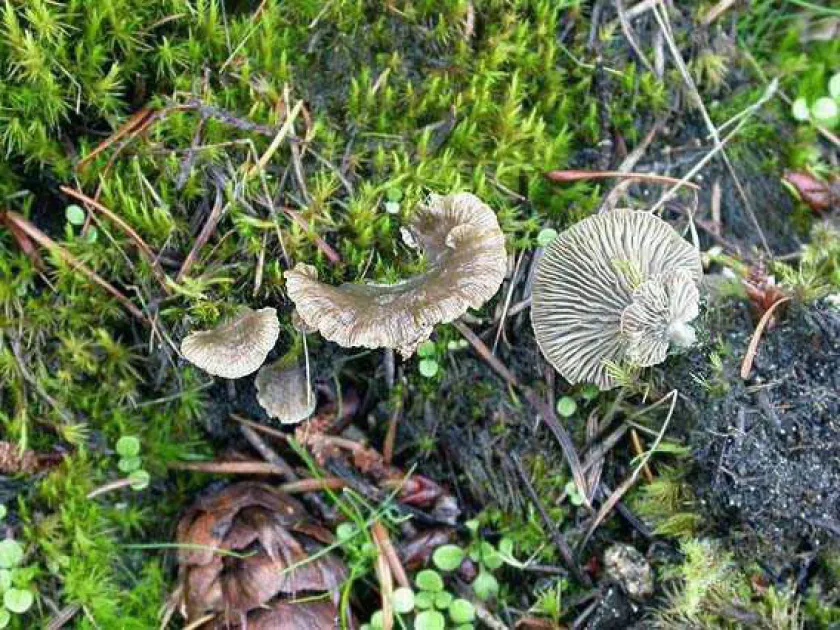
Description
Pathogen
Arrhenia acerosa is a species of gilled mushroom in the family Hygrophoraceae. It is classified as a saprotrophic fungus that lives on decaying organic matter rather than infecting living plants.
The fungus typically inhabits soil rich in humus or forest litter, feeding on the remnants of fallen leaves, needles, and other vegetative debris.
Its morphological features include a small, shell-shaped or funnel-shaped cap, often with a grey or brownish hue, and decurrent gills.
As a non-pathogenic organism, it does not possess the physiological mechanisms to invade, colonize, or damage healthy agricultural crops or their tissues.
Its presence in an agricultural field is purely incidental and is fundamentally different from true plant pathogens that cause diseases like rust, blight, or wilt.
Conditions for development
The growth and fruit body development of Arrhenia acerosa are highly dependent on high soil moisture and the presence of abundant organic substrates.
It thrives in damp, cool environments with moderate temperatures, typically favoring late autumn or wet, cool summer conditions.
Poor soil drainage and low oxygen levels in the substrate provide an ideal ecological niche for this fungus to colonize organic debris.
Soils with higher acidity may also provide a competitive advantage to this species over beneficial soil microbiota.
Insufficient decomposition of post-harvest residues allows this fungus to establish dense mycelial mats in the topsoil layer.
Why it matters
Arrhenia acerosa is not considered a harmful agent to agricultural production as it does not actively feed on living crop tissues.
However, it serves as a biological indicator of suboptimal soil management, specifically regarding moisture regulation and residue decomposition.
The conditions favoring this fungus, such as waterlogging, are detrimental to crop health and can lead to secondary issues like root hypoxia.
If the fungus develops in large clusters, it may indicate a lack of aeration in the root zone, which can restrict proper plant growth.
While the fungus itself does not cause disease, farmers should address the environmental conditions that support its growth to ensure better crop yields.
Protection
There is no necessity for chemical fungicide application as Arrhenia acerosa is not a disease-causing organism in agriculture.
Primary control strategies involve optimizing soil management practices to prevent excessive moisture accumulation and waterlogging.
The application of biological residue decomposers can accelerate the breakdown of organic material, removing the food source for such saprotrophs.
Improving soil aeration through proper cultivation and maintenance of drainage systems is the most effective preventative measure.
Maintaining a balanced pH through liming and utilizing proper crop rotation supports a healthy, competitive soil microbiome that naturally inhibits dominant saprotrophic fungal growth.
Discussion
No discussions yet — be the first.