
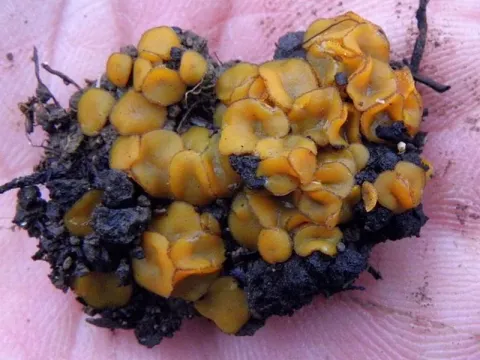
Anthracobia macrocystis
Anthracobia macrocystis
Anthracobia macrocystis is a species of fungi belonging to the Pyronemataceae family. It is distinct in its habitat preference, being a specialized carbophilous fungus.
What the section contains
Anthracobia macrocystis
This fungus is a saprotroph, meaning it feeds on decaying organic matter, but specifically on the charred remains left after fires, such as burned straw or woody debris.
The morphology consists of small, cup-shaped fruiting bodies known as apothecia, typically displaying vibrant orange or reddish colors against the dark ash-covered substrate.
The species name reflects the presence of enlarged cystidia within the hymenium, which are microscopic structures that assist in the organism's survival within stressful post-fire environments.
From an agronomical perspective, it is not a primary plant pathogen, but its presence serves as a bio-indicator of previous fire usage on the land, which affects soil chemistry.
The primary prerequisite for the growth of Anthracobia macrocystis is the presence of a burnt substrate. It thrives in environments where organic matter has been exposed to intense heat.
The species requires an alkaline environment, typically provided by the ash residue, which creates a specific pH level suitable for the germination of fungal spores.
Adequate moisture is essential for the development of the mycelium and the emergence of apothecia. The ash layer serves as a temporary reservoir for moisture, facilitating rapid colonization.
Development is most prolific in open areas with high solar exposure, provided that there is sufficient organic substrate available in the top layer of the treated soil.
Colonization follows a specific timeline, appearing shortly after the fire event, provided that atmospheric conditions remain favorable with sufficient humidity levels.
Anthracobia macrocystis does not pose a direct threat to the health of agricultural crops, as it does not parasitize living tissues of plants.
The harm is indirect, as the growth of this fungus is linked to the practice of burning plant residues, which depletes soil fertility and destroys the beneficial microbial community.
The presence of this fungus signifies a shift in soil ecology, where the delicate balance of beneficial bacteria and mycorrhizal fungi is replaced by opportunistic carbophilous species.
Continued practice of burning residues leads to long-term reduction in humus content, negatively impacting the physical and chemical properties of the field soil.
While not toxic to crops, the mycelial mat can physically impede root penetration in seedlings if seeds are sown directly into untreated ash patches where the fungus is dense.
The most effective strategy to manage Anthracobia macrocystis is the absolute prohibition of field burning. Eliminating the fire substrate removes the habitat for this fungus.
Implementing sustainable agricultural practices, such as incorporating crop residues into the soil via shredding and tillage, helps maintain soil structure and organic matter levels.
If the fungus is observed, deep plowing is recommended to bury the surface ash layer and disrupt the fungal colony, allowing for the re-establishment of normal microbial activity.
Applying nitrogen fertilizers can encourage faster decomposition of crop residues by beneficial bacteria, making the environment less favorable for specialized carbophilous fungi.
- Avoid burning crop residues.
- Practice no-till or reduced tillage with residue incorporation.
- Enhance soil biodiversity through crop rotation.