
Anthracnose of orchids
Colletotrichum orchidophilum
Description
Symptoms
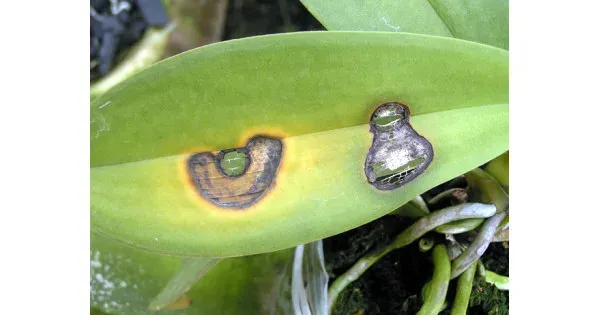
The first symptoms are the appearance of round or irregular spots on the leaves, usually dark brown or black in color. Over time, these spots increase in size and are often surrounded by a light yellow or translucent halo.
In the center of the affected areas, one can often observe the formation of concentric circles, which are the acervuli (fruiting bodies) of the fungus. In high humidity, these spots may be covered with a pinkish or greyish layer of conidia.
As the disease progresses, spots can merge, covering large areas of the leaf blade. This leads to deformation, chlorosis, and premature senescence or shedding of the leaf.
In severe cases, the infection spreads to pseudobulbs and roots. The affected areas of the pseudobulbs become sunken, soft, and dark, which, if left untreated, results in the total death of the orchid.
Diagnosing the disease can be difficult because early stages resemble sunburn; however, the presence of small black fruiting bodies within the necrotic zones confirms an anthracnose infection.
Pathogen
The causative agent of this disease is the fungus Colletotrichum orchidophilum. It is a pathogenic fungus belonging to the group of imperfect fungi, widely known for affecting various tropical and ornamental plant species.
The infection is transmitted primarily through spores (conidia), which spread through water droplets during irrigation, rain splashes, or via insect vectors. The fungus can survive for long periods in plant debris, growing media, or on contaminated tools.
The disease is classified as a necrotic leaf spot. The pathogen enters the plant tissue through stomata or mechanical wounds in the epidermis, subsequently initiating the destruction of the plant cells.
The biological cycle of the fungus is closely linked to the weakened immunity of the orchid, often caused by poor growing conditions. The mycelium grows into the intercellular spaces, releasing toxins that cause tissue necrosis.
While this specific pathogen is specialized for epiphytic orchids, it can infect various genera, including Phalaenopsis, Dendrobium, and Cattleya, thriving in their specific metabolic environments.
Conditions for development
High relative humidity, exceeding 70–80%, is the primary factor for disease development, especially when coupled with poor air circulation. Stagnant moisture on leaf surfaces is the ideal medium for spore germination.
Temperature ranges between +22…+28 °C are optimal for the rapid spread of the pathogen. Under these conditions, the fungal mycelium grows aggressively, covering new tissues within just a few days.
Improper watering practices, where water remains on the leaves and does not evaporate quickly, significantly increase the risk of infection. Evening watering is particularly dangerous due to the combination of low temperatures and high humidity.
Stress factors such as excessive nitrogen fertilization or insufficient lighting weaken the plant's natural defense barriers, making it significantly more susceptible to Colletotrichum invasion.
The presence of infected plants in the collection that have not been isolated creates a high risk of an epiphytotic outbreak, particularly in crowded greenhouse conditions.
Why it matters
The main harm caused by anthracnose is the disruption of the plant's photosynthetic activity, as large areas of leaf surface are damaged and become necrotic. This leads to the exhaustion of nutrients stored in the pseudobulbs.
If the infection reaches the stem or the crown, the orchid loses its ability to grow and bloom. Eventually, if the pathogen reaches the root collar, the plant will inevitably perish.
Economic damage is associated with the loss of aesthetic value, making ornamental specimens unsuitable for sale or exhibition. This is a major concern for both commercial nurseries and orchid enthusiasts.
In large greenhouses, anthracnose can destroy a significant portion of a plant batch in a short time due to the high rate of spore production and rapid transmission.
Furthermore, an infected plant serves as a reservoir for secondary infections, necessitating expensive phytosanitary measures and the disposal of biological material.
Protection
Control begins with the immediate isolation of infected plants. Affected tissues must be removed using a sterile instrument, cutting 1–2 cm into healthy tissue, followed by the application of an antiseptic or fungicide to the cut edges.
Chemical control involves the application of systemic fungicides, specifically those containing mancozeb, copper, or thiophanate-methyl. Treatments should be repeated every 7–10 days until symptoms subside.
Prevention includes maintaining a strict watering regimen that avoids getting water on the leaves. Regular disinfection of tools with alcohol or specialized solutions after each use is mandatory.
Improving air circulation with fans and maintaining proper spacing between plants is crucial for reducing humidity around the foliage, thus preventing fungal colonization.
- Isolate symptomatic plants immediately.
- Use systemic fungicides for comprehensive protection.
- Avoid overhead watering and leaf wetting.
- Ensure adequate ventilation in the growing area.
- Sterilize all cutting tools after every use.
Discussion
No discussions yet — be the first.