
Antrodia
Antrodia
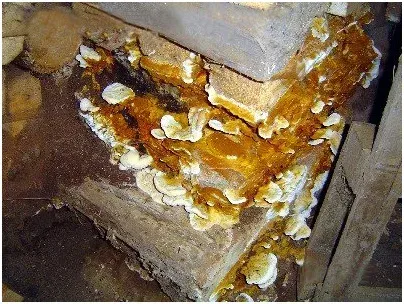
Description
Symptoms
The primary external sign of an Antrodia infection is the appearance of fruiting bodies on trunks or stumps. They are frequently localized in bark crevices, mechanical injury sites, or cut surfaces where moisture levels are elevated.
The internal condition of the wood changes significantly: in the initial stages, the color shifts to a darker or reddish-brown hue. As the rot progresses, the wood fibers lose their cohesion, leading to the formation of characteristic cubical cracking patterns.
Where the fungal mycelium develops, destruction of the cambium and bark occurs, which is visually manifested by depressed areas or bark detachment. The tree begins to show signs of general decline, such as premature yellowing of leaves, crown dieback, and reduced annual growth.
As the disease progresses, the trunk becomes brittle, increasing the risk of windthrow. In the lower part of the trunk or near the root collar, areas of heart rot are often found, which spread gradually in a vertical direction.
In the final stages, the tree loses its structural integrity, rendering it hazardous for forestry operations. Affected wood crumbles easily under pressure, turning into a brown, powder-like mass.
Pathogen
Antrodia is a genus of wood-decaying basidiomycetous fungi belonging to the family Fomitopsidaceae. These organisms are typical saprotrophs and facultative parasites responsible for causing destructive brown rot in wood.
The fungal mycelium actively penetrates the tree's structure, utilizing an enzymatic system to decompose cellulose and hemicellulose. As a result of the pathogen's metabolic activity, the wood loses structural integrity, becomes brittle, and develops a characteristic brown coloration.
The fruiting bodies of Antrodia can be resupinate, reflexed, or cap-like, often possessing a leathery or corky consistency. The hymenophore surface is typically tubular, which serves as a crucial diagnostic feature for field identification.
The life cycle of the fungus involves the dissemination of basidiospores carried by air currents. Upon landing on fresh bark wounds or wood cuts, the spores germinate, forming primary mycelia that gradually colonize the internal layers of the plant.
In forest ecosystems and plantations, Antrodia plays a dual role: as a decomposer of dead wood and as a pathogen that reduces the commercial quality and biological resilience of living trees.
Conditions for development
The main factor promoting Antrodia development is high wood moisture content, typically exceeding 20-30%. The fungus thrives in poorly aerated environments where moisture remains trapped for extended periods.
Favorable conditions for infection include any mechanical bark injuries caused by animals, anthropogenic activities, or natural disasters. Through these open wounds, pathogen spores can easily penetrate the tree's internal tissues.
Temperature regimes play a significant role: most Antrodia species are most aggressive in temperate climates with frequent precipitation. Optimal temperatures for mycelial growth range from +15 to +25 degrees Celsius.
The presence of weakened trees with reduced sap flow creates an ideal substrate for fungal colonization. A plant's exhausted immune system is unable to suppress the inward progression of fungal hyphae through the xylem.
Dense stand stocking and the lack of sanitation thinning contribute to high infection pressure. Stagnant air within forest stands creates a microclimate that facilitates spore germination and successful spread to adjacent healthy plants.
Why it matters
Antrodia causes significant economic losses to the forestry sector by lowering wood grade and causing a loss of structural strength. Affected trunks are unsuitable for construction purposes and industrial timber processing.
The biological impact involves the premature death of woody stands, disrupting the structure of forest communities. Infected trees act as infection epicenters from which spores are disseminated to healthy specimens.
In ornamental and urban landscaping, Antrodia poses a threat to mature or damaged trees, reducing their aesthetic value and creating hazards due to the risk of falling branches or entire trunks onto infrastructure.
Reduced biological resilience makes the stands more susceptible to secondary pests, such as wood-boring insects (bark beetles, longhorn beetles), which infest trees already weakened by rot, accelerating their mortality.
The damage caused by Antrodia is cumulative, as early detection is often impossible without specialized instrumental testing, which complicates the timely eradication of infection centers.
Protection
The primary prevention method is the adherence to sanitary norms in forests and orchards. Timely logging and removal of infected trees, followed by burning or site clearance, prevents spore dispersal.
Protecting wounds on trunks is a critical stage. All cuts, frost cracks, and mechanical injuries should be immediately treated with disinfectant solutions, horticultural sealants, or specialized fungicidal pastes.
Maintaining a high level of plant immunity is achieved through proper silvicultural practices, including balanced nutrition, regular watering, and pest management, ensuring the tree retains its natural defensive barriers.
Forest management must include monitoring stand conditions to detect fruiting bodies early. Preventive measures include the creation of mixed-species plantations, which are less prone to the rapid spread of fungal infections.
Chemical control methods for Antrodia are limited, as systemic fungicides are often ineffective against mycelia developing deep within the wood. The primary emphasis is always placed on silvicultural and sanitary measures to prevent initial colonization.
Discussion
No discussions yet — be the first.