
Anthracnose of pepper and eggplant
Colletotrichum petchii
Description
Symptoms
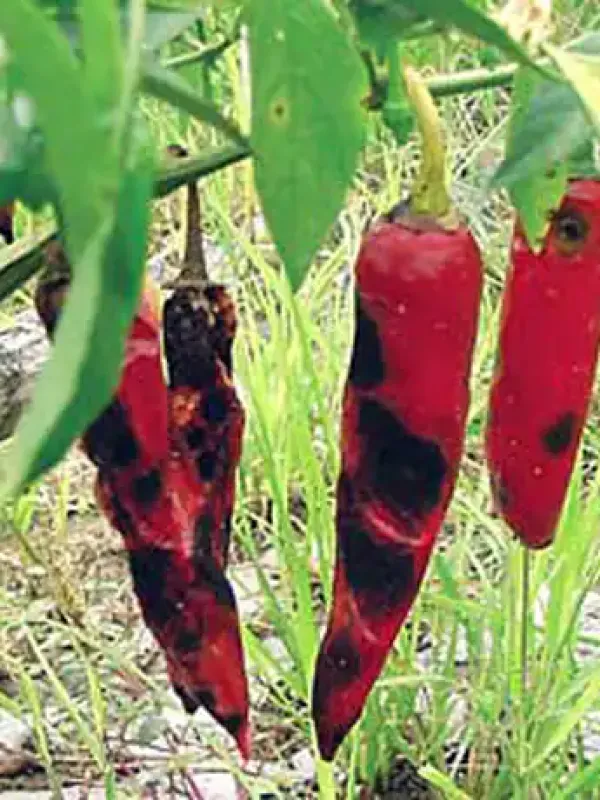
The first symptoms appear as small, sunken spots, circular or oval in shape, on fruits, leaves, and stems. Initially, these spots are brown or tan, gradually darkening to deep brown or black as the lesion expands.
In the center of the affected areas, concentric rings consisting of tiny black dots—the fungal fruiting bodies (acervuli)—are often visible. Under high humidity, a pink or creamy-colored mass of spores may appear on the surface of these spots.
On fruits, the infection manifests as water-soaked lesions that deepen over time and can cover a significant portion of the vegetable surface. Affected fruits become unmarketable, rot quickly, and eventually mummify.
Leaves of pepper and eggplant are also susceptible to the disease: necrotic spots with a yellowish halo form on them, leading to premature yellowing and leaf drop.
Stems are affected less frequently, but when infection occurs, elongated dark spots cause girdling, which may lead the plant to wilt and die from the point of infection upwards.
Pathogen
The disease is caused by the fungal pathogen Colletotrichum petchii, which belongs to the class of Ascomycetes. This microorganism infects solanaceous crops by entering plant tissues through micro-cracks, stomata, or mechanical damage to the epidermis.
The fungus survives in the soil on plant debris and can also be transmitted via infected seeds. During its life cycle, it forms specialized structures called acervuli, where conidia accumulate and are subsequently spread by rain splashes or irrigation water.
The infection can attack plants at any development stage, from seedlings to the fruit ripening period. The pathogen's high aggressiveness is attributed to its ability to adapt rapidly to changing environmental conditions.
The pathogen thrives in high humidity and moderate temperatures, making greenhouses and plastic tunnels high-risk zones for disease development. A prolonged incubation period allows the fungus to establish itself within the plant long before the first visual symptoms appear.
The life cycle of Colletotrichum petchii involves multiple phases that ensure its survival in the soil for extended periods, complicating eradication efforts solely through crop rotation.
Conditions for development
The primary factor for anthracnose development is excessive air humidity, exceeding 80-90%. Ideal conditions for active sporulation and infection spread occur with frequent overhead irrigation or lack of ventilation in greenhouses.
The optimal temperature range for the growth and development of the fungus is between +22...+28°C. Under these conditions, the incubation period is shortened, and the disease can cover significant crop areas in a short time.
Poor agricultural practices, such as high-density planting and inadequate airflow, promote moisture stagnation on plant parts, facilitating the attachment of fungal spores.
Mechanical injuries caused by pests or manual handling serve as entry points for primary infection. Any breach in the epidermis significantly increases the risk of fungal mycelium penetration.
The presence of weeds in the field also contributes to infection accumulation, as some weeds act as alternative hosts for the Colletotrichum fungus.
Why it matters
The harm caused by anthracnose includes a drastic reduction in fruit quality and partial or total loss of yield. Damaged fruits lose moisture rapidly, deform, and spoil during storage or transit.
Severe infection of the plant's aerial parts leads to disruptions in photosynthesis and metabolism, negatively impacting the growth rate and productivity of both pepper and eggplant.
Early seedling infection may lead to plant mortality, resulting in thin crop stands and the need for costly replanting or crop replacement.
The infection spreads rapidly within greenhouses, making it impossible to harvest marketable produce without effective protection measures. Produce from diseased plants loses shelf life and transportability.
The consequences of an anthracnose epiphytotic can be felt for several years, as the pathogen maintains viability in the soil layer as long as plant debris remains present.
Protection
The foundation of protection is the use of healthy, disinfected seed material. It is essential to select cultivars that possess genetic resistance to Colletotrichum diseases.
- Implementing crop rotation: avoiding solanaceous crops on the same site for at least 3-4 years.
- Removing and destroying all plant debris after harvest, as it serves as the primary infection reservoir.
- Managing greenhouse air humidity through regular ventilation.
- Applying copper-based fungicides or systemic chemical treatments at the first sign of disease.
Regular prophylactic treatments with bio-fungicides throughout the growing season can significantly reduce the infection pressure and prevent mass outbreaks of the disease.
Timely removal and disposal of diseased plants from the garden helps isolate the source of infection and halts the spread of fungal spores across the field.
Discussion
No discussions yet — be the first.